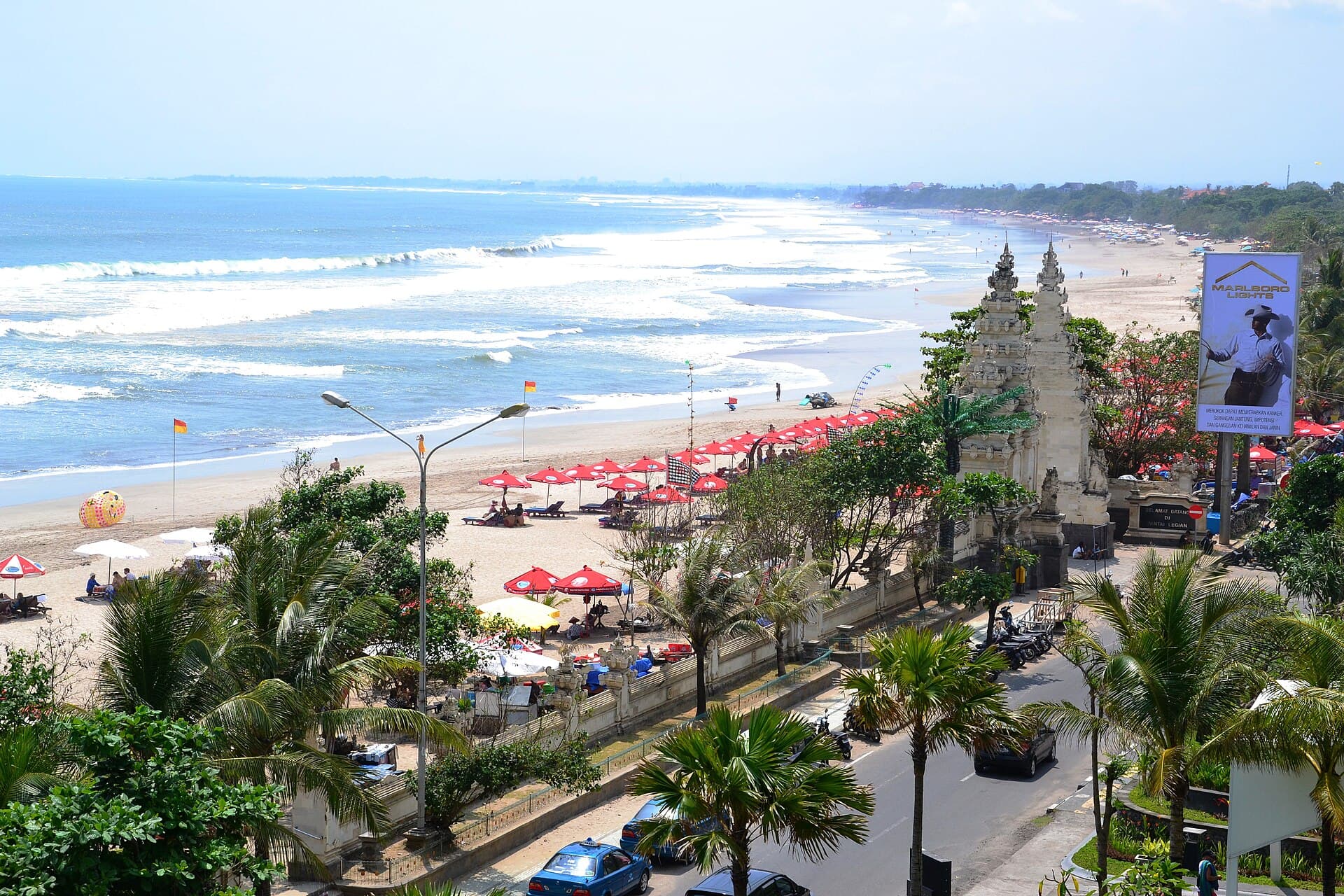
Kuta Beach sandstone fence
A two-meter-high sandstone fence was built along Kuta Beach, but its purpose went beyond mere decoration.
Full story unlocks in the tour
 Simon_sees from Australia / CC BY 2.0, via Wikimedia Commons
“Where the Indian Ocean meets endless sunsets and a ceaseless rhythm.”
Not the postcards. The stories even locals don't know — whispered in your ear, right where they happened.
A two-meter-high sandstone fence was built along Kuta Beach, but its purpose went beyond mere decoration.
A Danish trader, Mads Lange, played a significant role in Kuta's 19th-century history, yet his final resting place remains unexpected.
Kuta's tourism boom has roots in the 1930s with the opening of its first hotels, but their existence was entwined with global events.
Discover every secret of Kuta
Every address, every reveal in full — in your ear, right where it happened.
You pick your stops. You walk. The voice reveals what the others miss.
No tours available yet. Check back soon — we're preparing them.
Kuta, an urban village and the capital of Kuta District within Bali's Badung Regency, stands as a primary destination for travelers in Indonesia. Situated approximately 12 kilometers south of downtown Denpasar, it forms a segment of the larger Denpasar metropolitan area. What was once a quiet fishing village has transformed into a prominent beach resort, internationally recognized for its expansive sandy beach, diverse accommodations, and lively restaurants and bars.
Its close proximity to Ngurah Rai International Airport, just a 15-minute drive away, establishes it as a convenient entry point for many visitors to Bali. Kuta draws surfers, particularly those from Australia, attracted by the favorable wave conditions. The area is known for its energetic atmosphere, offering a blend of adventure and relaxation, with a bustling social scene and numerous options for dining, shopping, and entertainment.
Kuta's history extends to the early 19th century when it served as a significant port, a central point for Bali's maritime trade. In 1826, the Dutch established a trading post, though it was short-lived. Danish merchant Mads Lange further elevated Kuta's profile in 1839, conducting diplomatic and trade affairs from his compound. However, by the 1860s, the port's importance diminished, replaced by Buleleng's port, and Kuta reverted to a small fishing village.
The modern era of Kuta's tourism began in the 1930s, as its beach gained favor among Western visitors. The opening of the Kuta Beach Hotel in 1936, which even offered surfing lessons, marked a turning point. This early development, however, was interrupted by World War Two, during which the hotel was destroyed by Japanese forces.
Tourism truly revived in the late 1960s with the arrival of American and then Australian 'hippie' tourists, who were drawn to Kuta's excellent surfing conditions. This influx of visitors in the 1970s led to the rapid growth of hotels, souvenir shops, and restaurants. Australian backpackers, in particular, played a significant role in Kuta's transformation into a major tourist destination. While this led to unplanned development and some congestion, Kuta continued to thrive, attracting hundreds of thousands of visitors annually.
In 2002, Kuta was the site of a devastating bombing, which resulted in 202 fatalities. A permanent memorial now stands on Legian Street, bearing the names and nationalities of those who died. Despite this tragedy, Kuta's tourism sector has shown resilience, with significant recovery in recent years, contributing substantially to Bali's economy.
Kuta Beach, also known as Sunset Beach, is a primary attraction, offering a long stretch of sand ideal for relaxing, swimming, and observing the evening sky ablaze with color. The gentle, rolling waves make it an excellent location for beginner surfers, with numerous local instructors and board rentals readily available. For a more tranquil beach experience, Pantai Jerman (German Beach) in South Kuta offers a more relaxed atmosphere without the crowds and persistent vendors, and features a large statue of Varuna, the God of the oceans.
Beyond the beach, Kuta offers a range of activities. Waterbom Bali is a popular water park for a day of family-friendly fun. For shopping, Beachwalk Mall provides a modern retail experience, while local markets offer Balinese crafts and souvenirs. As evening falls, Jalan Legian comes alive with an active nightlife scene, featuring numerous bars, clubs, and live music venues. While Kuta itself is a center of activity, it also serves as a convenient base for day trips to other Balinese attractions, such as the cultural center of Ubud or the scenic Uluwatu Temple.
The optimal time to visit Kuta is during Bali's dry season, which spans from April to October. This period offers abundant sunshine, lower humidity, and pleasant breezes, creating ideal conditions for beach activities like sunbathing and surfing. While July and August are peak tourist months, bringing an active atmosphere, they also come with larger crowds. The rainy season, from November to March, still allows for travel and can offer advantages such as fewer visitors and potentially lower prices. For the best beach experience and surf lessons, weekday mornings are generally calmer. Evenings, however, are popular for experiencing the spectacular sunsets and the start of Kuta's nightlife.
Ngurah Rai International Airport (DPS) is the sole airport on Bali and the primary entry point for most travelers, located just south of Kuta in Tuban. Getting to Kuta from the airport is quick, typically around 15 minutes, depending on traffic. Taxis are readily available from official airport stands, or transfers can be arranged through your accommodation. Once in Kuta, walking is often the best way to navigate the central areas, though Bluebird taxis are a reliable option for longer distances. Renting a motorbike is also common for exploring, but traffic can be congested, and sidewalks may be uneven or used by motorcyclists. Be aware that touts can be persistent, attempting to sell various goods and services.