Hanuman Pol
The construction of Kumbhalgarh Fort faced a mysterious obstacle, with every attempt to build the walls failing. A local legend tells of a human sacrifice that finally allowed the fort to rise.
Full story unlocks in the tour
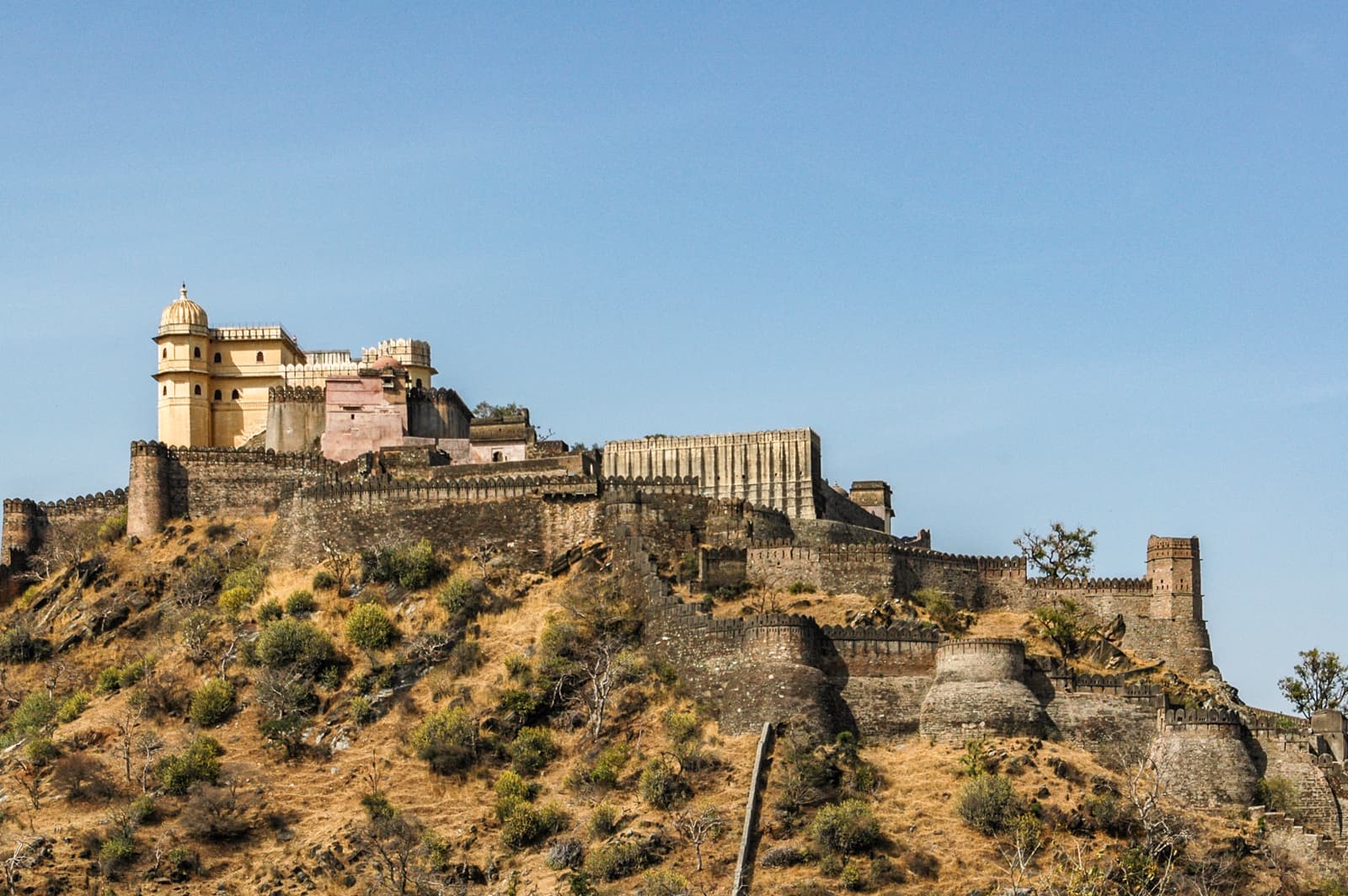 Rajesh Kapoor / CC BY-SA 4.0, via Wikimedia Commons
“Beyond the famed wall, a kingdom of secrets awaits.”
Not the postcards. The stories even locals don't know — whispered in your ear, right where they happened.
The construction of Kumbhalgarh Fort faced a mysterious obstacle, with every attempt to build the walls failing. A local legend tells of a human sacrifice that finally allowed the fort to rise.
Kumbhalgarh's formidable walls are renowned as the 'Great Wall of India,' but their width holds a surprising military advantage.
At the highest point of the fort lies the 'Palace of Clouds,' offering views that extend far beyond the Aravalli Hills.
Discover every secret of Kumbhalgarh
Every address, every reveal in full — in your ear, right where it happened.
You pick your stops. You walk. The voice reveals what the others miss.
No tours available yet. Check back soon — we're preparing them.
Kumbhalgarh, a grand fortress in Rajasthan, stands as a testament to Rajput military architecture and ingenuity. This UNESCO World Heritage Site is celebrated for its colossal perimeter wall, often referred to as the 'Great Wall of India,' which stretches for an impressive 36 kilometers, making it the second-longest continuous wall in the world after the Great Wall of China. Situated atop the Aravalli Hills at an elevation of 1,100 meters, the fort's strategic location provided an almost impregnable defense against invaders.
Beyond its imposing fortifications, Kumbhalgarh is a sprawling complex encompassing palaces, over 360 temples, and an intricate water management system, hinting at a self-sufficient city within its walls. It holds immense historical significance as the birthplace of Maharana Pratap, one of Mewar's most revered warriors. Exploring Kumbhalgarh is a journey back in time, offering a glimpse into the grandeur and resilience of Rajasthan's royal past.
## Origins and Construction Kumbhalgarh Fort was commissioned by Rana Kumbha, the visionary ruler of Mewar, in the 15th century. Construction began around 1443 CE and took over 15 years to complete, showcasing a significant milestone in Indian architecture. The fort was designed by the master architect Mandan, who even documented his architectural style in his text, Rajvallabh. Rana Kumbha was a meticulous builder, credited with constructing or restoring 32 of the 84 forts in his dominion, with Kumbhalgarh being the largest and most elaborate. The fort's design incorporated advanced military architecture, utilizing local sandstone and marble to create structures that blend seamlessly with the rugged Aravalli terrain.
## A Strategic Stronghold and Royal Refuge Kumbhalgarh's strategic location atop the Aravalli hills provided an impenetrable defense, making it a crucial stronghold in Rajasthan's history. The fort served as a refuge for Mewar rulers during times of conflict and was considered virtually unconquerable. It famously protected Maharana Udai Singh II during his childhood when his life was threatened. The fort's most dramatic moment came during the 1567-1568 siege by Mughal forces under Akbar. Despite their superior numbers, the Mughals could not breach the fort's defenses through conventional warfare. Historical accounts suggest the fort was only captured once, through an act of treachery: poisoning the water supply, forcing the defenders to surrender. However, the heroic Maharana Pratap later recovered it in the Battle of Dewair in 1582. Kumbhalgarh also holds the distinction of being the birthplace of Maharana Pratap, one of India's most revered warriors, who later led numerous battles against the Mughal Empire.
## Architectural Marvels and Spiritual Significance The fort's massive walls, stretching over 36 kilometers, are a remarkable engineering feat, wide enough for eight horses to ride abreast in many sections. Within these formidable walls lie over 360 temples, a mix of Hindu and Jain shrines, each narrating tales of devotion and artistry. Notable among them is the Neelkanth Mahadev Temple, dedicated to Lord Shiva, known for its intricate carvings and serene ambiance. The Badal Mahal, or 'Palace of Clouds,' is another significant structure, positioned at the highest point of the fort and offering panoramic views of the surrounding landscape. The fort's seven fortified gateways, such as Ram Pol and Hanuman Pol, are equally fascinating, each with its own story and strategic importance. In 2013, UNESCO recognized Kumbhalgarh Fort as a World Heritage Site, acknowledging its significance as an example of Rajput military hill architecture.
Begin your exploration at the main entrance, Ram Pol, one of the fort's seven massive gates. Walk along the fort walls, often called the 'Great Wall of India,' which span 36 kilometers and offer sweeping views of the Aravalli Hills. The walls are wide enough for eight horses to ride abreast in some sections.
Inside the fort, discover the Badal Mahal, or 'Palace of Clouds,' situated at the highest point, providing panoramic vistas. The fort complex houses over 360 temples, including around 300 ancient Jain temples and Hindu shrines. Don't miss the Neelkanth Mahadev Temple, dedicated to Lord Shiva, known for its impressive stone carvings. In the evenings, a spectacular light and sound show recounts the fort's history, a recommended experience.
Consider a visit to the nearby Kumbhalgarh Wildlife Sanctuary, which surrounds the fort and is home to leopards, wolves, sloth bears, and various bird species. Early morning safaris offer excellent wildlife spotting opportunities. The Ranakpur Jain Temple, approximately 30 kilometers away, is also a worthwhile detour, famed for its 1,444 intricately carved pillars.
The ideal time to visit Kumbhalgarh Fort is during the cooler months, from October to March. During this period, temperatures range from 10°C to 25°C, making it comfortable for exploring the extensive grounds and walking along the fort walls. The winter months also offer clear skies and excellent visibility for panoramic views of the Aravalli Hills. While the monsoon season (July to September) brings lush greenery and fewer crowds, intermittent rainfall might affect outdoor exploration. Summers (April to June) are generally hot, with temperatures soaring above 40°C, making daytime visits challenging.
Kumbhalgarh Fort is open daily from 9:00 AM to 6:00 PM. It's recommended to allocate at least 3 to 4 hours to fully explore the fort's grandeur. Entry fees are ₹15 for Indian nationals and ₹200 for foreign tourists; children under 15 have free entry. Additional charges may apply for parking and vehicle services. For the evening light and sound show, which typically starts around 7:00 PM in winter and 7:30 PM in summer, it's advisable to book tickets in advance, especially during peak season.
Wear comfortable walking shoes due to the extensive grounds and steep steps. Carry water, sunscreen, and a hat to protect yourself from the sun. The fort is approximately 85 kilometers from Udaipur, a two to three-hour drive. Taxis and car rentals are readily available, or you can opt for public transport like buses from Udaipur. The nearest airport is Udaipur Airport (approximately 72 km), and the most convenient railhead is Falna Railway Station (around 70 km).