Kufstein Fortress
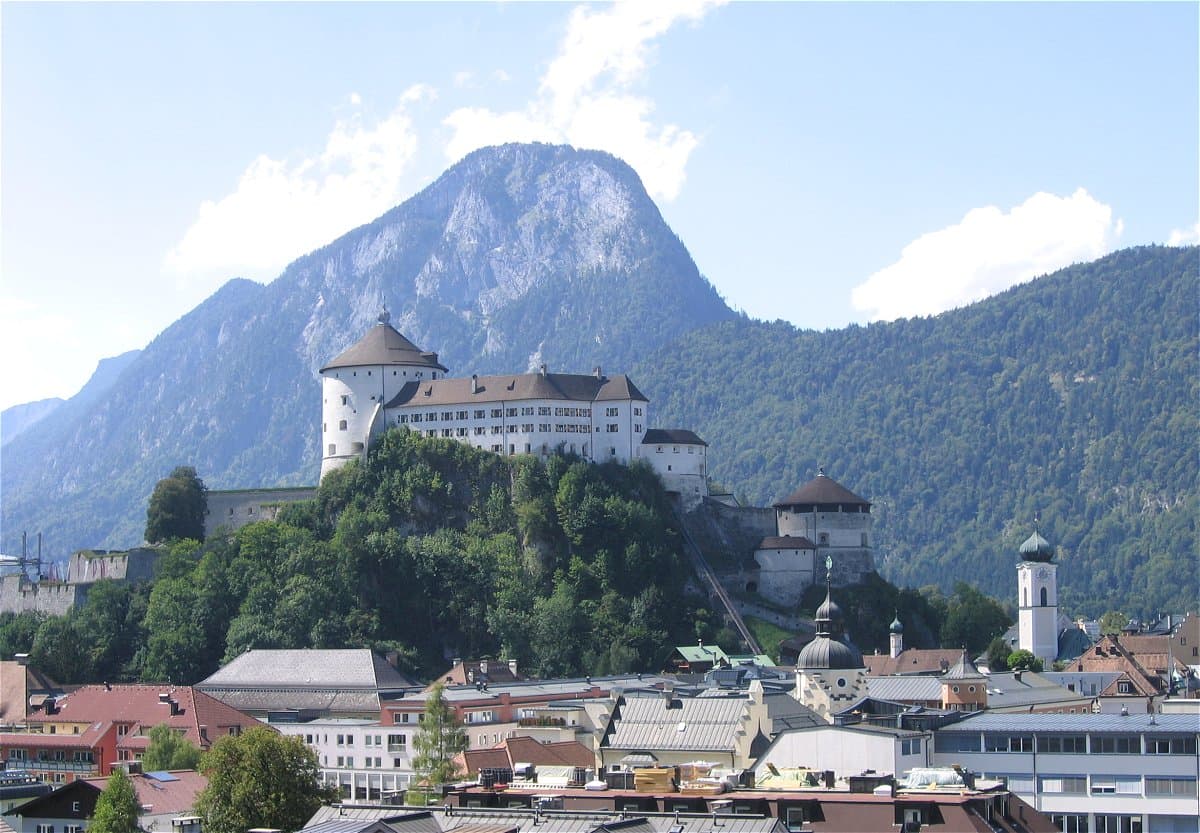
The formidable Kufstein Fortress, a landmark for over 800 years, conceals a surprising past within its walls.
Full story unlocks in the tour
 Rufus46 / CC BY-SA 3.0, via Wikimedia Commons
“Where ancient stones meet alpine grandeur, and the Inn River carves its path.”
Not the postcards. The stories even locals don't know — whispered in your ear, right where they happened.
The formidable Kufstein Fortress, a landmark for over 800 years, conceals a surprising past within its walls.
This appealing, historic street in Kufstein's Old Town shares a connection with a globally recognized melody.
Each day at noon, a powerful sound emanates from this tower, reaching far beyond the town's boundaries.
Discover every secret of Kufstein
Every address, every reveal in full — in your ear, right where it happened.
You pick your stops. You walk. The voice reveals what the others miss.
No tours available yet. Check back soon — we're preparing them.
Kufstein, a town in Austria, marries historical depth with alpine splendor. Situated on the banks of the Inn River and framed by the Kaiser Mountains, it stands as Tyrol's second-largest town after Innsbruck. The town's defining feature is the Kufstein Fortress, which rises prominently on a hill surveying the town. This strategic position, near the German border, has shaped much of Kufstein's eventful past.
Beyond its imposing fortress, Kufstein offers an appealing old town with narrow passageways and colorful structures, particularly along Römerhofgasse. The Inn River, with its emerald-green waters, lends a distinct atmosphere to the town, distinguishing it from many other mountain destinations. Kufstein functions as a doorway to the Tyrolean Alps, providing access to extensive hiking and cycling trails, and a range of outdoor activities for every season.
## From Ancient Settlements to Strategic Stronghold Kufstein's history extends back tens of thousands of years, with evidence of human settlement in the Tischofer Cave in Kaisertal dating over 30,000 years ago, making it arguably the oldest inhabited area of Tyrol. The Romans arrived around 15 BC, establishing the Inn River as a border between two provinces.
The Kufstein Fortress, the town's most recognizable landmark, was first documented in 1205 as 'Castrum Caofstein,' then under the possession of the Bavarian Duke Ludwig and the Bishop of Regensburg. Its strategic position at the entrance to the Alps made it a highly contested site between Bavaria and Tyrol, changing hands numerous times throughout the centuries. In 1342, Margarete "Maultasch," Duchess of Tyrol, received Kufstein as a wedding gift, marking its initial inclusion in Tyrol.
Emperor Maximilian I conquered Kufstein and its fortress in 1504, employing powerful cannons named Weckauf and Purlepaus. He significantly reinforced the fortress, constructing the massive Kaiserturm (Emperor's Tower) between 1518 and 1522, which substantially improved its defenses. The fortress later served as a prison for political dissidents under the Habsburgs, its name holding particular significance in Hungarian history. After periods of Bavarian possession, Kufstein returned to Austrian ownership in 1814. Since 1924, the fortress has been owned by the city of Kufstein, now serving as a popular cultural and historical attraction.
## Kufstein in Modern Times The opening of the Lower Inn Valley Railway line in 1858 significantly boosted Kufstein's economic development. While the historic town center sustained damage from Allied bombing during the late days of World War II, Kufstein has since rebuilt and thrived. Today, it is recognized for its blend of historical appeal, cultural events like the Operetta Summer and Knights' Festival held at the fortress, and its proximity to the natural splendor of the Kaiser Mountains.
Begin your exploration at the Kufstein Fortress, a dominant presence above the town. You can reach it via the glass-walled Festungsbahn funicular or by taking the stairs. Inside, explore the City Museum of Kufstein, the former state prison in the Kaiserturm, and an underground tunnel. Do not miss the daily performance of the Heroes' Organ in the Bürgerturm, the world's largest free-standing organ, played every day at noon (and additionally at 6 PM in July and August).
Descend into the Old Town to wander through the picturesque Römerhofgasse, a street known for its historic facades, medieval archways, and local shops. While there, you might spot the memorial stone for Karl Ganzer, composer of the famous 'Kufsteiner Lied.' For a different perspective, visit Riedel Glassworks, where you can observe the traditional art of mouth-blown glass in their Sinnfonie tour and find unique souvenirs.
To experience Kufstein's natural surroundings, take the Kaiserlift, a single-person chairlift, up to the Brentenjoch mountain station for expansive views of the Kaiser Mountains Nature Reserve. From here, various hiking trails await, including sections of the Kaiserkrone route. The nearby Kaisertal Valley, once Austria's only inhabited valley without a road connection, offers serene landscapes for walking.
Kufstein offers distinct experiences across all seasons. The warmer months, from May to September, are ideal for comfortable temperatures and outdoor activities like hiking and cycling. July is typically the warmest month, with average highs around 73°F (22°C) and lows around 55°F (11°C). June experiences the most wet days, so be prepared for some rain. Early autumn (September-October) provides crisp air, clear mountain views, and changing foliage, often with fewer visitors. Winter, from November to March, transforms the town into a snowy landscape, suitable for winter sports enthusiasts, with January being the coldest month, averaging highs of 35°F (2°C) and lows of 24°F (-7°C).
Kufstein is easily accessible by train, with connections to major cities like Innsbruck, Salzburg, and Munich. The A12 motorway also provides convenient access for those traveling by car. While a car can be useful for reaching trailheads and remote sites, the town itself is compact and walkable.
Public transportation within Kufstein and the surrounding Kufsteinerland region is efficient, with a network of local buses. Visitors staying in participating accommodations may receive a Kufsteinerland Guest Card, offering free unlimited access to public transport and some attractions. The Kufstein Tourist Office, located in the KISS shopping center at Unterer Stadtplatz, provides brochures, information, and event tickets.
Kufstein offers a range of accommodation options, from traditional guesthouses to modern hotels. Dining options include local Tyrolean cuisine, with many restaurants in the Old Town.