Kuantan River
The Kuantan River is a hub of life, yet its waters hold a peculiar secret about the city's origins.
Full story unlocks in the tour
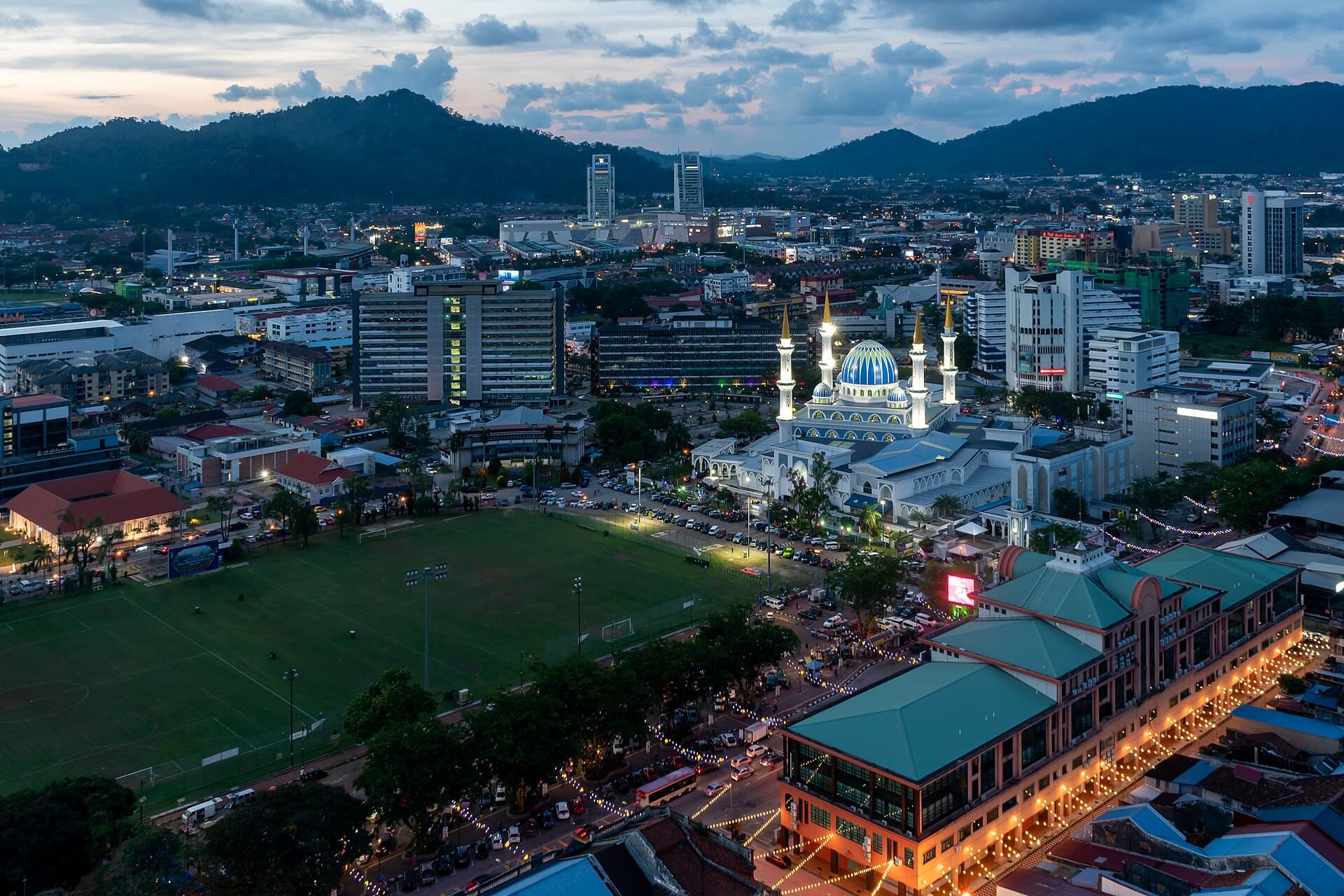 Dominic Nelson / CC BY-SA 4.0, via Wikimedia Commons
“Where the South China Sea whispers secrets to the rainforest.”
Not the postcards. The stories even locals don't know — whispered in your ear, right where they happened.
The Kuantan River is a hub of life, yet its waters hold a peculiar secret about the city's origins.
Deep within a 400-million-year-old limestone cave, a serene figure rests, a testament to an unexpected spiritual journey.
This quiet town, once home to the world's deepest tin mine, still carries echoes of its industrial past in an unusual way.
Discover every secret of Kuantan
Every address, every reveal in full — in your ear, right where it happened.
You pick your stops. You walk. The voice reveals what the others miss.
No tours available yet. Check back soon — we're preparing them.
Kuantan, the capital of Pahang, unfurls a blend of coastal charm and urban energy on Peninsular Malaysia's east coast, facing the South China Sea. It is a city where modern development coexists with verdant natural landscapes and inviting beaches. Kuantan is known for its relaxed atmosphere, drawing both locals and travelers seeking a tropical escape.
With a population of approximately 607,000 residents, Kuantan is a dynamic city that maintains a friendly, community-oriented ambiance. It serves as a significant commercial and social center for the region, offering diverse experiences from unspoiled beaches to cultural attractions and flavorful local cuisine.
The history of Kuantan is deeply intertwined with the Kuantan River, at whose mouth the city is situated. Early documentary mentions of a settlement in this area, then known as Teruntum, date back to the 1850s, forming the historic core of the modern city. In its earliest days, Kuantan was part of the Chih-Tu empire in the first century, later conquered by Pheng-Kheng in the 11th century, and then by the Siamese in the 12th century. By the 15th century, it fell under the rule of the Malaccan Empire.
Initially, Kuantan's economy was based on traditional fishing and small-scale trade. The late 19th century saw an acceleration in the city's development with the influx of Chinese miners and traders, drawn by tin mining in nearby areas like Gambang and Sungai Lembing. This led to Kuantan becoming an important transit point for tin export. Rubber plantations also attracted Indian settlers, further diversifying the community. Kuantan officially became the capital of Pahang state on August 27, 1955, taking over from Kuala Lipis. This shift spurred active construction of administrative buildings, often incorporating elements of Islamic architecture.
A significant event during World War II was the capture of Kuantan by Japanese troops on December 10, 1941, and the sinking of HMS Prince of Wales and HMS Repulse off its coast. After the war, British administration returned, followed by Malaysia's independence in 1957. The Kuantan Municipal Council was established in 1979 to manage the expanding urban area. In the 21st century, Kuantan achieved "City" status on February 21, 2021, and saw the grand opening of the Kuantan 188 tower, which became the second-highest spire in Malaysia, symbolizing the region's technological progress.
Begin your exploration at Teluk Cempedak, a popular beach known for its white sand, clear waters, and sculptural rock formations. A boardwalk here offers views and leads to quieter coves. For a dose of nature, visit Sungai Pandan Waterfall, a multi-tiered cascade with refreshing pools surrounded by dense rainforest, ideal for swimming and picnics.
In the city center, the Sultan Ahmad Shah State Mosque stands out with its blue dome and four minarets, an impressive example of Islamic architecture. Take a stroll along Taman Esplanade, a riverside park along the Kuantan River, offering scenic views and a lively atmosphere, especially in the evenings with food stalls. For sweeping city views, ascend Kuantan 188, the city's tallest tower, offering a 360-degree perspective of Kuantan, the river, and surrounding areas. Do not miss the Kuantan Art Street, featuring murals depicting local culture and lifestyle. For a unique cultural experience, head to Panching Cave (Gua Charas), a limestone cave housing a giant reclining Buddha statue.
The best time to visit Kuantan is during the dry season, which typically runs from March to October. During these months, the weather is dry and sunny, making it ideal for outdoor activities like beach visits, jungle hikes, and river cruises. While the "dry" season can still experience moderate rainfall, it is significantly less than the monsoon season. The monsoon season, from November to February, brings heavy rains and can result in rough seas, making some outdoor activities less enjoyable. For those seeking fewer crowds and potentially lower rates, early March or late September are good options.
Kuantan is accessible by bus, car, and flights from major Malaysian cities, with Sultan Haji Ahmad Shah Airport offering domestic flights and international flights to Singapore. From Kuala Lumpur, Kuantan is about a 2.5 to 4-hour drive via the East Coast Expressway. Once in Kuantan, getting around is convenient with ride-hailing apps like Grab, which are widely available and affordable. Local buses, part of the RapidKuantan system, are also an affordable option, with routes to destinations like Teluk Cempedak. Renting a car offers flexibility for exploring the outskirts and waterfalls.
The local currency is the Malaysian Ringgit (MYR), with ATMs widely available. While credit cards are accepted in malls and hotels, cash is preferred at street food stalls and night markets. Light, breathable clothing is recommended due to the year-round hot and humid climate. Modest dress is advised when visiting religious sites. Be cautious of monkeys at Teluk Cempedak and other parks, as they can be aggressive if they see food.