Kitano Ijinkan-gai
Among the elegant Western-style mansions of Kitano, one house holds a secret connecting it to a beloved German children's story.
Full story unlocks in the tour
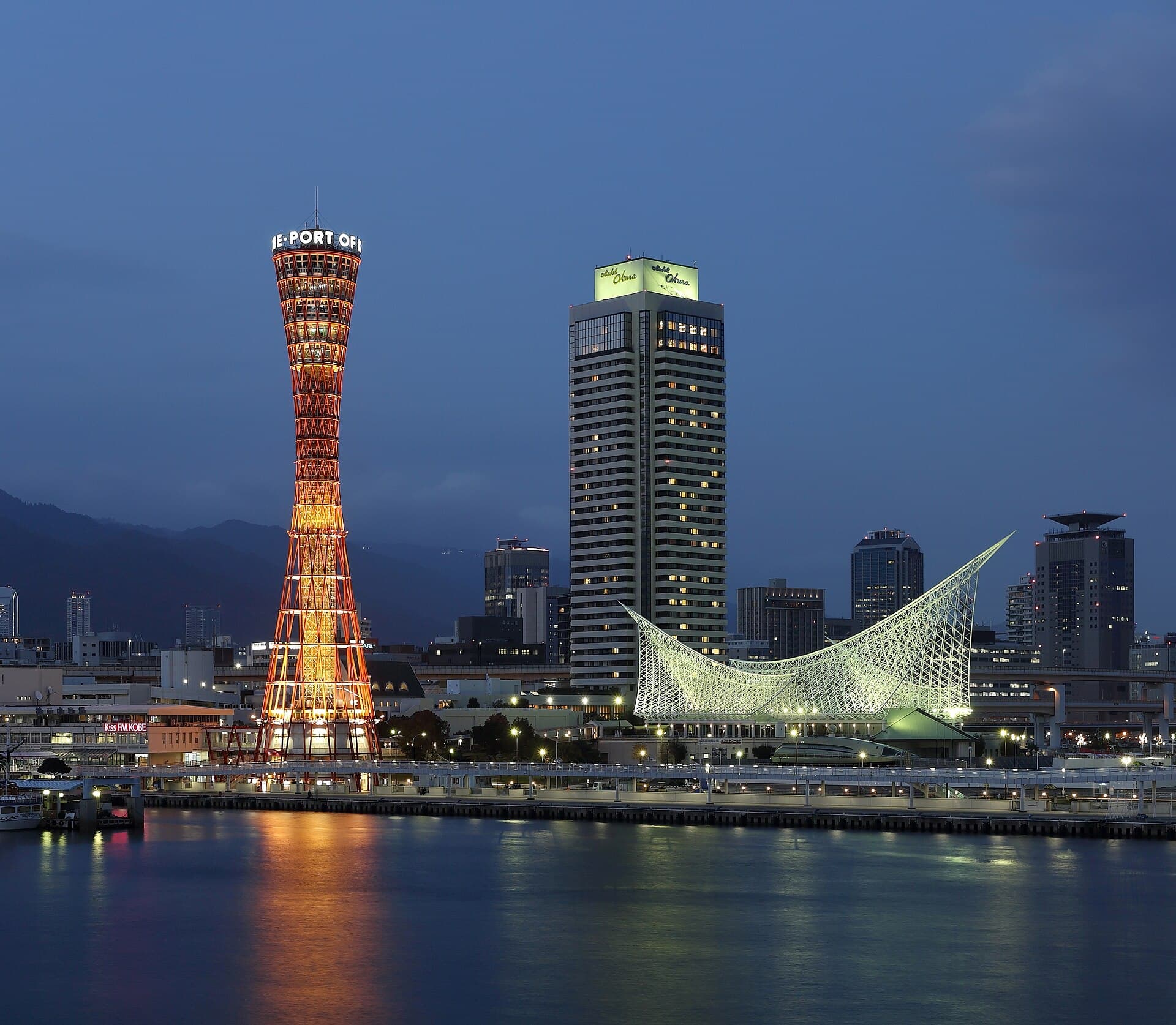 Martin Falbisoner / CC BY-SA 4.0, via Wikimedia Commons
“Where mountains embrace the sea, and East truly meets West.”
Not the postcards. The stories even locals don't know — whispered in your ear, right where they happened.
Among the elegant Western-style mansions of Kitano, one house holds a secret connecting it to a beloved German children's story.
While Kobe beef is celebrated globally, the city holds another culinary distinction, perfected over centuries, with a surprising element in its production.
A global phenomenon that unites people through song actually began in this port city, thanks to a self-described 'mediocre musician' with a simple idea.
Discover every secret of Kobe
Every address, every reveal in full — in your ear, right where it happened.
You pick your stops. You walk. The voice reveals what the others miss.
No tours available yet. Check back soon — we're preparing them.
Kobe, the capital of Hyogo Prefecture, is a dynamic port city where the Rokko mountain range meets the Seto Inland Sea. This unique geographical position has shaped its identity, fostering a mild climate and a distinctly international character. As one of Japan's ten largest cities, Kobe is part of the bustling Keihanshin metropolitan area, alongside Osaka and Kyoto, yet it maintains a charm often overlooked by travelers.
Since its port opened to foreign trade in 1868, Kobe has been a confluence of cultures, evident in its diverse architecture, cuisine, and a significant international population. From the historic Western-style residences of Kitano to the lively alleys of Nankinmachi (Chinatown), the city offers a blend of Japanese traditions and global influences. Today, Kobe stands as a testament to resilience, having rebuilt itself remarkably after the devastating Great Hanshin-Awaji Earthquake in 1995, with few visible scars remaining.
The area now known as Kobe carries a history stretching back thousands of years, with tools found in western Kobe indicating habitation from the Jōmon period. During the Nara and Heian periods, the port, then called Ōwada Anchorage, served as a crucial hub for imperial embassies to China. Its strategic location continued to foster trade, and for a brief five-month period in 1180 AD, Kobe even functioned as Japan's capital under the political leader Taira no Kiyomori.
The modern city of Kobe, however, did not officially exist until its founding on April 1, 1889. A pivotal moment in its development was the opening of Hyōgo Port (Kobe's old name) to foreign trade in 1868, marking the end of Japan's long period of isolation. This event transformed Kobe into a cosmopolitan city, drawing foreign merchants, diplomats, and engineers, whose influence is still visible in the Western-style architecture of districts like Kitano. This influx of international culture also led to Kobe becoming a center for shipbuilding, sake production, and even the birthplace of Japanese jazz.
Kobe's history also includes periods of immense challenge. The city endured heavy bombing during World War II on March 17, 1945, resulting in thousands of casualties and widespread destruction. Decades later, on January 17, 1995, a magnitude 6.9 earthquake, known as the Great Hanshin-Awaji Earthquake, struck Kobe, claiming over 6,000 lives and destroying hundreds of thousands of homes and significant portions of the port. The city has since undergone a remarkable recovery, with few signs of the devastation remaining. Today, Kobe commemorates its resilience with events like the Luminarie, an annual illumination in December that symbolizes the city's rebirth.
Begin your exploration at Meriken Park, a waterfront area featuring the iconic Kobe Port Tower, offering wide views of the harbor and cityscape. The park also houses the Kobe Maritime Museum and the 'Be Kobe' sign, a symbol of the city's recovery from the 1995 earthquake. A short walk from the park leads to Nankinmachi, one of Japan's three main Chinatowns, alive with food stalls and lively energy.
Ascend to the Kitano Ijinkan-gai, a historic district characterized by its preserved Western-style mansions from the Meiji era, reflecting Kobe's early international trade. Many of these former residences are now museums, offering a glimpse into the city's cosmopolitan past. For a different perspective, take the Kobe Nunobiki Ropeway to the Nunobiki Herb Gardens, providing expansive views of the city and Osaka Bay. The Nada district is essential for sake enthusiasts, with numerous breweries offering tours and tastings. For relaxation, a short trip to Arima Onsen, one of Japan's oldest hot spring resorts, offers a tranquil escape with its unique 'golden' and 'silver' waters.
Kobe offers a pleasant experience year-round, but the most favorable times to visit are spring (March to May) and autumn (late September to November). During spring, the weather is mild and comfortable, with cherry blossoms typically peaking around the first week of April. Autumn brings mild temperatures, reduced rainfall, and brilliant fall foliage, especially in areas like Mount Rokkō. Summers (late June to August) are hot and humid, while winters (December to February) are cool but generally not too cold for travel.
Kobe is well-connected and easy to navigate. Shin-Kobe Station is a stop on the Sanyo Shinkansen line, providing access from Tokyo, Kyoto, and Osaka. Sannomiya Station serves as the central hub for local train lines, including JR, Hanshin, and Hankyu, making it convenient for sightseeing. The city also has a comprehensive bus system, including the 'City Loop' tourist bus that connects major attractions.
For accommodation, the Sannomiya area is a popular choice due to its central location and dining options. Hotels in the bay area offer ocean views and night vistas. Consider staying at a traditional ryokan in Arima Onsen for a relaxing experience. While Kobe is walkable, especially in central areas, public transport is efficient for longer distances. A Suica card can be used on Kobe's public transport.