Knokke Casino
Beyond the gaming tables, the Knokke Casino holds a surprising artistic treasure.
Full story unlocks in the tour
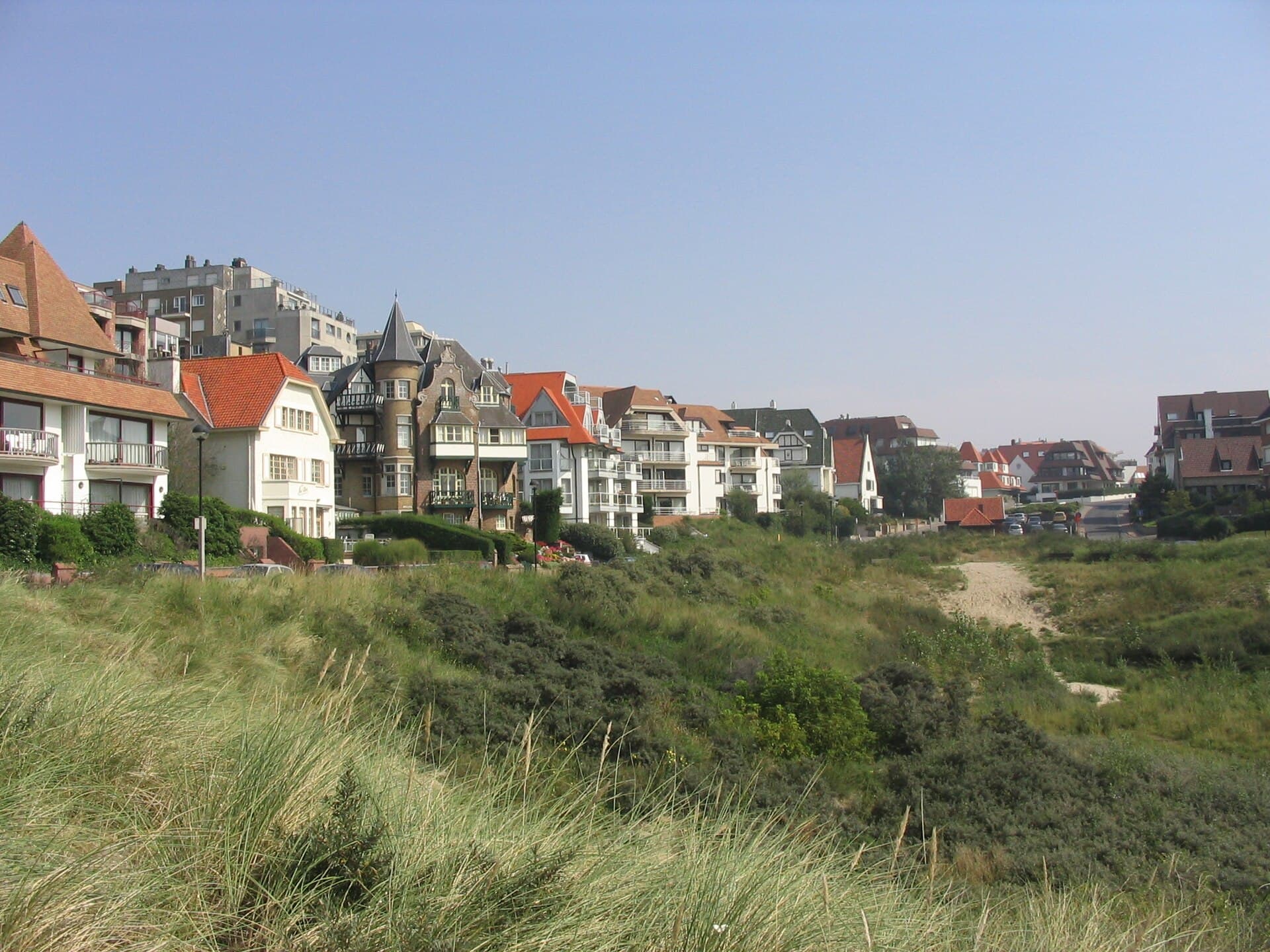 Unknown author / CC BY-SA 3.0, via Wikimedia Commons
“Where the North Sea whispers secrets and art adorns every corner.”
Not the postcards. The stories even locals don't know — whispered in your ear, right where they happened.
Beyond the gaming tables, the Knokke Casino holds a surprising artistic treasure.
This tranquil nature reserve, a haven for migratory birds, has a deeper historical connection to a once-thriving medieval port.
The seemingly endless stretch of sandy beaches here holds a unique, seasonal freedom for some four-legged friends.
Discover every secret of Knokke-Heist
Every address, every reveal in full — in your ear, right where it happened.
You pick your stops. You walk. The voice reveals what the others miss.
No tours available yet. Check back soon — we're preparing them.
Knokke-Heist, a sophisticated Belgian coastal resort, is a fusion of five distinct districts: Knokke, Heist-aan-Zee, Duinbergen, Ramskapelle, and Westkapelle. This elegant destination, situated at the eastern end of the Belgian coast near the Dutch border, is celebrated for its wide, sandy beaches, extensive art scene, and proximity to the Zwin Nature Park.
What began as a collection of marshy polder lands and small fishing villages in the 13th century has transformed into a prominent tourist destination, attracting visitors seeking a blend of coastal relaxation and a cosmopolitan atmosphere. With over 85 art galleries, high-end boutiques, and gourmet dining, Knokke-Heist offers a unique experience of refined European leisure.
The history of Knokke-Heist is a testament to human resilience and the gradual shaping of a coastal landscape. The area was originally characterized by marshland and sandbanks near the Zwin estuary. Early settlements, such as Heist (originally Koudekerke) and Knokke, emerged as the sea retreated and land was drained through the construction of dykes between the 11th and 13th centuries. The name 'Knokke' is thought to derive from a word meaning 'knoll' or 'hill,' referring to the elevated dunes, while 'Heist' likely comes from an old Germanic word for 'heath' or 'wasteland.'
The Zwin estuary played a crucial role in the region's early development, serving as a vital waterway connecting wealthy Bruges to the North Sea. However, the silting up of the Zwin gradually altered the landscape, transforming the sea route into fertile polders suitable for agriculture. The construction of defensive structures, like the Count Jean's Dyke (Graaf Jansdijk) after the devastating St. Elizabeth's flood in 1404, provided protection against storms and helped unite scattered settlements into a single economic zone.
Coastal tourism began to emerge in the second half of the 18th century. By 1839, innkeepers in Heist were required to keep guest lists, indicating a growing number of visitors. The mid-19th century saw infrastructure improvements, including paved streets, public water pumps, and the first concrete sea dyke. The Leopold Canal, built in 1857, further contributed to the Zwin becoming a natural reserve. Artists, notably Alfred Verwee, began to popularize the picturesque landscapes of Knokke in the 1880s, attracting an intellectual crowd.
The early 20th century marked the establishment of elite facilities, such as the Royal Zoute Golf Club in 1908, solidifying the resort's status as a retreat for the aristocracy. The grand opening of the current Knokke Casino building in 1930, a landmark of Art Deco architecture, became a significant center of social life. Despite damage during World War II, the area was rebuilt, and a post-1955 building boom further cemented Knokke-Heist's reputation as a modern, upscale resort. In 1971, the communes of Knokke, Heist, Westkapelle, and Ramskapelle administratively merged to form the single municipality of Knokke-Heist.
Knokke-Heist offers a diverse range of attractions, blending natural beauty with cultural sophistication. The expansive Knokke Beach stretches for kilometers, providing ample space for sunbathing, walks, and water sports. Along the promenade, you'll find elegant beach huts and numerous cafes.
For nature enthusiasts, the Zwin Nature Park is a unique coastal reserve on the border with the Netherlands. This former tidal inlet is renowned for its salt marshes, dunes, and rich birdlife, including storks, and offers scenic hiking and cycling trails. The park also features an interactive visitor center.
Knokke-Heist is often called the art capital of the Belgian coast, with over 85 art galleries. Public art installations are scattered throughout the town, including sculptures on the beach and wave breakers. The Knokke Casino is not only a venue for entertainment but also an architectural landmark featuring significant artworks by René Magritte, Paul Delvaux, and Keith Haring. For a glimpse into local history, the Sincfala Museum in Heist documents the region's past as a fishing community. The For Freedom Museum commemorates the liberation of Knokke-Heist during World War II, showcasing aircraft, photographs, and military equipment.
The best time to visit Knokke-Heist for warm weather and beach activities is during the summer months, from June to August. During this period, average temperatures hover around 18-19°C, with highs reaching 20-21°C. However, summer can also be crowded.
For a more peaceful experience with pleasant weather and fewer crowds, consider the shoulder seasons of spring (April-May) and autumn (September-October). Autumn, in particular, is noted for its golden light and a slower, more elegant rhythm, ideal for coastal walks and birdwatching in the Zwin Nature Park.
Knokke-Heist is easily accessible by various modes of transport. Trains from Brussels (approximately 1 hour 45 minutes) or Bruges (about 45 minutes) arrive at Knokke station, which is a short walk from the town center. The famous Coastal Tram (Kusttram) connects Knokke-Heist to all other Belgian coastal resorts. For those traveling by car, the E34 motorway provides a direct connection from Antwerp, and the town is less than 20 km from Bruges. While parking is available, it can be paid and limited, especially during peak season.
Within the town, walking and cycling are popular ways to get around, with bicycles readily available for rent. The official currency is the Euro (€). A temperate maritime climate means changeable weather, so packing layered clothing, including a light jacket or sweater, is advisable even in summer. Comfortable shoes are recommended for exploring the promenade and town.