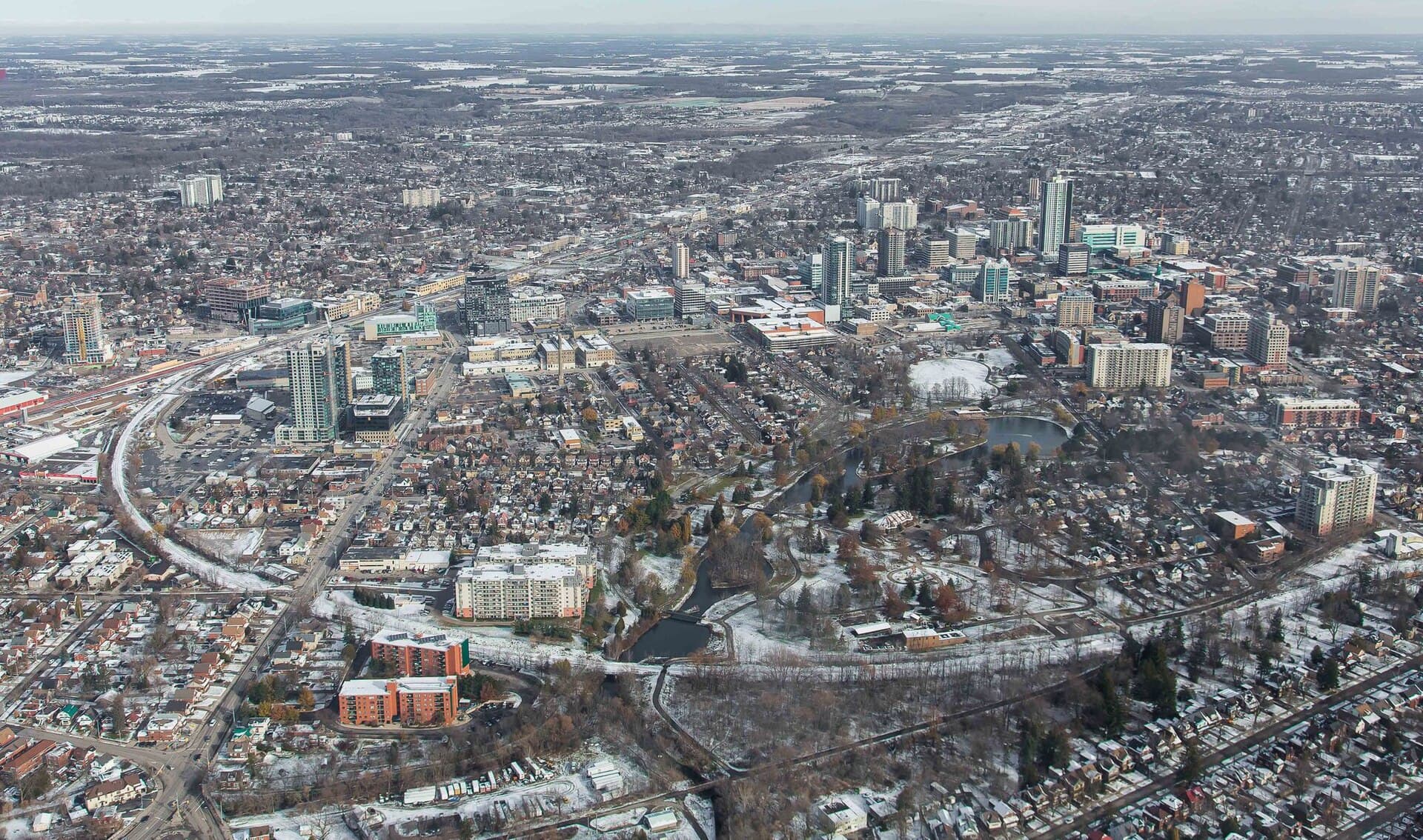
Victoria Park
A statue of a German Kaiser once stood prominently in Victoria Park, a reflection of the city's strong German heritage. But during a tumultuous time, it vanished.
Full story unlocks in the tour
 Tomasz Adamski / CC BY-SA 4.0, via Wikimedia Commons
“From German roots to a tech future, where tradition and innovation converge.”
Not the postcards. The stories even locals don't know — whispered in your ear, right where they happened.
A statue of a German Kaiser once stood prominently in Victoria Park, a reflection of the city's strong German heritage. But during a tumultuous time, it vanished.
Kitchener's admired old city hall was secretly slated for demolition to make way for a new development, sparking a local outcry.
Residents of a Kitchener townhouse complex in the 1980s reported strange, unexplained occurrences, from flying tea towels to unseen presences.
Discover every secret of Kitchener
Every address, every reveal in full — in your ear, right where it happened.
You pick your stops. You walk. The voice reveals what the others miss.
No tours available yet. Check back soon — we're preparing them.
Kitchener, Ontario, a city of over 250,000 residents, harmoniously blends its German heritage with a modern identity as a technological innovation hub. Located approximately 100 km west of Toronto in the Grand River valley, Kitchener is part of the Regional Municipality of Waterloo, often referred to as the Tri-Cities alongside Waterloo and Cambridge. Once known as Berlin until 1916, its German roots are still evident in its culture, architecture, and annual festivals, notably the Kitchener-Waterloo Oktoberfest, the largest Bavarian festival outside of Germany.
The city has transformed from an industrial heartland, once recognized for manufacturing rubber, furniture, and footwear, into a leading technology hub. It's now considered an anchor of Canada's Innovation Corridor, with a startup density second only to Silicon Valley. Kitchener's dynamic evolution offers a unique experience, combining historical character with a forward-thinking spirit.
Long before European settlement, the Grand River Valley, where Kitchener now stands, was the traditional territory of Indigenous peoples, including the Chonnonton, Anishinaabeg, and Haudenosaunee. Archaeological findings, such as stone tools and campsites, indicate human activity dating back thousands of years, with farming communities emerging during the Woodland Period. In 1784, the British Crown granted these lands, known as the Haldimand Tract, to the Six Nations for their support during the American Revolution.
In the early 1800s, German-speaking Mennonite families from Pennsylvania, seeking religious freedom and fertile farmland, began purchasing tracts of land in the area. The settlement was initially named Ebytoun, after community leader Benjamin Eby. By 1816, the government officially designated it the Township of Waterloo. A significant influx of German immigrants led to the town's renaming to Berlin in 1833, reflecting its strong cultural ties.
Berlin's development was significantly boosted by its location in the fertile Grand River valley and, crucially, the arrival of the Grand Trunk Railway in 1856. This transformed the agrarian settlement into a major industrial and commercial center, attracting workers and investors. The city's early economy was diverse, with flourishing crafts and industries like furniture manufacturing, button production, tanneries, and breweries. Berlin officially attained city status in 1912.
However, with Canada at war against Germany during World War I, anti-German sentiment grew. Under pressure and following a heated referendum, the city was renamed Kitchener on September 1, 1916, in honor of British Field Marshal Horatio Kitchener. This decision highlighted the era's tensions and the community's effort to redefine itself during wartime.
The 20th century saw Kitchener evolve from a manufacturing town into a modern urban center. The founding of the University of Waterloo in 1957, with its strong engineering and computer science programs, laid the groundwork for the region's future technological boom. Beginning in the 1990s, Kitchener gained recognition as part of Canada's "Technology Triangle," with the growth of tech companies like BlackBerry and the establishment of major offices for Google and Shopify. Today, Kitchener is a rapidly growing tech hub, often called the "Silicon Valley of the North," balancing its industrial heritage with an innovative future.
Begin your exploration at Victoria Park, a central green space dating back to 1896, featuring a lake, winding pathways, and a historic clock tower that once adorned the old city hall. For a deeper dive into the region's past, visit the Joseph Schneider Haus National Historic Site, the city's oldest existing dwelling built in 1816 by a German Mennonite pioneer. It offers a meticulous re-creation of 1850s Ontario life. The Waterloo Region Museum provides a comprehensive overview of Kitchener's history, from its First Nations inhabitants to its manufacturing era.
Art and culture enthusiasts will appreciate THEMUSEUM, offering hands-on, family-friendly exhibits and a permanent Sol LeWitt installation. For outdoor activities, explore the Huron Natural Area, Kitchener's largest natural space with hiking trails, wildflower meadows, and opportunities for wildlife viewing. The Iron Horse Trail connects Victoria Park to Waterloo Park, ideal for walking, cycling, or even horseback riding. Do not overlook the Kitchener Market, one of Canada's oldest public markets, offering local produce, handmade goods, and international foods.
Kitchener experiences a humid continental climate with four distinct seasons. The best time to visit for warm-weather activities and cultural exploration is from June to September, when average daytime temperatures range from 20°C to 27°C (68°F to 81°F). This period is ideal for outdoor activities and attending festivals. Fall, particularly September and October, offers pleasant temperatures (15-22°C / 59-72°F) for exploring museums and heritage sites without the summer crowds. Winters, from January to March, can be cold with temperatures dropping to -9°C (16°F), and are generally less ideal for tourism unless you're seeking budget travel or winter sports like skiing at Chicopee.
Kitchener is part of the Regional Municipality of Waterloo, located approximately 100 km west of Toronto. It is accessible by car via Highway 401, as well as by VIA Rail and GO Transit. The Region of Waterloo International Airport also serves the area. Within the city, public transportation is provided by Grand River Transit (GRT), which includes buses and the ION light rail system. The ION light rail connects south Kitchener, Downtown Kitchener, and Uptown Waterloo. Downtown Kitchener is walkable, but renting a car offers more freedom for exploring the wider region.
Accommodation options in Kitchener include hotels and vacation rentals, with downtown being a popular area for rentals. When packing, consider Kitchener's distinct seasons: warm clothing and waterproof shoes for winter, and light clothing and sunglasses for summer. Layering is recommended for spring and fall. Essential items include a cross-body bag, a portable phone charger (cold weather drains batteries faster), a reusable water bottle, comfortable walking shoes, and a small umbrella.