Ross Castle
The O'Donoghue Mór, the chieftain who constructed Ross Castle, is said to still watch over Lough Leane.
Full story unlocks in the tour
 瑞丽江的河水 / CC BY-SA 4.0, via Wikimedia Commons
“Where ancient legends linger and emerald landscapes enchant.”
Not the postcards. The stories even locals don't know — whispered in your ear, right where they happened.
The O'Donoghue Mór, the chieftain who constructed Ross Castle, is said to still watch over Lough Leane.
Queen Victoria's 1861 visit to Muckross House nearly bankrupted its owners.
The term 'jaunt' for a pleasure trip has its origins in Killarney's traditional horse-drawn carriages.
Discover every secret of Killarney
Every address, every reveal in full — in your ear, right where it happened.
You pick your stops. You walk. The voice reveals what the others miss.
No tours available yet. Check back soon — we're preparing them.
Killarney, a town in County Kerry, Ireland, serves as a portal to some of the country's most dramatic natural splendor. Positioned on the northeastern shore of Lough Leane, it forms a segment of the expansive Killarney National Park, a UNESCO Biosphere Reserve. The town itself, with a population of approximately 14,000, transforms into a lively center in summer, attracting over a million visitors annually. Its enduring allure stems from a combination of striking landscapes, a deep past, and a spirited local culture.
Visitors are captivated by Killarney's formidable mountains, tranquil lakes, and ancient woodlands, which shelter Ireland's only wild herd of native red deer. The town acts as a traditional starting point for the celebrated Ring of Kerry scenic drive, further solidifying its standing as a premier tourist destination. Beyond its natural wonders, Killarney presents an appealing town center with boutiques, pubs, and restaurants, blending an old-world character with contemporary appeal.
The area around Killarney holds a past stretching back to prehistoric times, with evidence of metal ore industries. By the 7th century, it had developed into a significant center for religious learning, with monasteries established on islands like Innisfallen. The town's modern tourism heritage began to take form in the 18th century, when Lord Kenmare initiated efforts to draw visitors and stimulate the local economy. Early industries in Killarney included linen mills, established by Thomas Browne, 4th Viscount Kenmare, in the 1740s, followed by hosiery and shoemaking in later years.
However, it was the arrival of the railway in 1853 that truly transformed Killarney into a prominent tourist destination, a development encouraged by Henry Arthur Herbert, the estate owner at the time. A pivotal moment in Killarney's past was Queen Victoria's visit in 1861, during which she stayed at Muckross House. This royal endorsement significantly elevated the profile of the region. Muckross House and its surrounding lands were eventually given to the Irish State in 1932, forming the core of what is now Killarney National Park, Ireland's first national park.
Ross Castle, a 15th-century tower house at the edge of Lough Leane, played a part in the Irish Confederate Wars, being one of the last strongholds to yield to Oliver Cromwell's forces in 1652. It was originally constructed by the O'Donoghues Mór clan and later associated with the Brownes of Killarney. Today, Killarney continues to flourish, recognized for its natural beauty and as a recipient of awards like the Best Kept Town in 2007.
Killarney offers a wealth of sights, primarily centered around its natural environment. Killarney National Park, a UNESCO Biosphere Reserve, invites exploration, featuring the Lakes of Killarney—Lough Leane, Muckross Lake, and Upper Lake. Visitors can hike, walk, or cycle along the lake trails, or embark on boat tours to places like Innisfallen Island. Discover Torc Waterfall, located at the base of Torc Mountain, and Ladies View, which presents expansive views of the park and the MacGillycuddy's Reeks mountains.
Within the National Park, explore historic sites such as Muckross House and Gardens, a 19th-century Victorian mansion with period furnishings and extensive gardens. Nearby, Muckross Abbey, a 15th-century Franciscan friary, stands as a testament to the region's religious past. Ross Castle, a 15th-century tower house on Lough Leane, is open for guided tours, offering a glimpse into Irish chieftain strongholds. For a traditional experience, consider a jaunting car tour through the park, where local 'jarveys' share stories and history.
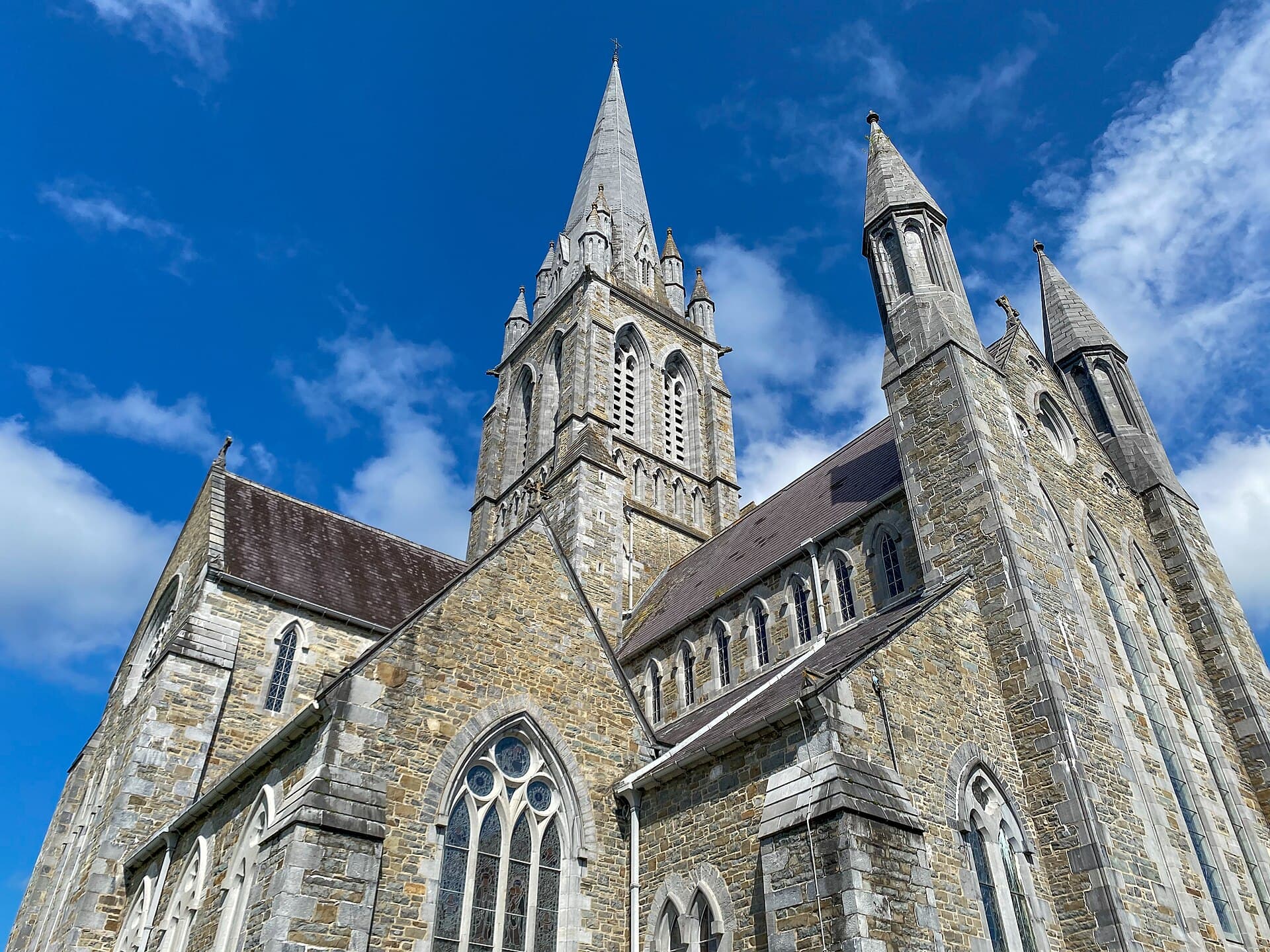
The town of Killarney itself provides an animated atmosphere with shops, pubs, and restaurants. St. Mary's Cathedral is notable for its architecture, and Killarney House and Gardens, close to the town, offers an interpretive exhibition and formal gardens.
The most favorable time to visit Killarney is during the late spring to early autumn months, from May to September, when the weather is milder and more agreeable. Average temperatures during this period range from 15°C to 19°C (59°F to 66°F). May and June offer extended daylight hours and verdant landscapes, ideal for outdoor activities, with fewer crowds than the height of summer. July and August are the warmest months, with average highs around 18-19°C (64-66°F), but also experience the largest crowds and higher prices. September provides a good balance of pleasant weather, with average highs around 16°C (61°F), and reduced tourist numbers. While Killarney experiences rainfall throughout the year, with 14 to 19 wet days per month, the lush green scenery is a direct result of this climate. Packing light rain gear is advisable for any visit.
Killarney is readily accessible, even without a car. The closest international airport is Cork Airport (ORK), about 55 miles away, with bus and train connections available. Kerry Airport (KIR) is even nearer, just seven miles from Killarney, offering regional flights. Killarney railway station, opened in 1853, provides direct train services to Dublin Heuston and Cork, and is conveniently positioned next to the bus station and Killarney Outlet Centre. Bus Éireann, the Irish National Bus Service, offers routes to Killarney from various locations.
Once in Killarney, the town center is walkable. For exploring the wider Killarney National Park and surrounding attractions, options include renting a bicycle, taking a traditional jaunting car tour, or utilizing boat tours on the lakes. Several reputable tour companies also offer day trips to popular destinations like the Ring of Kerry and the Gap of Dunloe. Accommodations range from hotels to bed and breakfasts, with prices generally higher during peak season (July and August).