Okanagan Lake
The depths of Okanagan Lake hold more than just clear, cool water.
Full story unlocks in the tour
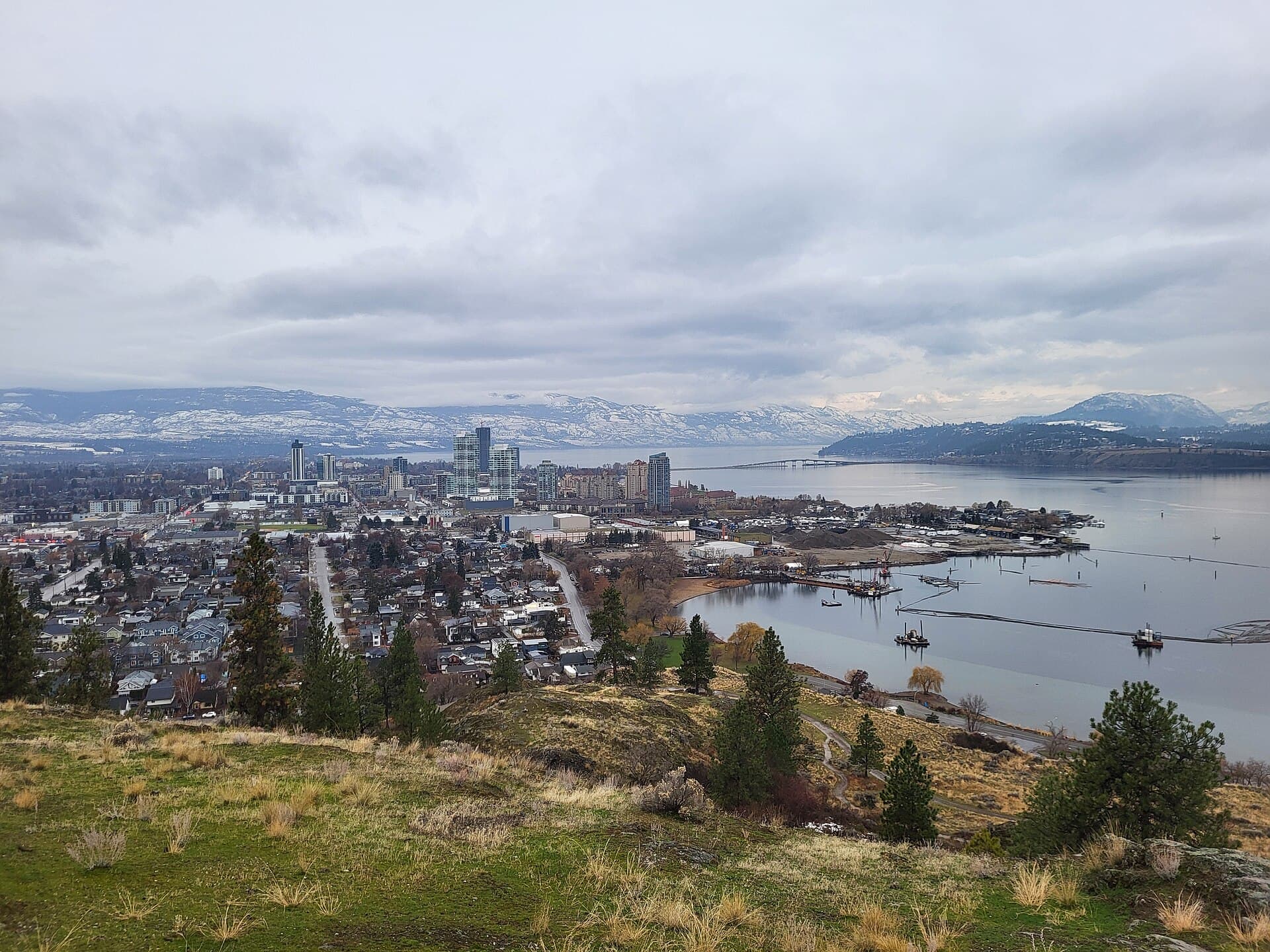 Gladgan / CC BY-SA 4.0, via Wikimedia Commons
“Where sun-drenched valleys meet the clear expanse of a great lake.”
Not the postcards. The stories even locals don't know — whispered in your ear, right where they happened.
The depths of Okanagan Lake hold more than just clear, cool water.
Kelowna's first European settler wasn't just a missionary.
Before wine became the region's signature, another crop briefly flourished.
Discover every secret of Kelowna
Every address, every reveal in full — in your ear, right where it happened.
You pick your stops. You walk. The voice reveals what the others miss.
No tours available yet. Check back soon — we're preparing them.
Kelowna, situated in British Columbia's Okanagan Valley, is a city defined by its relationship with Okanagan Lake and the surrounding mountains and vineyards. It is recognized as a UNESCO City of Gastronomy, blending its agricultural heritage with a burgeoning culinary scene. The city offers a four-season lifestyle, from warm, dry summers conducive to lake activities and vineyard tours, to milder winters with opportunities for snow sports in nearby mountains.
The city's name itself, derived from the Okanagan word kiʔláwnaʔ, means "grizzly bear," reflecting the deep connection between the land and the Indigenous Syilx people who have inhabited this region for thousands of years. Kelowna has grown into a significant urban center, with a diverse economy that includes agriculture, technology, healthcare, and a thriving tourism industry that draws over two million visitors annually.
Whether seeking outdoor adventure, a taste of world-class wines, or a relaxed lakeside escape, Kelowna presents a dynamic blend of natural beauty and urban amenities. Its unique microclimate, sheltered by mountains and moderated by Okanagan Lake, provides more than 2,000 hours of sunshine annually, making it a desirable destination year-round.
The history of Kelowna is deeply intertwined with the Syilx/Okanagan people, who have lived in the region for approximately 9,000 years, moving with the seasons to harvest food and care for the valley's ecosystems. Their language and traditions are reflected in the city's name, kiʔláwnaʔ, meaning "grizzly bear." The area around present-day Kelowna was known to the Indigenous Peoples as Nor-kwa-stin, meaning "hard black rock," a material used for sharpening flints.
The first European to travel to the Okanagan Valley was David Stuart in 1811, but permanent European settlement didn't begin until 1859 when Father Charles Pandosy, a French Roman Catholic Oblate missionary, established the Mission of the Immaculate Conception. His settlement, located at l'Anse au Sable (Bay of Sand), laid the groundwork for the region's agricultural future by planting trees and fostering an apple industry.
Kelowna was officially incorporated as a city on May 4, 1905, with a population of about 600. Early transportation relied heavily on Okanagan Lake, with the Canadian Pacific Railway introducing the steamer SS Aberdeen in 1893, providing a crucial link between Kelowna and other communities like Penticton. The arrival of the Canadian Pacific Railway extension to Kelowna in 1925 further solidified its growth, reducing its reliance on lake transport for trade.
Agriculture, particularly fruit growing, became a cornerstone of Kelowna's economy, with orchards of apples, cherries, and other fruits thriving in the fertile soil. The region also had a brief but significant tobacco industry, producing hundreds of thousands of cigars annually before succumbing to competition. The city also saw the birth of British Columbia's wine industry, with Calona Wines becoming the province's first commercial winery over 80 years ago.
In 1958, Canada's longest floating bridge at the time, the Okanagan Lake Bridge, was completed, connecting Kelowna to communities on the west side of the lake. This was later replaced by the William R. Bennett Bridge in 2008. Kelowna has faced challenges, including significant wildfires in 2003, 2009, 2015, 2017, and 2023, which destroyed homes and led to evacuations. Despite these events, the city has demonstrated resilience, with a diverse economy now encompassing technology, healthcare, and a robust tourism sector.
Kelowna offers a diverse range of attractions, from its scenic waterfront to its renowned vineyards. Begin your exploration in the Downtown Cultural District, home to the Kelowna Museums, the Kelowna Art Gallery, and the Rotary Centre for the Arts. Wander along the City Park boardwalk, where you can find the Variety Children's Waterpark, a playground, and a sandy beach. Nearby, Kerry Park features the Ogopogo statue, and Stuart Park has a grizzly bear statue and an outdoor skating rink in winter.
For outdoor enthusiasts, Knox Mountain Park is the largest natural area park in Kelowna, offering trails with expansive city views. The Myra Canyon Trestles provide a unique experience, with a wooden trail following a former railway line featuring tunnels and trestle bridges, ideal for biking or walking. Okanagan Lake itself is a hub for activity, with opportunities for swimming, boating, kayaking, and paddleboarding from various beaches like Hot Sands Beach and Gyro Beach. The region is also celebrated for its wine industry, with over 40 wineries within a short drive of downtown. Many offer tasting rooms and farm-to-table dining experiences.
Kelowna is a year-round destination, with each season offering distinct experiences. For warm-weather activities like swimming, boating, and enjoying outdoor festivals, the best time to visit is from early July to mid-August, when temperatures typically range from 25 to 30°C (77 to 86°F). The hot season generally lasts from June to early September.
If you prefer fewer crowds and pleasant weather, late spring (May and June) and early fall (September and October) are ideal. Spring brings blooming orchards and comfortable temperatures for hiking and cycling, while fall offers lively autumn foliage and harvest season activities at the wineries. Winter, from November to March, is milder than many Canadian cities and provides opportunities for snow sports at nearby Big White Ski Resort.
Navigating Kelowna is straightforward, with a variety of transportation options. Kelowna International Airport (YLW) offers numerous daily non-stop flights. Once in the city, renting a car is a popular choice for exploring the wineries and surrounding areas, with several agencies available. Public transit is also an option, and the city is increasingly bike-friendly.
The Canadian dollar is the standard currency, and major credit cards are widely accepted. It's advisable to factor in taxes, which may be added to posted prices. For local information and assistance, the Kelowna Visitor Centre at 238 Queensway is open daily and provides maps, directions, and recommendations. Familiarize yourself with local regulations regarding driving, cycling, and alcohol consumption to ensure a smooth visit.