Kamares Aqueduct
The grand Kamares Aqueduct, a defining symbol of Kavala, appears to be a purely Ottoman creation.
Full story unlocks in the tour
 CeeGee / CC BY-SA 4.0, via Wikimedia Commons
“Where empires converge and the Aegean shares its ancient stories.”
Not the postcards. The stories even locals don't know — whispered in your ear, right where they happened.
The grand Kamares Aqueduct, a defining symbol of Kavala, appears to be a purely Ottoman creation.
The charming, winding streets of Kavala's Old Town, known as Panagia, feel like a journey through time, but there's a specific reason for its unique layout.
Kavala was once known as the 'Mecca of Tobacco,' with numerous grand warehouses still standing. These buildings were more than just storage facilities.
Discover every secret of Kavala
Every address, every reveal in full — in your ear, right where it happened.
You pick your stops. You walk. The voice reveals what the others miss.
No tours available yet. Check back soon — we're preparing them.
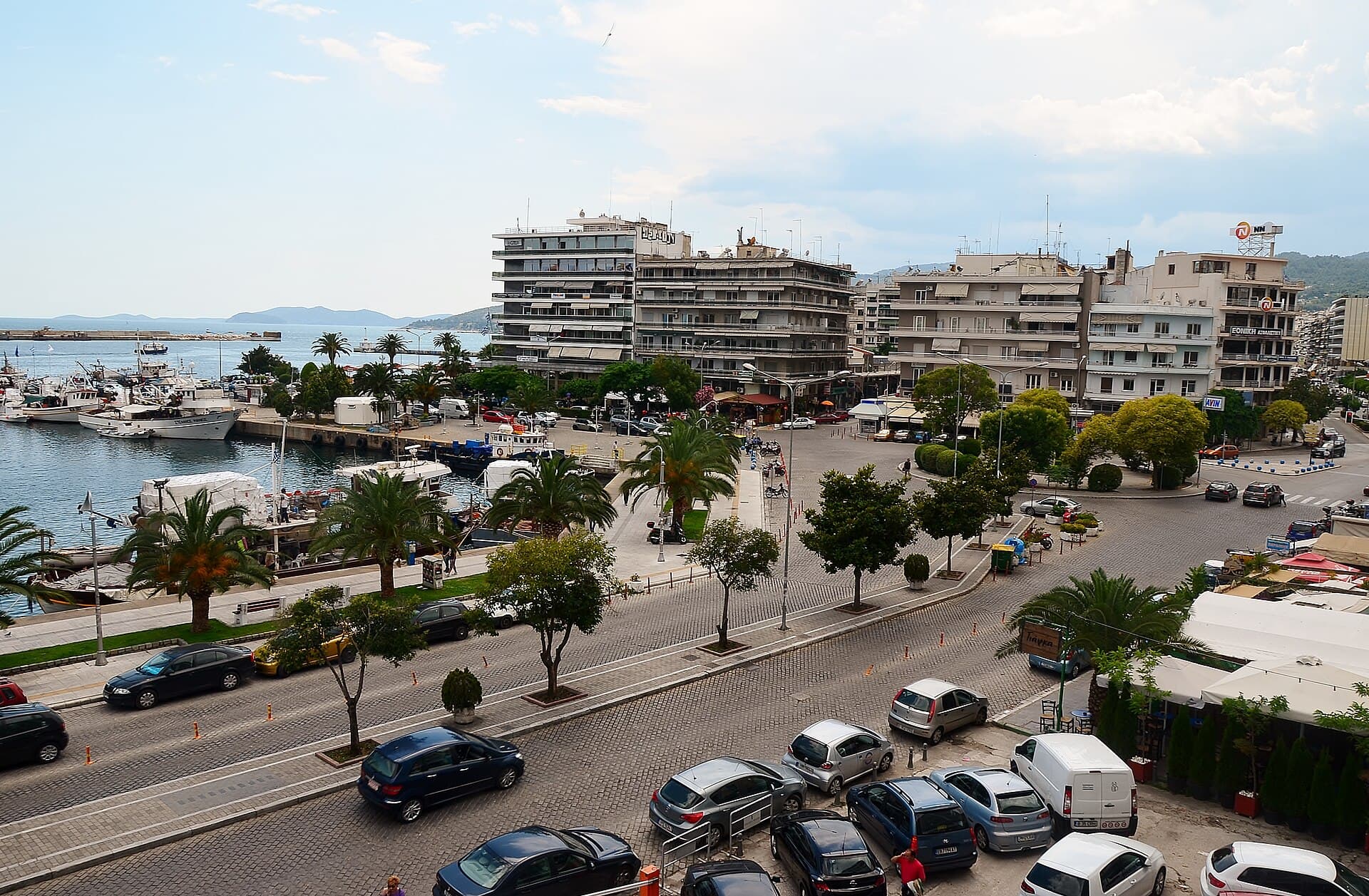
Kavala, a captivating port city in northern Greece, unfolds like an amphitheater around its natural harbor on the Aegean Sea. This coastal destination, often overlooked by those flocking to more famous Greek locations, offers a compelling blend of history, culture, and scenic beauty. With colorful houses climbing the hillside and historic landmarks overlooking the waterfront, Kavala provides an authentic Greek experience without the overwhelming crowds.
Its strategic location at the crossroads of Europe and Asia has shaped its identity, resulting in a fascinating fusion of Western and Eastern influences visible in its architecture and atmosphere. From ancient roots as Neapolis to its Byzantine and Ottoman chapters, Kavala invites exploration, promising a journey through centuries of captivating stories.
Whether you're drawn to archaeological sites, a lively food scene, or simply the serene beauty of the Aegean, Kavala presents a rewarding discovery for the discerning traveler.
## From Ancient Neapolis to Ottoman Grandeur Kavala's story begins in the 7th century BC, when settlers from the island of Thassos established a colony called Neapolis, meaning "New City." Its strategic coastal position, coupled with access to rich gold and silver mines in the nearby Pangaion mountain, quickly made it a thriving hub for trade and military activities. This early importance was further cemented when the Apostle Paul passed through in AD 49, marking Kavala as a crucial point in the spread of Christianity in Europe.
Under Roman rule, Neapolis became a civitas and an important station along the Via Egnatia, an ancient Roman road connecting the Adriatic Sea to the Bosphorus. The city later became known as Christoupolis, or "City of Christ," during the Byzantine era. However, its history was marked by periods of destruction and rebuilding, including its capture and devastation by the Turks in 1387.
The Ottoman Empire's influence profoundly shaped Kavala, with the city remaining under Ottoman rule until 1912. During this period, significant infrastructure was restored and built, including the iconic Kamares Aqueduct in the early 16th century, ordered by Sultan Suleiman the Magnificent. Another notable figure from this era is Muhammad Ali Pasha, born in Kavala in 1769, who would later become the founder of modern Egypt. His former residence and the Imaret, an Ottoman charitable complex he founded, stand as testaments to his legacy.
## The Tobacco Boom and Modern Kavala By the mid-19th century, Kavala experienced a "Golden Age" driven by the tobacco trade, earning it the nickname "Mecca of Tobacco." The city's port and its proximity to areas cultivating high-quality tobacco made it a major processing and export center in the Balkans. This prosperity is still evident in the city's architecture, with elegant neoclassical mansions and numerous large tobacco warehouses, many of which are now repurposed for cultural events or as shopping centers.
Following the Greco-Turkish War of 1919–1922, Kavala saw a significant influx of Greek refugees from Anatolia, which further boosted its labor force and the tobacco industry. In 1934, Kavala made headlines by electing Greece's first communist mayor, Dimitrios Partsalidis, earning it the temporary moniker "Little Moscow." Today, Kavala remains an important economic center in Northern Greece, balancing its historical depth with a modern, authentic character.
Begin your exploration in Panagia, Kavala's Old Town, a peninsula of winding streets, colorful houses, and Ottoman-era architecture. The Kavala Fortress, a 15th-century Ottoman citadel built on Byzantine ruins, crowns the peninsula and offers sweeping views of the city, harbor, and Aegean Sea.
Walk beneath the grand arches of the Kamares Aqueduct, a 16th-century Ottoman engineering marvel that once supplied water to the old city. Visit the Imaret, a striking early 19th-century Ottoman complex founded by Muhammad Ali Pasha, now a luxury hotel but still a significant landmark. Nearby, explore the House of Muhammad Ali, his birthplace, which now functions as a museum.
Delve into Kavala's industrial past at the Tobacco Museum and the Municipal Tobacco Warehouse, an Ottoman neoclassical building now used as a cultural venue. Just a short drive north of the city lies the Archaeological Site of Philippi, a UNESCO World Heritage site where Apostle Paul established the first Christian church in Europe, featuring Roman ruins including a forum, theater, and basilicas. For a calming break, head to Rapsani Beach, a convenient city beach with clear waters and soft sand.
The ideal times to visit Kavala are during spring (April-May) and fall (September-October). Temperatures are comfortable, ranging from 20-27°C, and the crowds are minimal. Spring brings blooming wildflowers and nearly empty beaches, while fall offers warm sea temperatures and beautiful golden light. Summer (June-August) is peak season, with temperatures often exceeding 30°C and a lively atmosphere, though Kavala remains less crowded than many Greek islands. For those seeking tranquility, winter (December-February) provides a quieter experience.
Kavala is a compact city, easily explored on foot, especially the city center and the old Panagia district. While the city center is generally flat, many streets outside this area, particularly in Panagia, can be steep. Local buses connect the city center to beaches and nearby villages, with tickets typically costing €1-2. Taxis are available, but pre-booking is recommended for airport transfers.
Kavala International Airport (KVA) is about 30 km from the city center. Alternatively, you can fly to Thessaloniki and take a 1.5-hour drive or bus to Kavala. Ferry services connect Kavala to the nearby island of Thassos and other North Aegean islands. The official currency is the Euro (€), and the official language is Greek, though many locals speak English. The electrical current is 230V AC (50Hz), so North American devices will require a converter, and UK devices an adapter.