Kaunas Old Town
Beneath the time-worn stones of Kaunas' Old Town, a legend speaks of a city even older and more beautiful.
Full story unlocks in the tour
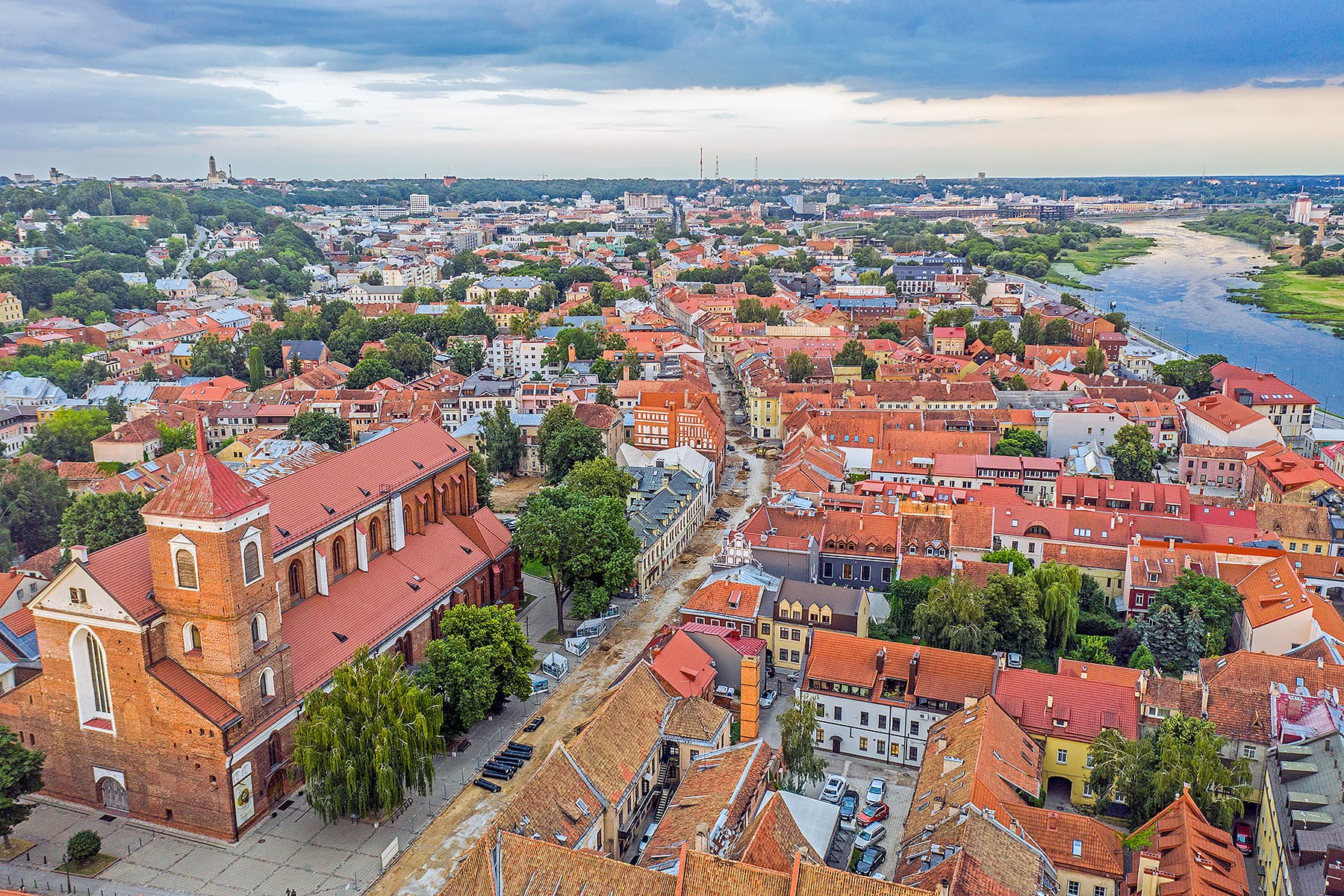 BigHead / CC BY-SA 4.0, via Wikimedia Commons
“Kaunas: Where interwar modernism meets ancient echoes and an unexpected spirit.”
Not the postcards. The stories even locals don't know — whispered in your ear, right where they happened.
Beneath the time-worn stones of Kaunas' Old Town, a legend speaks of a city even older and more beautiful.
The enduring Kaunas Castle safeguards a secret concerning a forgotten army, perpetually awaiting a call to defend.
One of Kaunas' charming funiculars offers a ride that feels like a journey through time, also connecting to a distinctive vantage point.
Discover every secret of Kaunas
Every address, every reveal in full — in your ear, right where it happened.
You pick your stops. You walk. The voice reveals what the others miss.
No tours available yet. Check back soon — we're preparing them.
Kaunas, Lithuania's second-largest city, is a captivating destination where centuries of history converge with a dynamic contemporary spirit. Situated at the confluence of the Nemunas and Neris rivers, the city offers a distinct appeal, often described as a less crowded yet enriching alternative to Vilnius. From its medieval Old Town to its celebrated interwar modernist architecture, Kaunas presents a compelling narrative of resilience and cultural evolution.
Designated as a European Capital of Culture in 2022, Kaunas has embraced its identity as a 'Contemporary Capital,' showcasing a lively arts scene, distinctive museums, and an abundance of street art. The city's pedestrian-friendly avenues, bustling cafes, and riverside walks invite exploration, revealing a blend of historical depth and modern creativity. Whether you are drawn to its architectural heritage, its unique cultural offerings, or simply the authentic atmosphere, Kaunas promises a memorable experience that resonates with the genuine spirit of Lithuania.
Kaunas's origins trace back to a fortress established around 1030, though its first written mention appears in 1361, coinciding with the construction of the brick Kaunas Castle. This strategic stronghold, positioned at the confluence of the Nemunas and Neris rivers, served as a crucial defense against the Teutonic Order. Despite being captured and destroyed by the Teutonic Order in 1362, the castle was rebuilt, underscoring the city's enduring importance.
In 1408, Grand Duke Vytautas the Great granted Kaunas city rights, solidifying its status and fostering its growth as a significant river port and trade center. By 1441, Kaunas joined the Hanseatic League, establishing the only Hanseatic merchant office in the Grand Duchy of Lithuania and becoming a vital hub for trade with Western Europe. The 15th and 16th centuries marked a period of prosperity, with the development of numerous craft guilds, a public school, and a hospital. However, the city faced severe setbacks in the 17th and 18th centuries due to wars, occupation, and plague epidemics.
Kaunas gained renewed prominence in 1843 when it became the capital of the newly formed Kovno Governorate under the Russian Empire, which had acquired the city in 1795. The late 19th century saw the city fortified with a ring of defensive structures, including forts, batteries, and barracks, making it a first-class military fortress. A pivotal chapter in Kaunas's history unfolded between 1920 and 1939 when, with Vilnius under Polish control, it served as the temporary capital of independent Lithuania. This 'Golden Age' saw rapid expansion, a surge in population, and the construction of many public and private buildings, leading to the development of its distinctive modernist architectural style, which has since earned European Heritage status and is on its way to UNESCO recognition.
The city endured significant damage and loss of life during World War II and subsequent Soviet occupation, with tens of thousands killed or exiled. Despite these hardships, Kaunas remained a center of Lithuanian national sentiment and culture, even experiencing nationalist riots in 1972. Today, Kaunas stands as a modern educational and manufacturing hub, cherishing its profound past while embracing its role as a dynamic contemporary city.
Begin your exploration in Kaunas Old Town, a delightful area with winding streets, colorful houses, and numerous churches. The Kaunas Town Hall, affectionately known as 'The White Swan,' stands prominently in the center of the Old Town Square. Nearby, the ruins of the 14th-century Kaunas Castle offer a glimpse into the city's defensive past.
Stroll along Laisvės Alėja (Freedom Avenue), a wide, pedestrianized boulevard lined with linden trees, perfect for enjoying the city's cafe culture. Discover Kaunas's celebrated interwar modernist architecture, particularly prominent in the New Town, which has earned a European Heritage label and is on its way to UNESCO World Heritage status. Do not miss the Church of St. Michael the Archangel, with its imposing presence.
For distinctive experiences, visit the Devil's Museum, home to a collection of over 2,000 devil-themed artifacts from around the world. Explore Kiemo Galerija (Yard Gallery), an open-air art space where local artist Vytenis Jakas and residents have transformed courtyard walls into canvases. Ride one of the city's two funiculars, the Aleksotas Hill Funicular or the older Žaliakalnis Funicular, for expansive views. The Ninth Fort Museum offers a sobering but essential insight into Lithuania's 20th-century history. Just outside the city, the 17th-century Baroque Pažaislis Monastery, overlooking the Kaunas Reservoir, is an architectural marvel.
The best time to visit Kaunas for warm-weather activities is from late June to late August, when temperatures are comfortable, ranging between 65°F and 80°F (18°C-27°C). This peak season offers long daylight hours and a bustling cultural scene with numerous outdoor events and festivals, though it can also be busier with higher prices.
May and September are excellent shoulder months, offering cooler temperatures (14-20°C) with fewer crowds and often sunny weather. October brings beautiful foliage to the city's parks. While winter (December-February) is cold with snow, it can be a picturesque time to visit, especially for Christmas markets, if you are prepared for temperatures averaging -7°C.
Kaunas is easily accessible, with Kaunas Airport (KUN) serving as Lithuania's second-busiest airport, located 14 km northeast of the city center. Ryanair is a main carrier, with direct flights to over 20 European cities. A bus (No. 29) connects the airport to the city center, and taxis are also available. For those arriving from Vilnius, frequent buses and trains offer a convenient 1.5 to 2-hour journey.
Within Kaunas, public transport consists of an extensive network of buses and trolleybuses, operating generally from 4:30 a.m. to 10:30 p.m., with night buses on weekends. Single-use paper tickets can be purchased from the driver for 1 EUR, or you can use a prepaid electronic card (e-ticket) available at newspaper stands. The 'Žiogas' app is recommended for purchasing cheaper tickets and checking routes and schedules. The official language is Lithuanian, and the currency is the Euro.