The Maha Devale
The main shrine at Kataragama holds a powerful secret, one that defies typical temple iconography.
Full story unlocks in the tour
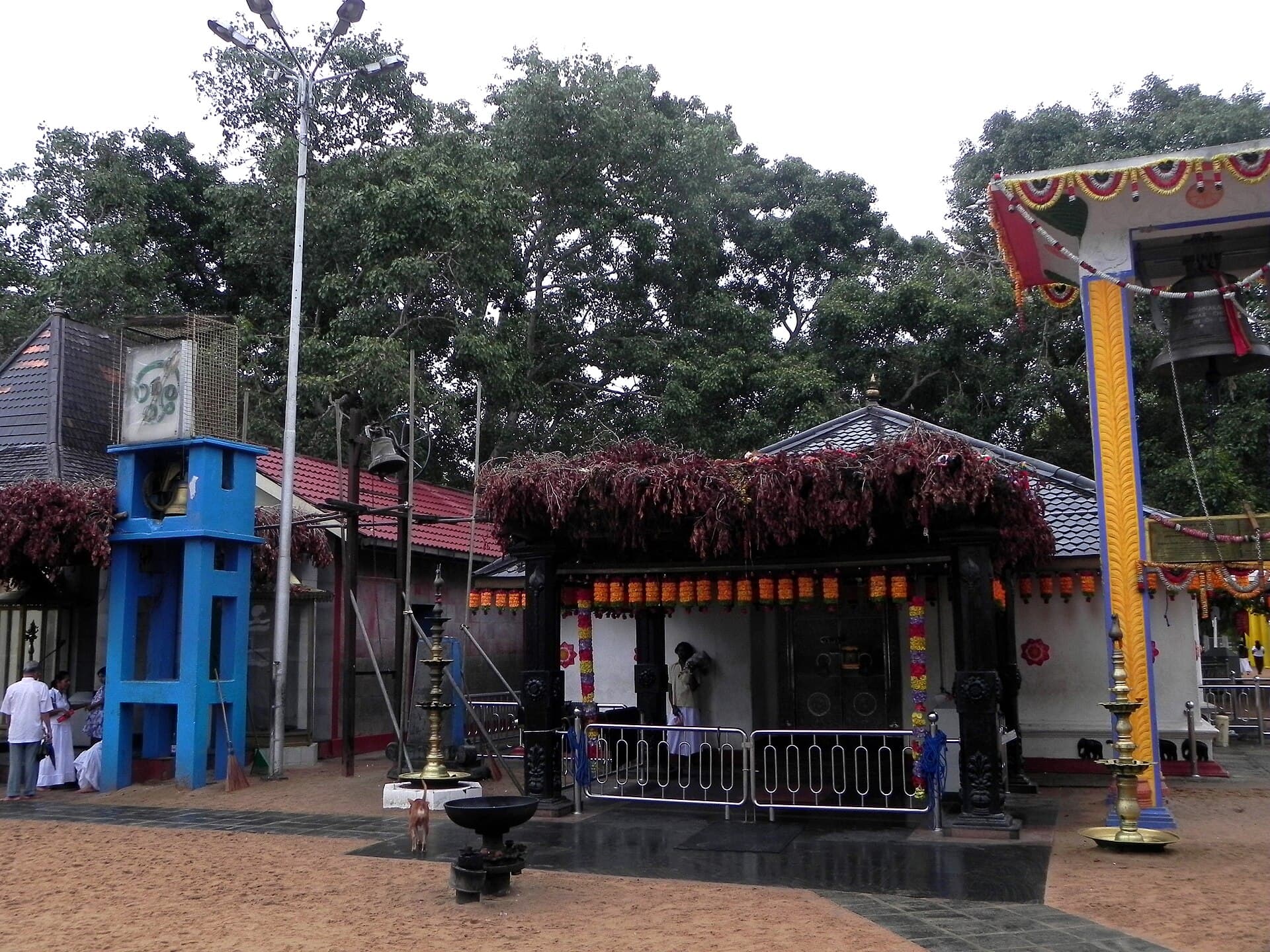 Ghostface Buddha / CC BY-SA 2.0, via Wikimedia Commons
“Where ancient faiths converge in a symphony of devotion.”
Not the postcards. The stories even locals don't know — whispered in your ear, right where they happened.
The main shrine at Kataragama holds a powerful secret, one that defies typical temple iconography.
Locals believe the waters of the Menik Ganga offer more than just spiritual cleansing.
Among the lively processions and rituals, one particular act of devotion stands out for its intensity.
Discover every secret of Kataragama
Every address, every reveal in full — in your ear, right where it happened.
You pick your stops. You walk. The voice reveals what the others miss.
No tours available yet. Check back soon — we're preparing them.
Kataragama, in Sri Lanka's southeastern Uva province, is a sacred pilgrimage town revered by Buddhists, Hindus, Muslims, and the indigenous Vedda people. It stands as a powerful symbol of religious harmony, where diverse traditions converge within a single complex. Once a challenging jungle shrine, Kataragama is now accessible by road, drawing pilgrims and curious travelers alike to its unique spiritual atmosphere.
This town is not merely a collection of ancient sites; it's a living, breathing center of faith where the sounds of prayer, the scent of incense, and the footsteps of devotees create an immersive experience. Beyond its religious significance, Kataragama serves as a gateway to the wild southeast of Sri Lanka, offering proximity to national parks, rivers, and forests for those seeking a blend of spiritual journey and natural exploration.
The history of Kataragama stretches back millennia, with archaeological evidence suggesting its importance long before formal records. The nearby Kiri Vehera stupa, for instance, is believed to have been built or renovated around the 1st century BCE. Ancient chronicles, such as the 5th-century Buddhist text Mahawamsa, mention "nobles of Kajaragama" present at the planting of the sacred Bodhi Tree in Anuradhapura in the 3rd century BCE, indicating its early significance.
By the 15th century, Kataragama had become a popular pilgrimage site for Hindus from Sri Lanka and South India. The medieval phase of the shrine's history is often linked to the arrival of Kalyanagiri Swamy from North India in the 16th or 17th century, who re-established the forest shrine and its mythic associations. This revival attracted both Indian and Sri Lankan Hindu devotees, as well as local Sinhala Buddhists.
Over the centuries, the cult of Kataragama Deviyo, the presiding deity, became increasingly popular among the Sinhalese, who recognize him as one of their guardian deities. Legends associate King Dutugamunu (2nd century BCE) with the construction of a shrine to Kataragama Deviyo after his victory over King Elara, fulfilling a vow. The site officially gained recognition as a holy place by the Sri Lankan government in the 1950s, leading to further development and increased patronage. Today, Kataragama continues to evolve, with its unique multi-faith character remaining a central aspect of its enduring appeal.
The heart of Kataragama is its sacred complex, where multiple faiths coexist. The Ruhunu Maha Kataragama Devalaya, or Maha Devale, is the primary shrine dedicated to Kataragama Deviyo (Lord Murugan). It's unique for housing a yantra—a spiritual drawing—rather than a statue of the deity. Adjacent to it, you'll find shrines dedicated to Lord Ganesha, Vishnu, and the Buddha.
A short walk from the main temple is the Kiri Vehera, an ancient white Buddhist stupa believed to have been built by King Mahasena in the 3rd century BCE. Pilgrims often visit this site, which is considered one of the 16 principal places of Buddhist pilgrimage in Sri Lanka.
The Menik Ganga, or River of Gems, flows through Kataragama, and its banks serve as a significant site for ritual bathing. Pilgrims cleanse themselves in its waters before entering the temple complex, a practice believed to offer both spiritual purification and healing properties.
Also within the complex is a mosque, the Ul-Khizr Mosque, which underscores the town's inter-faith fabric. For a deeper understanding of the region's heritage, the Kataragama Museum offers a glimpse into local history and artifacts.
The most lively time to experience Kataragama is during the annual Esala Perahera festival, typically held in July or August, coinciding with the Esala full moon. This two-week spectacle features elaborate processions with decorated elephants, traditional dancers, fire jugglers, and ancient rituals, culminating in the renowned fire-walking ceremony. While it's an immersive cultural experience, expect large crowds and higher accommodation prices.
For a quieter visit with pleasant weather, the months from December to March are ideal, offering dry conditions and moderate temperatures. January, February, and March are also recommended. The "Golden Window" of December to March offers pleasant temperatures and manageable crowds.
Kataragama is accessible by road, with frequent bus services connecting it to major cities like Colombo, Matara, and Hambantota. The nearest railway station is Beliatta, requiring an onward bus or taxi journey. Once in Kataragama, most key sites within the temple complex are within walking distance, and tuk-tuks are readily available for longer distances.
Modest dress is essential when visiting temples and sacred sites: shoulders and knees must be covered. Removing shoes, hats, and sunglasses before entering the temple complex is also required. Light, comfortable cotton clothing is recommended due to the warm climate. If planning to bathe in the Menik Ganga, bring suitable bathing attire and an extra set of dry, modest clothes for after.
Accommodation options range from simple guesthouses for pilgrims to more comfortable hotels, with booking in advance recommended, especially during festival periods. While generally safe, it's wise to be aware in crowded areas, particularly during festivals.