The grand 19th-century manor now housing Joinville's National Museum of Immigration and Colonization was built for royalty, yet its intended occupants never stepped inside.
Unknown author / CC BY-SA 2.5, via Wikimedia CommonsJoinville
“Where European heritage intertwines with Brazilian spirit.”
Joinville, as no one tells it.
Not the postcards. The stories even locals don't know — whispered in your ear, right where they happened.
For years, Joinville had an unusual, scaly resident that played a surprising role in the city's environmental efforts.
Joinville is home to an institution of classical ballet, a presence one would expect to find only in one other, very distant, global city.
Discover every secret of Joinville
Every address, every reveal in full — in your ear, right where it happened.
You pick your stops. You walk. The voice reveals what the others miss.
How long do you have in Joinville?
No tours available yet. Check back soon — we're preparing them.
The story of Joinville
Joinville, the largest city in the southern Brazilian state of Santa Catarina, offers a compelling blend of industrial strength and profound cultural inheritance. Often referred to as the "Brazilian Manchester" due to its significant industrial and economic stature, the city is also known by more evocative titles like "City of Flowers" and "City of Dance." This distinctive identity arises from a fascinating history of European immigration, predominantly German, Swiss, and Norwegian, which has left an enduring impression on its architecture, cuisine, and customs.
Beyond its economic drive, Joinville provides visitors with a unique experience, where urban development coexists with preserved Atlantic Forest landscapes. The city's dedication to arts and culture is clear in its internationally acclaimed annual Dance Festival, recognized as the largest of its kind globally. Whether exploring its historical foundations, enjoying its green spaces, or immersing oneself in its lively cultural scene, Joinville delivers a surprisingly European yet authentically Brazilian journey.
From Royal Dowry to Industrial Powerhouse
The land that would become Joinville was originally part of a dowry in 1843, a wedding gift to Princess Francisca of Brazil, sister of Emperor Pedro II, upon her marriage to François d'Orléans, Prince de Joinville. Despite this royal connection, the Prince himself never actually visited the land.
The city's official founding date is March 9, 1851, when the first 191 European immigrants, primarily from Germany and Switzerland, arrived to establish the Colônia Dona Francisca. Soon after, Norwegian immigrants also settled in the area. In 1852, the settlement was officially renamed Joinville in honor of Princess Francisca's husband. Between 1851 and 1888, approximately 17,000 German immigrants, many of them Lutheran peasants, settled in Joinville, followed by waves of Italian families.
Life for these early settlers was arduous, with many facing illness. However, their persistence laid the foundation for the city's future. Joinville rapidly transitioned from an agrarian colony to an industrial center, earning the moniker "Brazilian Manchester" due to its economic and technological leadership. The city was established as a municipality in 1887.
Today, Joinville is a significant hub for industries such as compressor and refrigeration manufacturing, auto parts, chemicals, and plastics. Its strategic location near major ports and a skilled workforce have contributed to its impressive economic growth. The city maintains a high quality of life, ranking among the best in Brazil. The European influence remains visible in its architecture, local cuisine, and numerous festivals, including the annual Joinville Dance Festival, which began in 1982 and is recognized as the largest dance festival in the world.
Begin your exploration at the National Museum of Immigration and Colonization (Museu Nacional de Imigração e Colonização), housed in the historic Prince's House, a 19th-century manor that offers a glimpse into the city's European origins. Walk along the picturesque Rua das Palmeiras, a palm-lined street leading to the museum. For sweeping city views, ascend to the Mirante do Morro da Boa Vista, an observation deck 250 meters above the city, providing a 360-degree perspective of Joinville and Babitonga Bay.
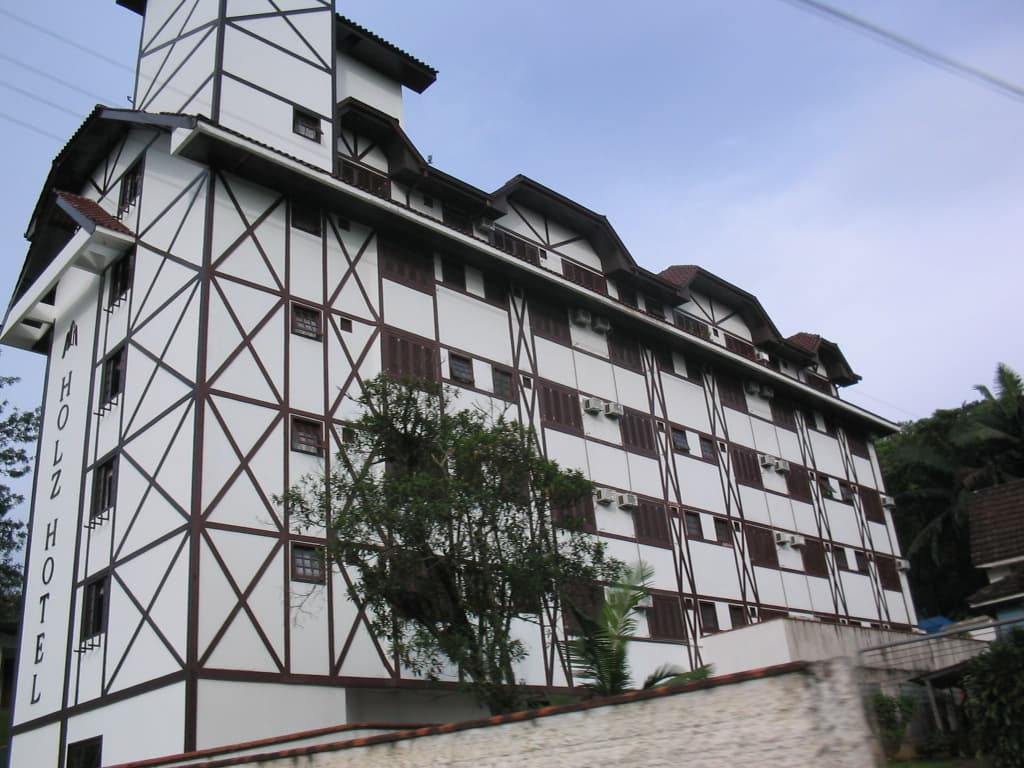
Immerse yourself in the performing arts at the Bolshoi Ballet School, the only branch of the renowned Russian institution outside of Russia. The city also offers the Joinville Museum of Art (Museu de Arte de Joinville) and the Juarez Machado International Institute, dedicated to the celebrated local artist. For a deeper dive into ancient history, visit the Sambaqui Archaeological Museum of Joinville (Museu Arqueológico de Sambaqui de Joinville), which preserves artifacts from prehistoric shell mounds. Nature enthusiasts can explore the Zoobotanical Garden (Zoobotânico Joinville) with its collection of local flora and Brazilian animals, or venture to Caiera Park for walking trails and views of Babitonga Bay. Consider a drive along the charming Estrada Bonita (Beautiful Road), known for its timber-framed houses and homemade colonial breakfast offerings.
Joinville experiences a humid subtropical climate with distinct seasonal changes. For warm-weather activities and general outdoor tourism, the most pleasant times to visit are from mid-April to late June and from late July to late September. The city's celebrated Joinville Dance Festival takes place annually in late July. Summers (December to March) are the warmest and wettest, with frequent rainfall. Winters (June to August) are cooler and drier, with July being the coldest month.
Joinville-Lauro Carneiro de Loyola Airport (JOI) offers flights to major Brazilian cities like São Paulo. Taxis are a convenient way to get from the airport to the city center, taking approximately 25 minutes. Within the city, you can navigate by foot, direct buses, or taxis. Joinville is generally considered one of the safer major cities in Brazil, but standard urban precautions apply; secure your belongings and avoid poorly lit areas at night. The primary language is Portuguese, and while there's a strong German heritage, do not assume locals speak German or English. It's advisable to drink filtered or bottled water. Hotel prices are generally reasonable, except during the Joinville Dance Festival in July, when occupancy rates are high and prices can increase significantly.
- What is Joinville known for?
- Joinville is widely recognized as the "City of Dance" due to its annual, internationally acclaimed dance festival, and for being home to the only Bolshoi Ballet School outside of Russia. It's also known as the "Brazilian Manchester" for its strong industrial economy and as the "City of Flowers."
- What is the best way to get around Joinville?
- You can get around Joinville by foot, direct buses, or taxis. The city also has bike paths for cycling enthusiasts.
- Is Joinville safe for tourists?
- Joinville is considered one of the safer major cities in Brazil. However, it's always wise to take standard urban precautions, such as keeping belongings secure and avoiding poorly lit areas at night.
- What language is spoken in Joinville?
- The primary language spoken in Joinville is Portuguese. While the city has strong German roots, it is not common for everyone to speak German or English.
- Are there beaches near Joinville?
- Yes, there are beaches near Joinville. Popular coastal towns like Barra Velha, Piçarras, and Balneário Camboriú are within an hour's drive. Vigorelli Beach is also a safe place for swimming.
- What kind of food can I expect in Joinville?
- Joinville's cuisine reflects its European heritage, particularly German influences. You can expect hearty food and traditional colonial breakfasts, often featuring homemade breads, cheeses, and preserves.