Sultan Abu Bakar State Mosque
This grand mosque, a prominent landmark, holds a surprising architectural secret.
Full story unlocks in the tour
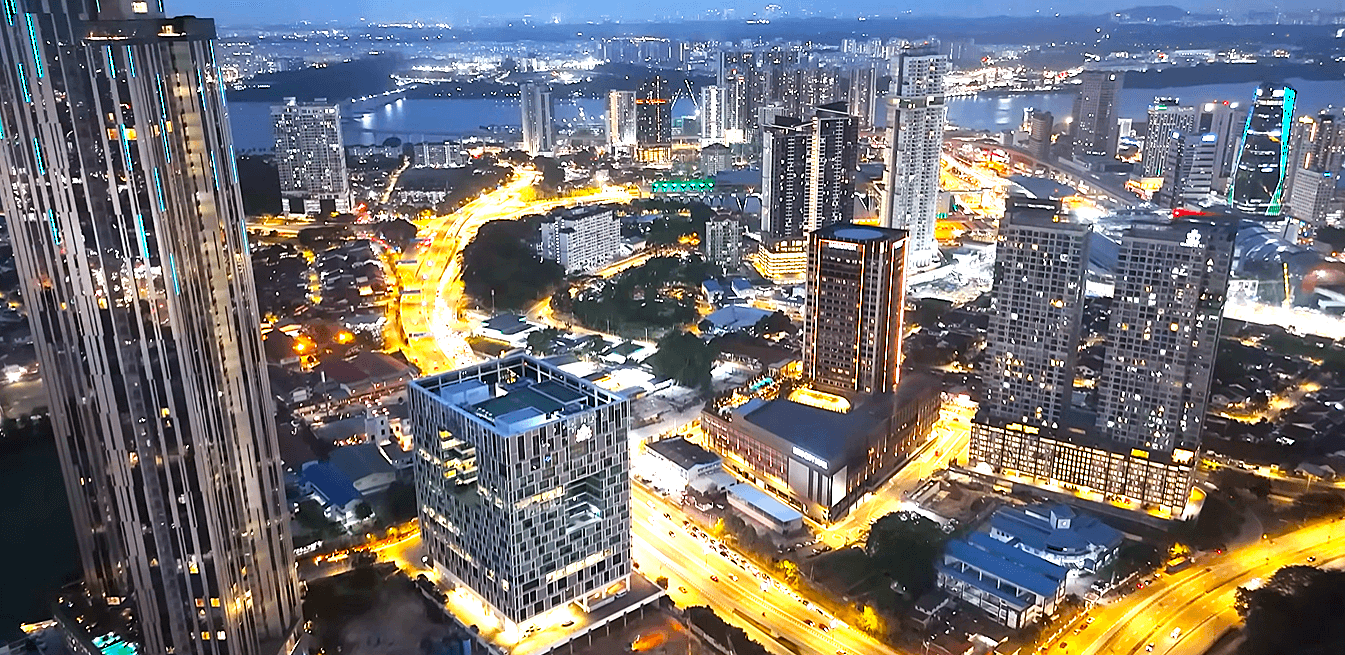 Malaysia Skyline / CC BY 4.0, via Wikimedia Commons
“Where the echoes of history meet the hum of a modern city, just across the strait.”
Not the postcards. The stories even locals don't know — whispered in your ear, right where they happened.
This grand mosque, a prominent landmark, holds a surprising architectural secret.
One of the city's oldest religious sites, this temple is more than just a place of worship.
The former royal palace offers a glimpse into the opulent lives of Johor's sultans, but its public opening was a significant shift.
Discover every secret of Johor Bahru
Every address, every reveal in full — in your ear, right where it happened.
You pick your stops. You walk. The voice reveals what the others miss.
No tours available yet. Check back soon — we're preparing them.
Johor Bahru, often called JB, is the active capital of the Malaysian state of Johor, located at the southern tip of Peninsular Malaysia. Separated from Singapore by the Johor Strait, it serves as a vital gateway, holding one of the world's busiest international land border crossings. Once a humble fishing village known as Tanjung Puteri, Johor Bahru has transformed into a rapidly developing urban center, a spirited blend of tradition and modernity.
This dynamic city is a crossroads of cultures, with Malay, Chinese, and Indian communities contributing to its varied heritage, evident in its architecture, cuisine, and festivals. From historical landmarks that narrate its past to contemporary shopping malls and entertainment hubs, Johor Bahru offers a multifaceted experience for visitors. It's a city that invites exploration, where the echoes of its past resonate amidst the pulse of its present.
The area now known as Johor Bahru was originally a Malay fishing village called Tanjung Puteri. Its transformation began in 1855 with Temenggong Daeng Ibrahim establishing a settlement here. In 1866, his son, Sultan Abu Bakar, moved the capital of his sultanate to this location, officially renaming it Johor Bahru, meaning "New Johor." Sultan Abu Bakar is widely recognized as the "Father of Modern Johor" for his significant efforts in modernizing the state and developing the city.
During Sultan Abu Bakar's reign between 1886 and 1895, Johor Bahru saw considerable modernization, including the construction of administrative centers, offices, schools, and railways connecting to Woodlands, Singapore. The city's growth was further fueled by the development of agriculture, which attracted a large workforce of Chinese and Indian laborers, laying the foundation for its enduring cultural diversity. The completion of the Johor–Singapore Causeway in 1924 further solidified its connection to Singapore, facilitating travel and trade.
Johor Bahru faced occupation by Japanese forces during the Pacific War. In the post-war era, it became a significant center for Malay nationalism, notably with the formation of the major political party, UMNO, at the Istana Besar in 1946. The city officially attained city status on January 1, 1994, marking its evolution into a major metropolis. Since 2006, Johor Bahru has been a key part of Iskandar Malaysia, the nation's largest special economic zone, driving further development and investment.
Begin your exploration at the Sultan Abu Bakar State Mosque, a striking architectural landmark blending Victorian and Moorish styles, offering views of the Johor Strait. Nearby, the Royal Abu Bakar Museum, housed in the former Istana Besar palace, showcases the royal family's extensive collection and offers a glimpse into Johor's regal past. Delve into the city's multicultural fabric at the Johor Bahru Old Chinese Temple, one of the oldest religious structures, and the Arulmigu Sri Rajakaliamman Glass Temple, a mesmerizing Hindu temple adorned with colorful glass mosaics. For a deeper understanding of the Chinese community's contributions, visit the Chinese Heritage Museum.
For shopping and entertainment, Johor Bahru City Square and Komtar JBCC are popular choices, conveniently located near the immigration checkpoint. Other major malls include KSL City Mall, Mid Valley Southkey, and Paradigm Mall JB, offering a wide array of retail, dining, and leisure options. Families can enjoy theme parks like LEGOLAND Malaysia Resort and Adventure Waterpark Desaru Coast for a day of thrills. For outdoor activities, consider go-karting at RUD Karting Centre or ATV riding at ATV Park Johor Bahru.
Johor Bahru experiences a tropical rainforest climate, meaning it's generally hot and humid throughout the year, with average temperatures ranging from 25°C to 32°C (77°F to 90°F). Rain is common, particularly during the monsoon seasons from May to September and November to January. While the city is a year-round destination, avoiding the heaviest monsoon periods might enhance outdoor activities. However, indoor attractions like shopping malls and museums remain comfortable regardless of the weather.
For most nationalities, visa-free entry to Malaysia for tourism or business is granted for periods of 30 or 90 days. However, it's essential to check specific visa requirements based on your nationality and ensure your passport is valid for at least six months beyond your entry date, with at least one blank page. All foreign nationals, except Malaysian permanent residents, long-term pass holders, and diplomatic passport holders, are required to complete the Malaysia Digital Arrival Card (MDAC) prior to arrival.
Staying connected is easy with various SIM card and eSIM options available. Major carriers like Maxis, CelcomDigi, and U Mobile offer good coverage, with kiosks at Senai International Airport and convenience stores. While generally safe, especially in well-lit, busy areas like major malls and heritage streets, it's advisable to be aware of your surroundings, particularly at night, and to keep valuables secure. Emergency services can be reached by dialing 999 for police and ambulance.