Imperial Kiln Factory
During the Ming Dynasty, the Imperial Kiln Factory had a ruthless quality control measure for porcelain destined for the emperor.
Full story unlocks in the tour
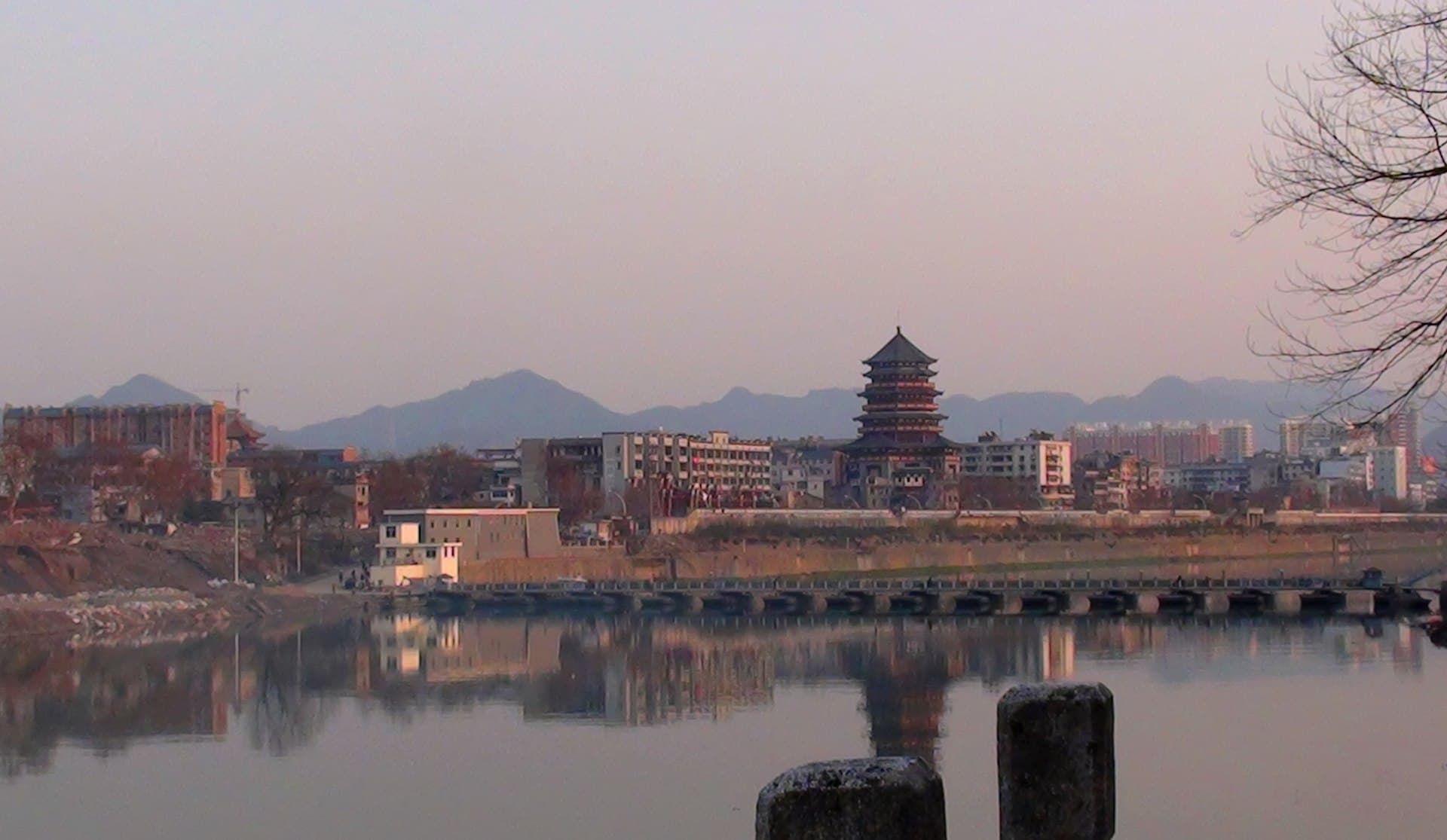 JHH755 / CC BY-SA 3.0, via Wikimedia Commons
“Where earth and fire converge, revealing stories in porcelain.”
Not the postcards. The stories even locals don't know — whispered in your ear, right where they happened.
During the Ming Dynasty, the Imperial Kiln Factory had a ruthless quality control measure for porcelain destined for the emperor.
The very material that gave porcelain its global name has a surprising origin story, far from the grand imperial kilns.
Even today, a walk through Jingdezhen offers a unique auditory experience that speaks to centuries of craftsmanship.
Discover every secret of Jingdezhen
Every address, every reveal in full — in your ear, right where it happened.
You pick your stops. You walk. The voice reveals what the others miss.
No tours available yet. Check back soon — we're preparing them.
Jingdezhen, in China's Jiangxi Province, has been known as the "Porcelain Capital" for over a millennium, a city deeply intertwined with the creation of ceramics. Its history of pottery production stretches back as far as the 6th century CE, and by the 14th century, it had become the largest center for Chinese porcelain. The city's enduring legacy is built upon its unique geological resources, including high-quality kaolin clay and porcelain stone, along with abundant wood for kilns and convenient river transport.
Beyond its historical significance, Jingdezhen today is a lively hub where ancient techniques meet contemporary artistry. The city is home to numerous workshops, museums, and galleries, attracting artists and enthusiasts from around the world. From exploring ancient kiln sites to participating in hands-on pottery workshops, visitors can immerse themselves in the intricate process of porcelain making and witness the fusion of tradition and innovation.
Jingdezhen's influence extends globally, with its porcelain having traveled the world via the Silk Road and even inspiring the English word "china" for porcelain itself. It is a place where every street, every alley, and even the streetlights made of ceramics, tell a story of a craft perfected over centuries.
The origins of ceramic production in Jingdezhen can be traced back to the Han dynasty (206 BCE–220 CE), when the city, then known as Xinping, produced "blue pottery with glaze." By the Tang dynasty (618–907 CE), Jingdezhen's ceramic industry was already prominent, and it was during this period that white porcelain makers, fleeing conflict in the north, migrated to the region, contributing to the development of a bluish-white porcelain known as Qingbaici. The city's most significant period of growth began in the Song dynasty (960–1279 CE). In 1004 CE, Emperor Zhenzong was so captivated by the translucent white porcelain that he ordered the inscription "made in the Jingde period" on imperial pieces, and the city was renamed Jingdezhen.
During the Song period, Jingdezhen became particularly known for its Qingbai ware, a transparent, jade-like porcelain with a bluish-white glaze, often decorated with delicate carving. The city's strategic location, with ample supplies of kaolin, porcelain stone, and wood fuel, along with access to water for transportation, fueled its rise as a porcelain powerhouse. The Yuan dynasty (1271–1368) marked a significant advancement with the birth of blue-and-white porcelain in Jingdezhen's kilns, a style that would become iconic. The Yuan court established the Fuliang Porcelain Bureau to regulate production, further solidifying Jingdezhen's importance.
The Ming dynasty (1368–1644) saw Jingdezhen become the undisputed center for porcelain making in China, with official kilns established at Zhushan to produce wares exclusively for the imperial court. The scale of production was immense, employing thousands of workers with highly specialized tasks, ensuring efficiency and consistency. A single order from the palace in 1433, for example, requested 443,500 pieces of porcelain with dragon and phoenix designs. This imperial patronage continued into the Qing dynasty (1644–1911), with the government establishing a vast ceramics factory and achieving peak perfection in ceramics production under directors like Tang Ying. However, the Imperial kilns and many surrounding kilns were destroyed during the Taiping Rebellion (1850–1864), leading to a decline in the region's ceramics industry. Despite these challenges, Jingdezhen's legacy of craftsmanship has endured, with a continuous history of ceramic production spanning over 1,700 years.
Begin your exploration at the Ancient Kiln Folk Customs Museum, an expansive area showcasing ancient Chinese kilns and offering live demonstrations of traditional porcelain-making. You can witness the world's oldest porcelain production line and even try your hand at creating a ceramic piece. Adjacent to this is the Imperial Kiln Scenic Area, a reconstructed site of Ming and Qing imperial kilns, featuring life-size replicas and a "72-step craftsmanship corridor" detailing traditional techniques. The onsite museum within this area displays imperial porcelain masterpieces.
The Jingdezhen Ceramics Museum is a key institution for understanding the city's ceramic heritage, housing over 500,000 exhibits spanning from antiquity to contemporary works. Its collection emphasizes Jingdezhen wares and offers insights into diverse styles and techniques. For a more contemporary perspective, visit Taoxichuan Creativity Square, a cultural and creative district transformed from old ceramic factories, featuring galleries, studios, design shops, and weekly creative markets where emerging artists sell their work.
Don't miss Sanbao International Ceramic Art Village, a tranquil area favored by pottery artists, with art workshops, private studios, cafes, and teahouses along a stream. You can also discover ancient ruins of a watermill that once pounded clay. For a unique shopping experience, explore Porcelain Street and the lively Taoyang New Village Night Market, where you can find a wide variety of ceramic goods.
Jingdezhen can be visited year-round due to its focus on ceramic culture. However, the autumn months, particularly from September to October, are often recommended as the best time to visit. During this period, the weather is pleasant, with average daily temperatures ranging from 13–26°C (56–78°F) and less rainfall. The annual Jingdezhen International Ceramic Fair is also held in October, offering a chance to experience the city's ceramic culture at its liveliest, though it can be crowded. Spring, from March to May, is another good option, with moderate temperatures suitable for outdoor activities, though rainfall can be high.
Jingdezhen is accessible by air, rail, and road. Jingdezhen Luojia Airport (JDZ) offers domestic flights to major Chinese cities and is approximately 8 kilometers from the city center. Jingdezhen North Railway Station is a major hub for high-speed trains, connecting the city to destinations like Shanghai, Beijing, Hangzhou, and Nanchang. Taxis are readily available and generally inexpensive for getting around the city. For a more immersive experience in areas like the Sculpture Factory and Old Factory districts, bikes and e-bikes are a good option. Public buses are available, but a reliable navigation app for local routes is not always consistent.
Accommodation is primarily concentrated in the Changjiang and Zhushan Districts. While international 5-star hotels are limited, local hotels and homestays, particularly near Taoxichuan Innovation Park and the Porcelain Sculpture Factory, offer attractive options. Mobile payments via Alipay or WeChat are widely accepted throughout the city, so ensure these apps are set up before your trip.