Jhansi Fort
The fort's impressive defenses once included a specific type of cannon that played a crucial role in a historic battle.
Full story unlocks in the tour
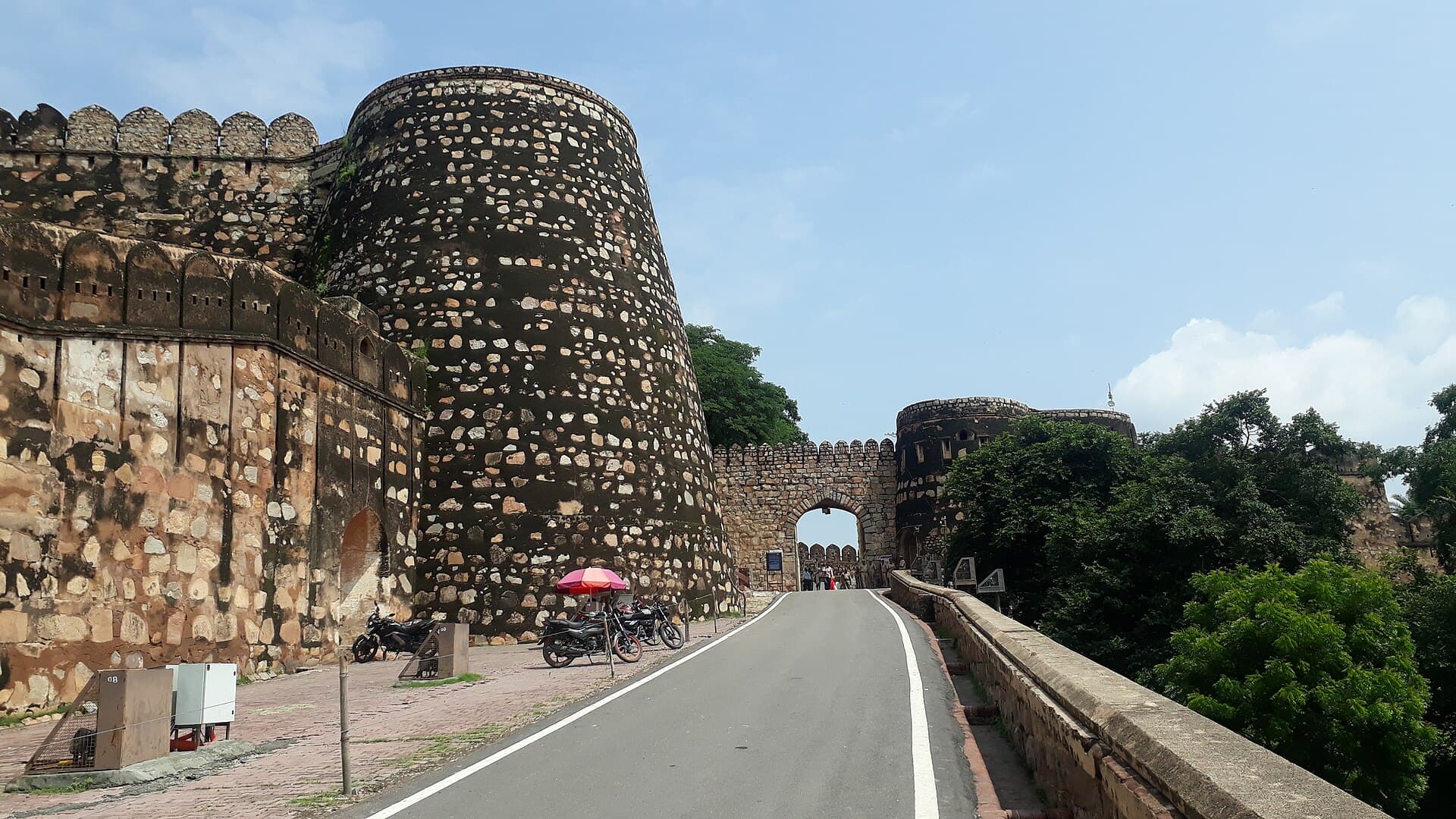 Pinakpani / CC BY-SA 4.0, via Wikimedia Commons
“Where valor echoes through ancient stones.”
Not the postcards. The stories even locals don't know — whispered in your ear, right where they happened.
The fort's impressive defenses once included a specific type of cannon that played a crucial role in a historic battle.
While its name translates to 'Queen's Palace,' the Rani Mahal in Jhansi has a surprising, almost identical counterpart with a similar romantic origin story in another country.
Beyond its role as a major transport hub, Jhansi's railway station holds a distinction that places it among the world's longest.
Discover every secret of Jhansi
Every address, every reveal in full — in your ear, right where it happened.
You pick your stops. You walk. The voice reveals what the others miss.
No tours available yet. Check back soon — we're preparing them.
Jhansi, a city in the northern Indian state of Uttar Pradesh, carries a name synonymous with courage and self-respect. Frequently referred to as the 'Gateway to Bundelkhand,' it sits strategically between the Pahunj and Betwa rivers. This historic urban area, with an estimated population exceeding 650,000, functions as a significant administrative and transport hub, where bustling traditional markets meet grand ancient forts.
Jhansi's terrain showcases rocky hills, and its architecture presents a striking contrast between its dynamic present and its storied past. It is a place where every stone seems to narrate accounts of bravery, particularly those of Rani Lakshmibai, the legendary queen who became a symbol of resistance during the Indian Rebellion of 1857. A journey to Jhansi is an invitation to traverse time, to experience the legacy of the Marathas and the British era, and to feel the rhythm of an authentic Indian city.
Beyond its historical importance, Jhansi also serves as an agricultural marketplace and home to a steel-rolling mill and other manufacturing units, underscoring its enduring economic relevance. It provides an excellent starting point for exploring the cultural treasures of central India, with nearby destinations like Orchha and Datia offering further glimpses into ancient dynasties and natural splendor.
Jhansi's origins trace back to ancient times, forming part of regions known as Chedi Rashtra and Bundelkhand. Initially named Balwant Nagar, it served as a stronghold for the Chandela kings. However, its prominence diminished in the 11th century before experiencing a resurgence in the 17th century under Raja Bir Singh Deo of Orchha.
Raja Bir Singh Deo, who maintained favorable relations with the Mughal emperor Jahangir, oversaw the construction of the formidable Jhansi Fort in 1613. The name 'Jhansi' itself is said to have originated from a comment by the Raja, who, when observing the fort from his palace in Orchha, remarked that it appeared like a 'jhain-si' (blurred shadow).
In 1729, after Maharaja Chhatrasal faced an attack from Mohammed Khan Bangash, Peshwa Baji Rao I came to his aid, leading to the defeat of the Mughal army. As a gesture of gratitude, Chhatrasal offered a portion of his kingdom, including Jhansi, to Peshwa Baji Rao. Jhansi then came under the rule of the Maratha Newalkar dynasty. Naroshanker, appointed as subedar in 1742, significantly expanded the fort, with the new section being named Shankergarh.
The city's most defining period arrived with Rani Lakshmibai, who became queen after marrying Raja Gangadhar Rao in 1842. Following her husband's death and the British annexation of Jhansi under the Doctrine of Lapse in 1853, Rani Lakshmibai famously led the resistance during the Indian Rebellion of 1857. Her heroic defense of the fort against British forces in 1858 solidified Jhansi's place in Indian history as a symbol of bravery and sacrifice. After the rebellion, Jhansi was briefly part of Gwalior State before being returned to British rule in 1886 and eventually becoming part of Uttar Pradesh in independent India.
Begin your exploration at the iconic Jhansi Fort, a 17th-century marvel constructed by Raja Bir Singh Deo. This expansive stronghold, covering 15 acres with granite walls 16 to 20 feet thick, features ten gates, including Khanderao Gate and Laxmi Gate. Inside, discover the Ganesh and Shiva temples, the 'Kadak Bijli' cannon, and a memorial marking Rani Lakshmibai's daring escape.
Next, visit Rani Mahal, the former palace of Rani Lakshmibai. This 18th-century structure, though partially damaged during the 1857 rebellion, has been restored and now functions as a museum, showcasing artifacts from the 9th century and exhibits related to the queen's life.
The Jhansi Government Museum is another essential stop, housing a collection of terracotta, bronzes, weapons, sculptures, manuscripts, paintings, and coins, with a dedicated gallery to Rani Lakshmibai. For a peaceful escape, head to Barua Sagar Tal, a lake known for its natural beauty and remnants of ancient forts and temples, located about 25 kilometers from Jhansi. You can also visit the Mahalakshmi Temple on the banks of Lakshmi Tal, an ancient temple adorned with intricate carvings of Hindu deities.
The most pleasant time to visit Jhansi is during the cooler, drier months. October to March offers ideal weather for sightseeing, with temperatures ranging from 4°C to 21°C. Specifically, pre-winters (October-November) and spring (February-March) are recommended, as the climate is perfect for outdoor activities. The popular Jhansi Festival, held in February, also draws visitors, offering an authentic cultural experience. Avoid the summer months (April to June) when temperatures can soar to 45°C, and the monsoon season (July to September) brings heavy rainfall and high humidity, making sightseeing challenging.
Jhansi is well-connected by various modes of transport. The Jhansi Junction Railway Station is a major hub, with direct train links to cities across India, including Delhi, Mumbai, and Chennai. For air travel, the nearest operational airport is Gwalior Airport, approximately 98-102 kilometers away, with Khajuraho Airport also an option at 150 kilometers. Jhansi is also accessible by road, situated at the intersection of major national highways (NH 25, NH 26, and NH 75), connecting it to cities like Delhi, Agra, and Lucknow.
Within the city, auto-rickshaws, tempos, and public buses are readily available and cost-effective for getting around. For convenience, consider negotiating fares with rickshaw drivers or using ride-sharing apps like Ola or Uber if available. Private taxis can also be hired for personal use or sightseeing tours. When visiting religious sites, it's advisable to wear modest clothing that covers shoulders and knees.