The Western Wall (Kotel)
Beyond the visible prayers, a tradition unfolds, perhaps unexpected for a place of such solemnity.
Full story unlocks in the tour
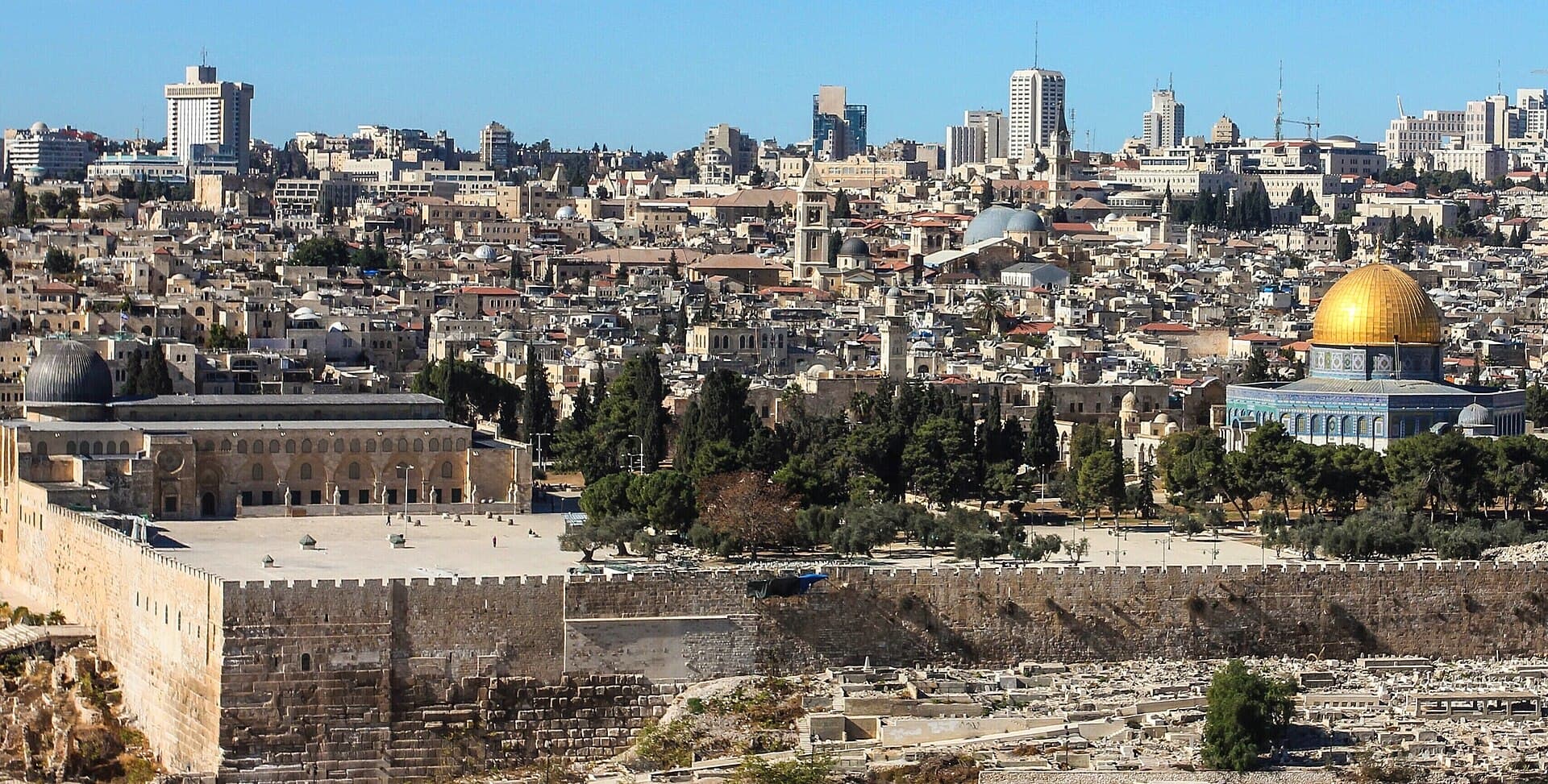 askii / CC BY-SA 2.0, via Wikimedia Commons
“Where ancient stones recount sagas of faith and empires.”
Not the postcards. The stories even locals don't know — whispered in your ear, right where they happened.
Beyond the visible prayers, a tradition unfolds, perhaps unexpected for a place of such solemnity.
The authority over Christianity's most sacred site rests not with a priest or patriarch.
The renowned golden dome does not always appear as it does in photographs.
Discover every secret of Jerusalem
Every address, every reveal in full — in your ear, right where it happened.
You pick your stops. You walk. The voice reveals what the others miss.
No tours available yet. Check back soon — we're preparing them.
Jerusalem, a city etched into the soul of humanity, stands as a testament to millennia of faith, conflict, and profound spiritual resonance. Revered by Jews, Christians, and Muslims, its ancient stones and labyrinthine alleys hold stories that have shaped civilizations. A journey here is not merely a visit, but an immersion into a living history, where the echoes of prophets and kings intermingle with the pulse of contemporary life. The city's unique atmosphere, a blend of the sacred and the mundane, invites contemplation and discovery at every turn.
Divided into distinct quarters within its Old City walls, Jerusalem offers a mosaic of cultures and traditions. From the fervent prayers at the Western Wall to the solemn reverence within the Church of the Holy Sepulchre, and the architectural grandeur of the Dome of the Rock, each site is a chapter in a grand narrative. Beyond the major landmarks, the city unfolds with bustling markets, aromatic spice stalls, and quiet courtyards, revealing layers of everyday life that have persisted for centuries. Prepare to walk through history, to witness devotion, and to feel the undeniable weight and wonder of a city truly unlike any other.
Jerusalem's origins stretch back to the Early Bronze Age, with evidence of human settlement dating over 5,000 years. Its strategic location on a mountain ridge between the Mediterranean Sea and the Jordan Valley made it a coveted prize throughout antiquity. The city first gained prominence as the capital of the Kingdom of Judah under King David around 1000 BCE, becoming the spiritual and political heart of the Jewish people.
Over the centuries, Jerusalem endured a relentless cycle of conquest and destruction. The Babylonians razed the First Temple in 586 BCE, leading to the Babylonian Exile. Rebuilt under Persian rule, the city flourished again, only to face Hellenistic and Roman domination. The Roman destruction of the Second Temple in 70 CE marked a pivotal moment, scattering the Jewish population and forever altering the city's landscape.
Under Byzantine rule, Jerusalem transformed into a major Christian pilgrimage site, with the construction of significant churches, including the Church of the Holy Sepulchre. The advent of Islam in the 7th century brought another layer of religious significance, with the Dome of the Rock and Al-Aqsa Mosque being built on the Temple Mount, known to Muslims as Haram al-Sharif. The city then became a focal point of the Crusades, changing hands multiple times between Christian and Muslim forces.
The Ottoman Empire's long rule from the 16th century to the early 20th century brought a period of relative stability, leaving behind much of the Old City's current architectural character, including the iconic walls. Following World War I, Jerusalem came under British Mandate, a period marked by growing Arab-Jewish tensions. The establishment of the State of Israel in 1948 led to the division of the city, with West Jerusalem becoming Israel's capital and East Jerusalem (including the Old City) under Jordanian control. The Six-Day War in 1967 saw Israel capture East Jerusalem, reunifying the city under Israeli sovereignty, a status that remains a complex and often contested issue on the international stage.
The Old City, encircled by ancient walls, is the heart of Jerusalem's historical and religious significance. Within its four quarters—Christian, Jewish, Muslim, and Armenian—lie countless sites. The Western Wall, a remnant of the Second Temple, is a profound site of Jewish prayer. Above it, the Dome of the Rock, with its gleaming golden dome, and the Al-Aqsa Mosque stand as central Islamic landmarks. The Church of the Holy Sepulchre, revered by Christians as the site of Jesus' crucifixion and resurrection, invites solemn reflection.
Beyond the Old City, explore the Mahane Yehuda Market, a sensory explosion of fresh produce, spices, and local delicacies. The Israel Museum houses the Dead Sea Scrolls and a comprehensive collection of art and archaeological artifacts. Yad Vashem, the World Holocaust Remembrance Center, offers a powerful and essential experience for understanding a pivotal moment in history. For sweeping views of the Old City, ascend the Mount of Olives, a site also significant for its religious associations.
The ideal times to visit Jerusalem are during the spring (April to May) and autumn (September to October). During these shoulder seasons, the weather is pleasantly mild, with comfortable temperatures and less rainfall, making it perfect for exploring the city's outdoor sites. Summers (June to August) are typically hot and dry, with temperatures often exceeding 86°F (30°C), while winters (December to February) are cooler and wetter, with occasional cold spells.
The local currency is the Israeli New Shekel (ILS). Credit cards are widely accepted, but it's advisable to carry some cash for smaller purchases, especially in markets. Hebrew and Arabic are the official languages, but English is commonly spoken in tourist areas. Dress codes are generally modest, particularly when visiting religious sites, where shoulders and knees should be covered. Public transportation includes buses and the Jerusalem Light Rail, which efficiently connects many key areas. Taxis are also readily available. It's recommended to stay hydrated, especially during warmer months, and to wear comfortable walking shoes for navigating the Old City's uneven terrain.