Patricia Lake
Beneath the calm surface of Patricia Lake lies a secret from World War II.
Full story unlocks in the tour
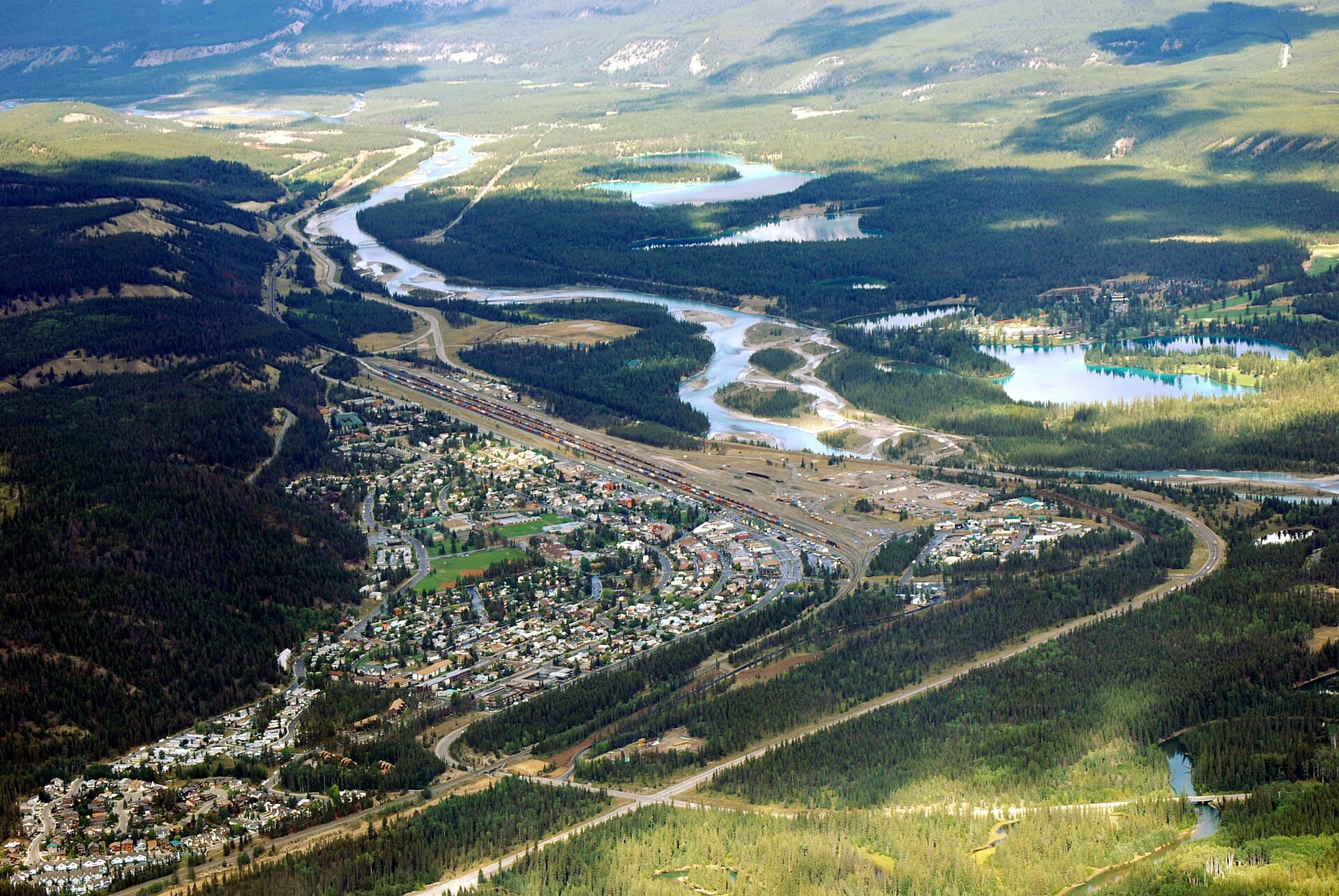 Harvey Barrison from Massapequa, NY, USA / CC BY-SA 2.0, via Wikimedia Commons
“Where the wild Rockies meet a sky full of stars.”
Not the postcards. The stories even locals don't know — whispered in your ear, right where they happened.
Beneath the calm surface of Patricia Lake lies a secret from World War II.
One of Jasper's most iconic views is Spirit Island, but its spiritual significance runs deeper than most realize.
The creator of Sherlock Holmes was so captivated by the Canadian Rockies that he visited Jasper not once, but twice.
Discover every secret of Jasper
Every address, every reveal in full — in your ear, right where it happened.
You pick your stops. You walk. The voice reveals what the others miss.
No tours available yet. Check back soon — we're preparing them.
Jasper National Park, Alberta, stands as the largest national park in the Canadian Rockies, stretching over 11,000 square kilometers (4,200 sq mi). This expansive wilderness is a UNESCO World Heritage Site, recognized for its exceptional natural beauty, diverse ecosystems, and significant geological features. Travelers are drawn to its grand peaks, extensive backcountry trails, and abundant wildlife, including grizzly bears, moose, and elk.
The town of Jasper, an intimate community within the park, originated as a railway town. It serves as a central point for exploring the surrounding landscapes, which encompass mountains, valleys, glaciers, forests, alpine meadows, and rivers. The park is also known as the world's second-largest Dark Sky Preserve, offering unparalleled opportunities to view the stars.
While Jasper offers year-round adventure, it provides a distinct experience compared to its southern counterpart, Banff. Jasper often feels calmer and more expansive, allowing for moments of solitude amidst the grand scenery.
The Athabasca River Valley, where Jasper National Park now lies, was inhabited by Indigenous peoples for as long as 10,000 years, who hunted in the grassland meadows beneath the towering peaks. Various Athabaskan-speaking groups, including the Sekani, Dane-zaa, and Tsuut'ina nations, lived on the eastern side of what is now the park, while the Secwepemc, an Interior Salish nation, resided on the western side.
European presence in the area began in the early 19th century with the fur trade. Explorer David Thompson was among the first Europeans to discover a northern route through the Rocky Mountains at Athabasca Pass in 1810-1811. This pass became a crucial part of the North West Company's fur trade route, leading to the establishment of supply depots. In 1813, a depot was built on Brûlé Lake, which later became known as "Jasper House" after Jasper Haws, a fur trader who took command of the post in 1817.
By the late 19th century, with the decline of the fur trade and the railway being built elsewhere, the upper Athabasca Valley was primarily inhabited by Métis settlers and one white homesteader. However, the early 20th century brought new developments. Plans for two transcontinental rail lines through the Yellowhead Pass spurred the Canadian government to establish a forest reserve along the route. In 1907, Jasper Forest Park was created, named after Jasper Haws. The Grand Trunk Pacific Railway laid track through the park in 1911, founding the town of Fitzhugh around its railway station, which was renamed Jasper in 1913. In 1930, Jasper Forest Park was officially designated as Jasper National Park.
The park's establishment, however, came at a cost to Indigenous communities, who were forcibly expelled from the Canadian Rockies. Today, Parks Canada is working in partnership with Indigenous communities to acknowledge this history and celebrate Indigenous culture and perspectives.
Early tourism in Jasper saw mountaineers and explorers, often with local guides, mapping the new park. The railway facilitated the growth of tourism, leading to the development of accommodations like the Fairmont Jasper Park Lodge, which opened in 1922. The Jasper-Edmonton road opened in 1928, further increasing accessibility.
Jasper National Park offers a diverse array of sights and activities. Take the Jasper SkyTram for sweeping views of six mountain ranges, glacial lakes, and the town of Jasper, or hike to the summit of Whistler Mountain for an even higher vantage point. Explore Maligne Canyon, one of the deepest canyons in the Canadian Rockies, with impressive waterfalls and unique geological features. A short drive past the canyon leads to Medicine Lake, known for its disappearing waters, and then to Maligne Lake, the largest natural lake in the Canadian Rockies and home to the iconic Spirit Island, accessible by boat or kayak.
Journey along the Icefields Parkway, a scenic drive connecting Jasper to Banff, stopping at Athabasca Falls and Sunwapta Falls to witness their powerful cascades. Venture onto the Athabasca Glacier, part of the immense Columbia Icefield, either by guided tour in an Ice Explorer vehicle or by hiking to its base. For a unique perspective, experience the Columbia Icefield Skywalk, a glass-floored walkway suspended 918 feet above the Sunwapta Valley. Other notable spots include Pyramid Lake, ideal for canoeing and stargazing, and the Miette Hot Springs, the warmest in the Rockies, offering a relaxing soak after a hike.
Jasper National Park is open year-round, with each season offering distinct experiences. Summer (June to August) is the peak season, with warm temperatures, long days, and all tours and attractions fully operational, ideal for hiking, biking, paddling, and glacier exploration. Autumn (September to October) brings brilliant fall foliage, active wildlife, and fewer crowds, making it a visually striking time to visit. Winter (November to April) transforms Jasper into a wonderland for skiing and snowboarding at Marmot Basin, snowshoeing, and stargazing in the Dark Sky Preserve. Spring (April to May) sees warmer temperatures in the valleys, with winter activities still available and some summer attractions beginning to open in May.
All visitors to Jasper National Park require a valid National Park Pass, which can be purchased online, at park gates, or at the visitor center in downtown Jasper. The park is located in Alberta, approximately 370 km west of Edmonton and 404 km northwest of Calgary. It can be accessed from the west and east via the Yellowhead Highway (Highway 16) and from the south by the Icefields Parkway (Highway 93). While driving is a popular way to explore, many areas within the town of Jasper are best explored on foot, and local businesses offer bike rentals. Cellular service is not reliable throughout the park, especially along the Icefields Parkway, and WiFi is limited to the Parks Canada Centre in Jasper. It's recommended to carry bear spray when hiking due to the healthy bear population. Recreational drone use is prohibited within park boundaries and can result in significant fines.