Jaffa Clock Tower
The grand Jaffa Clock Tower, a prominent landmark, was built to celebrate an Ottoman Sultan's reign, but its origins are rooted in a more mundane, relatable frustration.
Full story unlocks in the tour
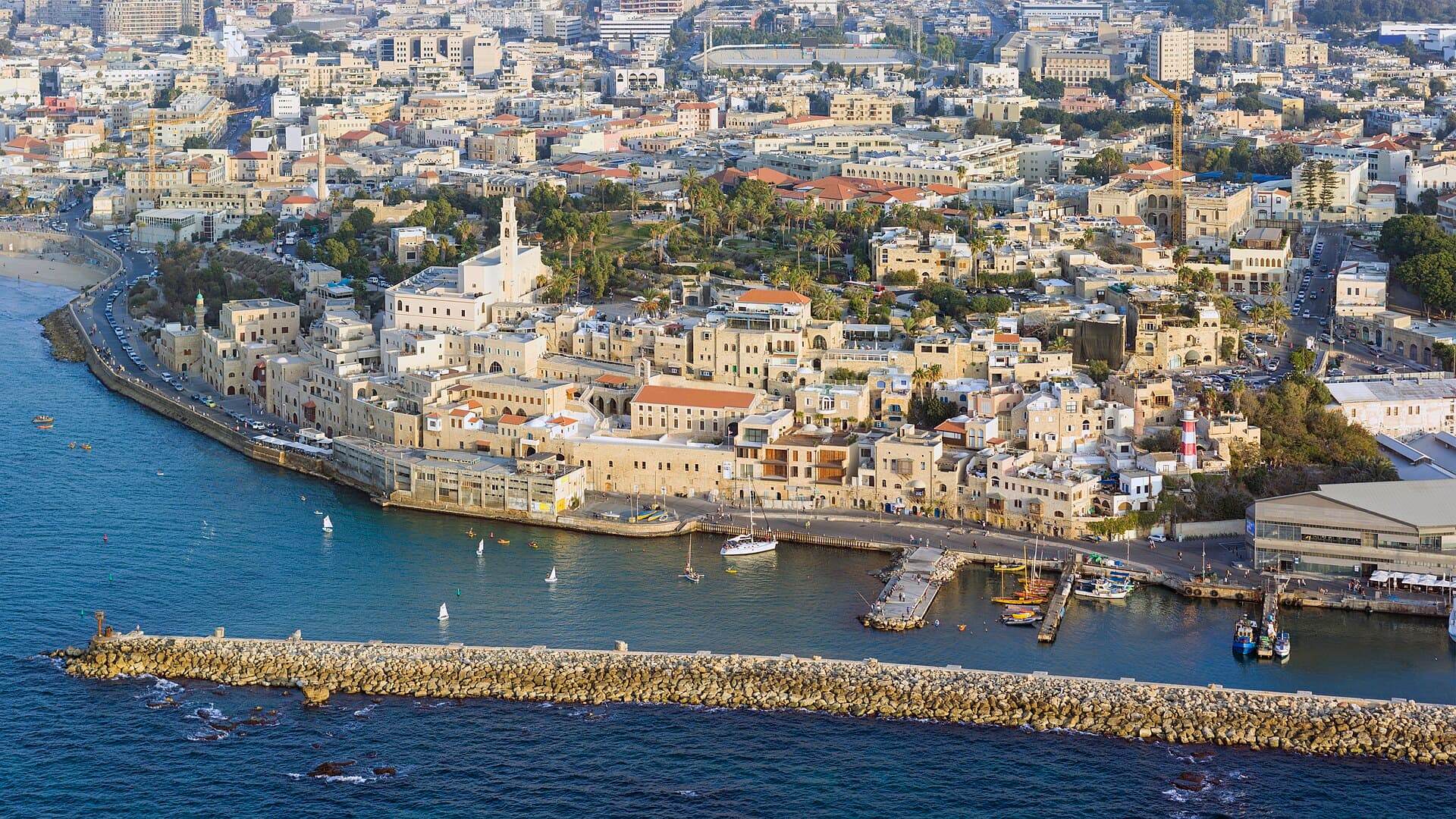 Godot13 / CC BY-SA 4.0, via Wikimedia Commons
“Where ancient legends meet modern life, a timeless port breathes its stories.”
Not the postcards. The stories even locals don't know — whispered in your ear, right where they happened.
The grand Jaffa Clock Tower, a prominent landmark, was built to celebrate an Ottoman Sultan's reign, but its origins are rooted in a more mundane, relatable frustration.
Off the coast of Jaffa, a cluster of rocks bears the name of a mythical princess, but the Greek legend it references might not have originally been set here.
This lively market has been a center of commerce for centuries, but its current layout is a result of urban planning by a past empire.
Discover every secret of Jaffa
Every address, every reveal in full — in your ear, right where it happened.
You pick your stops. You walk. The voice reveals what the others miss.
No tours available yet. Check back soon — we're preparing them.
Jaffa, or Yafo in Hebrew, is an ancient port city that predates modern Tel Aviv, with a history spanning over 4,000 years. Situated on a naturally elevated outcrop overlooking the Mediterranean, Jaffa has long served as a crucial gateway to the Holy Land for traders, pilgrims, and conquerors alike.
Today, Jaffa is an integral part of the Tel Aviv-Yafo municipality, a lively district where ancient history seamlessly blends with contemporary culture. Its picturesque stone alleys, bustling markets, and scenic seaside views offer a unique experience, drawing visitors to explore its deep heritage and lively atmosphere.
Jaffa's origins stretch back to the Early Bronze Age, with archaeological excavations revealing settlement as early as the 16th century BCE. It is claimed to be the oldest port in the world, with some traditions attributing its founding to Japheth, the son of biblical Noah. The city is mentioned in ancient Egyptian and Assyrian documents, and biblically, it's noted as a boundary for the tribe of Dan and as the port through which Lebanese cedars were imported for the construction of Solomon's Temple in Jerusalem. It is also the port from which the prophet Jonah is said to have set sail.
Over millennia, Jaffa has been under the control of various empires, including Egyptians, Canaanites, Phoenicians, Greeks, Romans, Byzantines, Muslims, Crusaders, and Ottomans, each leaving an indelible mark on its character. Its importance as a major port declined during the Roman period with the construction of Caesarea. During the Arab period, Jaffa's significance as a port increased, serving as a storage center and entry point for pilgrims.
Jaffa flourished during the Ottoman period, becoming an important economic center and a melting pot of cultures where Muslims, Christians, and Jews coexisted. The city became known for its expansive orchards and the namesake Jaffa orange. In the early 20th century, Jaffa underwent rapid modernization, and in 1909, a group of Jewish residents left Jaffa to establish Tel Aviv in the sand dunes to the north.
In 1799, Napoleon sacked the town during the Siege of Jaffa. Later, in 1917, the British took the city in the Battle of Jaffa during World War I. Following the 1948 Palestine War, much of Jaffa's Arab population either fled or were expelled, and in 1950, the city was unified with Tel Aviv, forming the Tel Aviv-Yafo municipality. Today, Jaffa is one of Israel's mixed cities, with approximately 37% of its population being Arab.
In recent decades, Jaffa has undergone significant restoration and redevelopment. The historic core has been carefully preserved, transforming it into a lively center for tourism, arts, and culture. The waterfront area near the port has been a key regeneration area, and artists' studios, inviting restaurants, and hotels have sprung up in its atmospheric surroundings.
Begin your exploration at the Jaffa Clock Tower, a prominent Ottoman-era landmark built in 1903 to commemorate Sultan Abdul Hamid II's silver jubilee. From here, delve into the lively Jaffa Flea Market (Shuk Hapishpishim), a century-old open-air market offering antiques, vintage goods, jewelry, and handicrafts, alongside modern boutiques and eateries.
Wander through the narrow, stone-paved alleys of Old Jaffa, where you'll discover art galleries, artists' studios, and unique boutiques. Make your way to Kedumim Square, a central hub featuring the Old Jaffa Visitors Center, which offers a multimedia journey through the city's archaeological past. Overlooking the port, you'll find St. Peter's Church, a Baroque-style Roman Catholic church built in 1894, honoring the Apostle Peter's visit to Jaffa. Just offshore, spot the Andromeda Rock, a rocky formation tied to the Greek myth of Perseus and Andromeda. For sweeping views of the Mediterranean Sea and Tel Aviv's skyline, visit Jaffa's Summit Garden, also home to the Wishing Bridge.
The best times to visit Jaffa are during the spring (March to May) and autumn (September to November). During these months, temperatures are mild and pleasant, ideal for exploring the city's outdoor attractions, charming alleyways, and the port on foot. Spring offers the added beauty of blooming flowers, while autumn provides comfortable conditions before winter. Summers (June to August) are hot and humid, though it is peak tourist season and beaches are popular. Winters (December to February) are less recommended due to cooler temperatures and potential rain.
Jaffa is easily accessible from Tel Aviv. You can reach it by following the promenade from downtown Tel Aviv or by taking a local bus, such as the number 46, from the main station. The area involves significant walking on inclines and stone surfaces, so comfortable shoes are essential. Jaffa is a popular tourist destination and can be crowded on weekends. While Hebrew and Arabic are the official languages, English is widely spoken. The local currency is the Israeli Shekel (ILS). Many restaurants in the Jaffa Flea Market and along the port offer exceptional seafood and authentic Middle Eastern cuisine, including hummus.