Palacio de Villardompardo
Beneath a grand Renaissance palace, an older world resides, awaiting rediscovery.
Full story unlocks in the tour
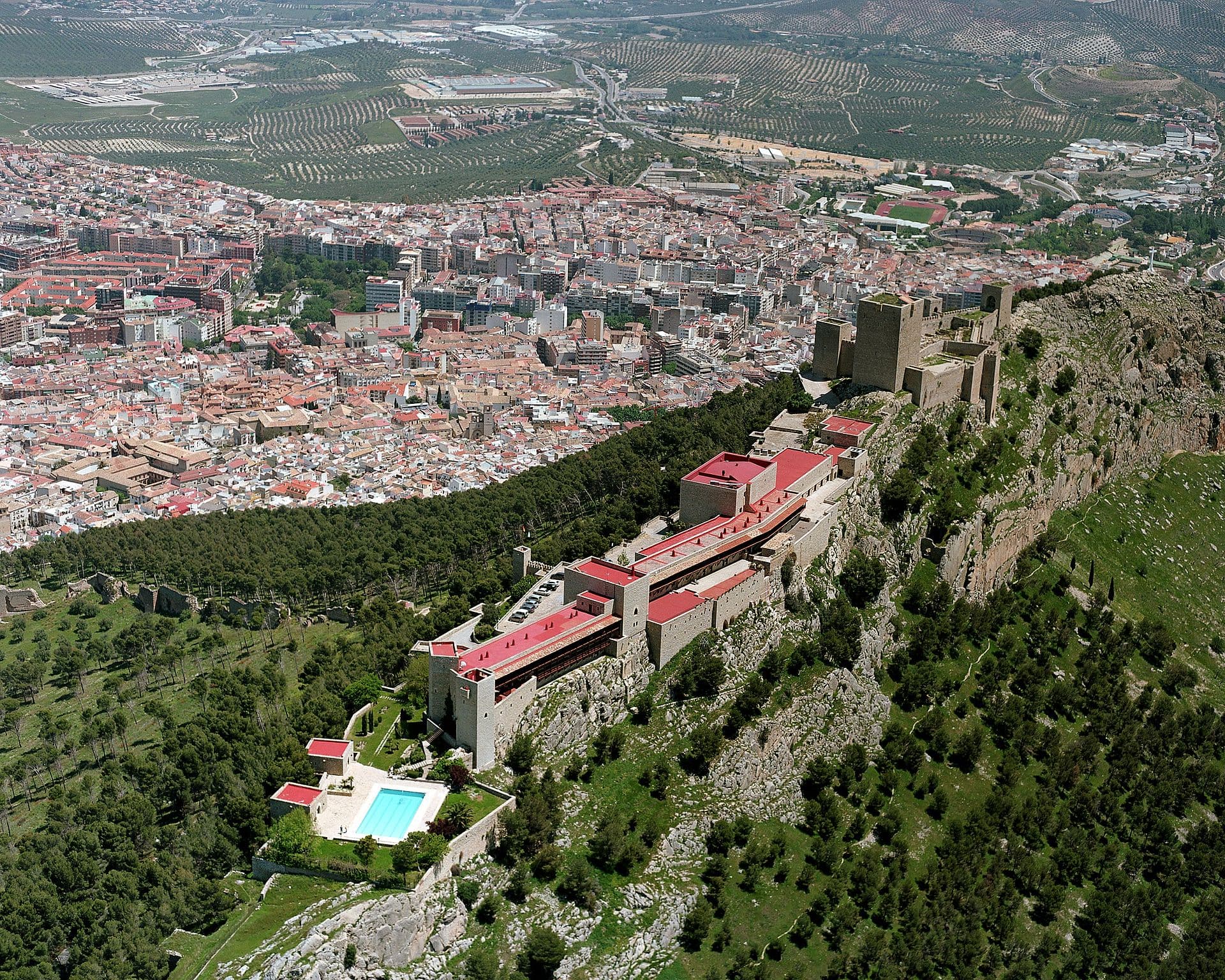 Paradores / CC BY-SA 4.0, via Wikimedia Commons
“Where ancient currents flow like liquid gold.”
Not the postcards. The stories even locals don't know — whispered in your ear, right where they happened.
Beneath a grand Renaissance palace, an older world resides, awaiting rediscovery.
This monumental Renaissance cathedral safeguards a relic said to bear a divine impression.
Beyond the city, the land itself narrates a crucial medieval borderland saga.
Discover every secret of Jaén
Every address, every reveal in full — in your ear, right where it happened.
You pick your stops. You walk. The voice reveals what the others miss.
No tours available yet. Check back soon — we're preparing them.
Jaén, the provincial capital in Andalusia, Spain, is a city often overlooked by travelers, yet it offers a compelling fusion of history, culture, and natural splendor. Known as the 'World Capital of Olive Oil,' the province of Jaén is responsible for a significant portion of the world's olive oil production, with over 60 million olive trees shaping its expanse.
The city itself is defined by its position at the foothills of the Cerro de Santa Catalina, featuring steep, narrow pathways in its ancient core. While less frequented than other Andalusian cities like Seville or Granada, Jaén provides an authentic Spanish encounter, rich in historical markers and local customs.
From the formidable Santa Catalina Castle surveying the city to the intricate Renaissance architecture of its cathedral and the ancient Arab baths, Jaén invites exploration beyond the well-trodden tourist routes.
The history of Jaén stretches back to antiquity, with evidence of human presence dating to the Neolithic era. The city began to coalesce as an Iberian settlement, with one significant proto-urban center, Puente Tablas, existing near the modern city from the 7th century BCE. Under Roman governance, the city, then called Auringis, gained municipium status, fostering its development and infrastructure. The region was already recognized for olive oil production, exported throughout the Roman Empire, and silver and lead deposits in the Sierra Morena mountains also contributed to its early economy.
With the Arab conquest of the Iberian Peninsula, Jaén, known as Jayyān, regained prominence, becoming the capital of the Taifa of Jaén. During five centuries of Moorish rule, the city prospered with the construction of mosques, fortifications, and palaces. The Almoravids incorporated it into their empire in 1091, followed by the Almohads in 1148. The fertile lands, abundant water, and industries like tapestry and wooden household utensils contributed to its affluence.
A pivotal moment arrived on July 16, 1212, with the Battle of Las Navas de Tolosa, fought approximately 40 miles north of Jaén. This major battle of the Christian Reconquista witnessed the combined armies of Castile, Aragon, Navarre, and Portugal decisively defeat the Almohads, marking a turning point in the Christian advance into al-Andalus. Jaén itself was surrendered by Muhammad I of Granada to Ferdinand III of Castile on February 28, 1246, after a siege. The city then became a crucial border outpost between Christian and Muslim kingdoms for two centuries, leading to the construction of numerous fortifications.
The 16th century saw the commencement of the current Jaén Cathedral, a significant Renaissance achievement, with construction extending for centuries. The administrative reform of 1833 solidified Jaén's status as a provincial capital, spurring growth and the demolition of parts of its medieval walls for expansion. In the 19th and 20th centuries, Jaén's role as the 'World Capital of Olive Oil' became firmly established.
Begin your exploration at the Jaén Cathedral, a Spanish Renaissance masterpiece designed largely by Andrés de Vandelvira. Its impressive façade, Baroque sculptures by Pedro Roldán, and a Neoclassical choir are notable features. The cathedral also houses a copy of the Veil of Veronica. Adjacent to the cathedral is the Plaza de Santa María, a historic public space.
Ascend to the Castillo de Santa Catalina, a fortress with Moorish origins from the 8th century, later expanded and modified by Christians after 1246. From its elevated position, the castle offers expansive views of the city, the Guadalquivir Valley, and the surrounding olive groves. The castle includes a Tourist Interpretation Centre.
Beneath the Renaissance-era Palacio de Villardompardo are the Arab Baths of Jaén, the largest and best-preserved Moorish baths in Spain. These 11th-century baths, once a social and cultural center, now offer a glimpse into Islamic architecture and daily life. The palace also houses the Museum of Popular Arts and Customs and the International Museum of Naïve Art.
For a deeper understanding of the region's primary industry, consider visiting a local olive oil mill, or almazara, to learn about traditional production methods and enjoy tastings.
The most pleasant times to visit Jaén are during spring (April to May) and autumn (September to October). During these months, the weather is agreeable, with average highs ranging from 20-25°C, making it ideal for exploring the city and its surroundings. Summers (June to August) can be intensely hot, with average highs reaching 30-35°C and periods of searing heat, sometimes exceeding 40°C. While winters are mild, they are also the cloudier and wetter months.
Jaén is well-connected by bus, with frequent services to other major Spanish cities like Granada, Málaga, and Córdoba from its central bus station. The city's topography, with its steep pathways in the historic center, means comfortable walking shoes are advisable. While tourism is not the primary industry, the city offers a relaxed atmosphere. The local custom of tapas is deeply ingrained, with many bars offering a small plate of food free with a drink, providing an economical way to sample local cuisine. The province of Jaén is celebrated for its olive oil, so sampling local extra virgin olive oil is essential. A typical daily budget, excluding accommodation, might range from €40–60.