Jaca Cathedral
Beyond its grand Romanesque facade, a subtle detail on a column hints at a fascinating, perhaps even scandalous, connection to ancient Roman funerary practices.
Full story unlocks in the tour
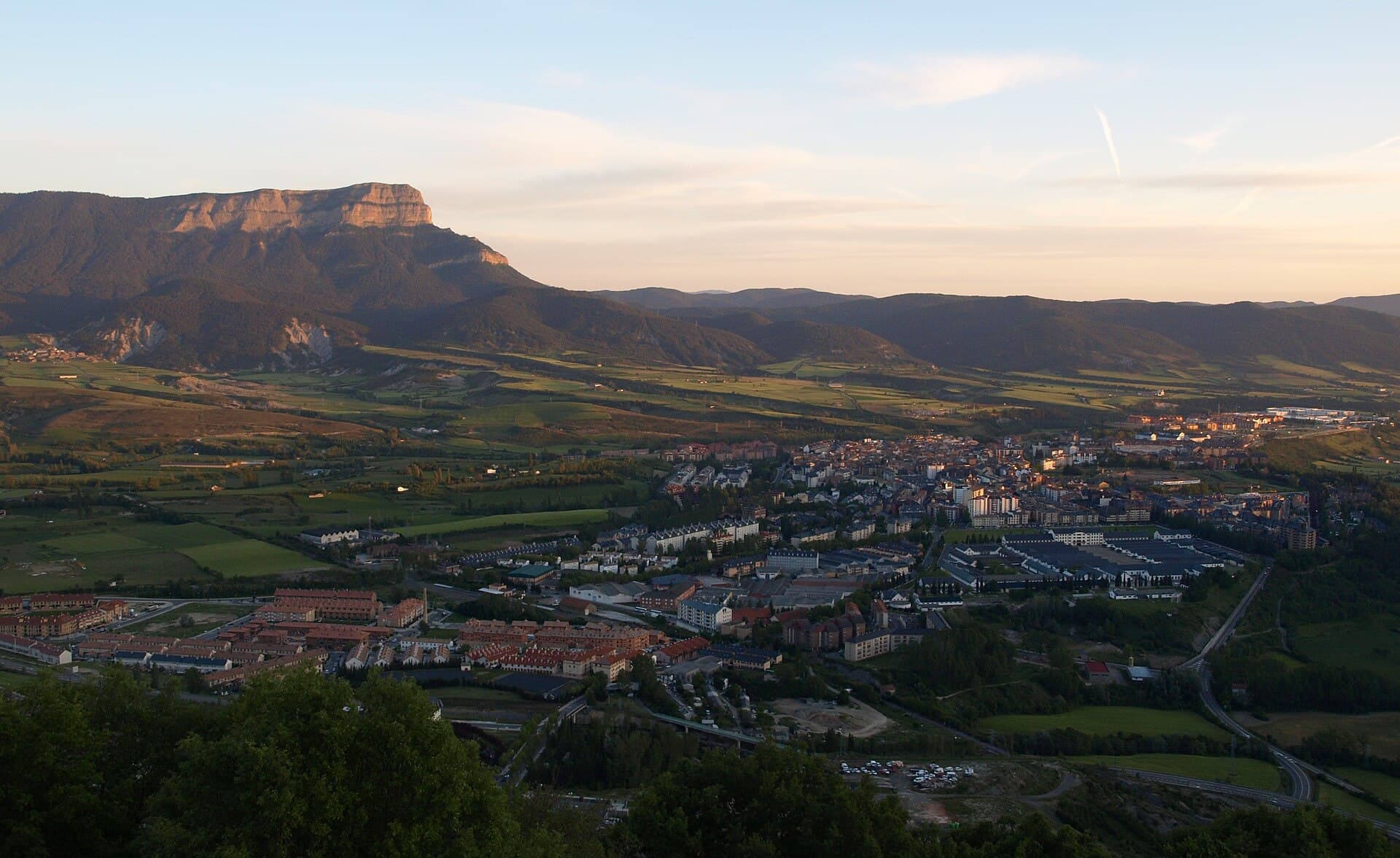 Elemaki / CC BY 3.0, via Wikimedia Commons
“Where Pyrenean peaks meet ancient stones.”
Not the postcards. The stories even locals don't know — whispered in your ear, right where they happened.
Beyond its grand Romanesque facade, a subtle detail on a column hints at a fascinating, perhaps even scandalous, connection to ancient Roman funerary practices.
The well-preserved moat of this 16th-century fortress isn't just for show; it's home to some unexpected, peaceful residents.
This museum holds some of Spain's finest Romanesque art, but the journey of these artworks to their current home is a tale of preservation against abandonment.
Discover every secret of Jaca
Every address, every reveal in full — in your ear, right where it happened.
You pick your stops. You walk. The voice reveals what the others miss.
No tours available yet. Check back soon — we're preparing them.
Jaca, a city cradled in the Spanish Pyrenees, serves as a portal to mountain adventures and a repository of Aragonese history. Its strategic location on the Aragón River, close to the French border, has shaped its identity for over two millennia. The city's lively old town invites exploration with its historic buildings, inviting streets, and squares, offering a blend of cultural immersion and opportunities for relaxation.
Once the inaugural capital of the Kingdom of Aragón, Jaca's past is etched into its Romanesque cathedral and its formidable 16th-century citadel. Beyond its historical monuments, Jaca acts as a center for outdoor enthusiasts, providing access to skiing in winter and hiking in summer. Whether you are drawn to ancient art, military history, or mountain landscapes, Jaca offers a compelling experience.
## Ancient Roots and Roman Influence Jaca's origins stretch back to at least the 3rd century BC, when the Iberian Iaccetani people established a settlement and minted coins. This cattle-raising community, known for its warfare, inhabited the area until 195 BC, when Roman forces under Marcus Pontius Cato conquered them. During Roman and Visigothic periods, Jaca's strategic position between the Iberian Peninsula and France ensured its importance.
## The First Capital of Aragón In 716, Jaca fell under Moorish control, known as Dyaka, becoming a significant city within the province of Sarkosta (modern Zaragoza). The city was retaken by Christians in 760. A pivotal moment arrived in 1035 when Ramiro I, the first King of Aragón, designated Jaca as the capital of his nascent kingdom. The name Aragón itself derives from the Aragón River, which flows through the Canfranc Valley north of Jaca. Under Ramiro I and his successors, the kingdom expanded, and Jaca flourished as a political and religious center.
## Medieval Growth and the Camino de Santiago In 1077, King Sancho Ramírez granted Jaca a royal charter, fostering weekly markets and trade. This period also saw the commencement of Jaca Cathedral's construction and the relocation of the Bishop of Aragón's seat to the city. Defensive walls were erected, attracting new settlers and merchants. Jaca's role as capital concluded in 1096 following the Christian reconquest of Huesca, when the royal court moved to the larger city. Despite this, Jaca remained a crucial stop on the Aragonese Way of Saint James, a branch of the Camino de Santiago, which significantly contributed to its growth and cultural exchange.
## Fortification and Modern Era In the late 16th century, King Philip II ordered the construction of a formidable pentagonal fortress, known as the Citadel or Castle of San Pedro, to defend Spain's northern frontier against potential French invasions. Designed by Italian military engineer Tiburzio Spannocchi, it was among the first fortifications built to withstand cannon fire, featuring thick, low walls and angled bastions. The Citadel played a role in the Spanish War of Independence, being occupied by French troops for nearly five years before its recovery in 1814. In the early 20th century, parts of the medieval city walls were demolished to facilitate urban expansion. Jaca also holds a place in more recent history with the Jaca uprising in 1930, an early event preceding the Spanish Civil War.
Jaca offers a compelling array of historical and cultural sites. The Jaca Cathedral, also known as the Cathedral of San Pedro, is a Romanesque masterpiece and one of Spain's oldest cathedrals, with construction beginning in 1077. Its distinctive 'ajedrezado jaqués' (chessboard-like) decorative stone pattern spread along the Camino de Santiago. Within the cathedral's cloister, the Diocesan Museum of Jaca houses a significant collection of Romanesque art, including medieval paintings, sculptures, and frescoes rescued from churches across the region.
A short walk from the cathedral stands the Citadel of Jaca, or Castle of San Pedro, a remarkably preserved 16th-century pentagonal fortress. Its moat, bastions, and drawbridge are intact, and it also contains the Museum of Military Miniatures, showcasing over 32,000 lead soldiers in detailed dioramas. Other points of interest include the 15th-century Clock Tower, which originally served as the town prison, and the Town Hall with its 16th-century Plateresque style. For expansive views of Jaca and the Aragón valley, consider a visit to the Fort of Rapitán or the Peña Oroel.
Jaca is a year-round destination, with distinct charms for each season. For warm-weather activities like hiking and exploring the old town, the best time to visit is from late June to early September, when temperatures are pleasantly warm, ranging from 13-26°C (56-79°F). Summers are generally dry and clear. Winter, from late November to early March, brings cold temperatures and snowfall, making it ideal for skiing and other snow sports at nearby resorts like Astún and Candanchú. Spring and autumn offer milder weather and colorful scenery, with fewer crowds.
Jaca is easily navigable on foot due to its manageable size. For reaching Jaca, the nearest major airports are Pamplona (PNA), about 1 hour and 20 minutes away by car, and Zaragoza (ZAZ), approximately 1 hour and 40 minutes away. While there is a small airfield in Santa Cilia de Jaca, it does not publish METARs, and Huesca-Pirineos Airport is 64 km away. From Zaragoza, direct trains to Jaca are available, though schedules can vary, sometimes requiring a bus replacement service. The Jaca train station is located about 1.35 kilometers from the city center. The central bus station is convenient for exploring nearby villages or reaching larger cities like Huesca and Zaragoza. Accommodations in Jaca cater to various budgets, from hotels to campgrounds. Check-in at many hotels is typically from 3:00 p.m., with check-out by 12:00 p.m.