Playa La Ropa
This popular beach carries a curious name, hinting at a dramatic event from centuries past.
Full story unlocks in the tour
 Microstar / CC BY-SA 4.0, via Wikimedia Commons
“Where Pacific breezes meet planned paradise.”
Not the postcards. The stories even locals don't know — whispered in your ear, right where they happened.
This popular beach carries a curious name, hinting at a dramatic event from centuries past.
Beyond its inviting beaches, one particular spot on Isla Ixtapa holds a secret tied to ancient remedies.
The calm waters of Zihuatanejo Bay conceal an unexpected underwater resident.
Discover every secret of Ixtapa
Every address, every reveal in full — in your ear, right where it happened.
You pick your stops. You walk. The voice reveals what the others miss.
No tours available yet. Check back soon — we're preparing them.
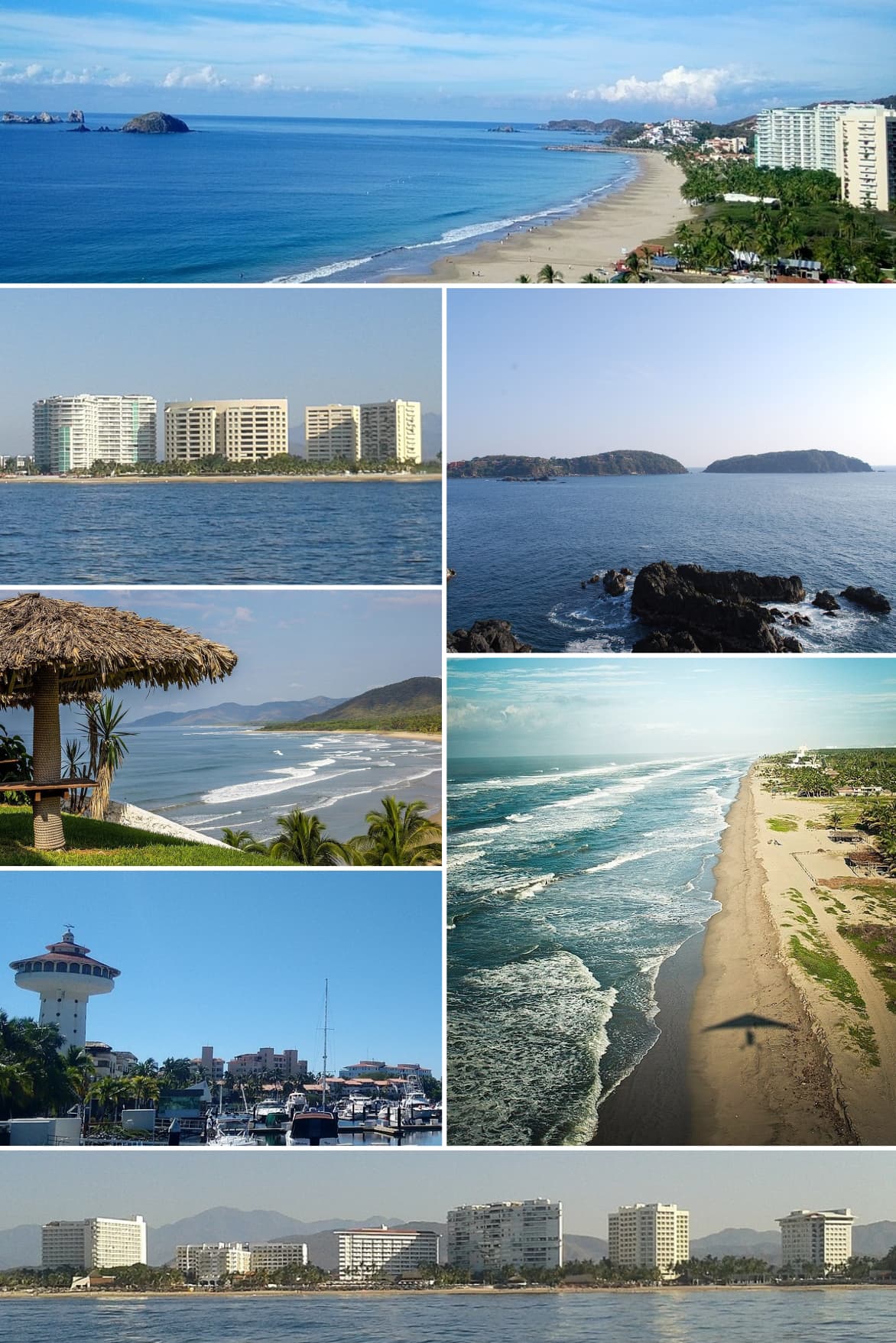
Ixtapa, a resort destination on Mexico's Pacific Coast, offers a striking contrast to its older, more traditional neighbor, Zihuatanejo. Conceived in the early 1970s by the Mexican tourism development agency, Fonatur, Ixtapa was designed from a former coconut plantation to attract international visitors with its modern hotels, golf courses, and marina.
Just 5 kilometers away, Zihuatanejo provides a glimpse into a traditional Mexican fishing village with a history spanning thousands of years. Together, these two distinct towns offer a diverse experience, blending contemporary amenities with authentic local character, all set against the backdrop of the Sierra Madre mountains meeting the Pacific Ocean.
Ixtapa-Zihuatanejo is situated in the state of Guerrero, approximately 245 kilometers northwest of Acapulco. The region is known for its warm weather, sandy beaches, and a variety of activities, from water sports to exploring ecological reserves.
The history of the Ixtapa-Zihuatanejo region stretches back millennia, with archaeological evidence suggesting human habitation as far back as 3,000 years, dating to the Olmec civilization. The area was once part of the province of Cuitlatecapan, with Cihuatlán as its capital. The name Zihuatanejo itself is derived from the Náhuatl word "Cihuatlán," meaning "land of women," a name the Spanish later modified.
In the 1500s, Zihuatanejo served as a significant port for Spanish traders engaged in commerce with the Far East. An expedition in 1527 even departed from here to the Philippines, marking only the second voyage from America to the Far East. Throughout the 17th century, Zihuatanejo Bay became a refuge for sailors and a hideout for pirates seeking treasures from Chinese vessels arriving from Manila. This era left its mark on local place names; for instance, Playa La Ropa, or "Clothes Beach," is said to be where silks from a shipwrecked Spanish galleon washed ashore.
By the turn of the 20th century, Zihuatanejo continued its role as a port, exporting hardwoods, coconut oil, shellfish, and fish. The late 1940s saw its re-emergence as a vacation retreat, attracting even American Beat Writers in the 1950s. The construction of a federal highway from Acapulco in the 1960s further connected Zihuatanejo to the rest of Mexico, as it was previously accessible only by air or sea.
Ixtapa's modern story began in the early 1970s when the Mexican government's tourism-development agency, Fonatur, identified a coconut plantation north of Zihuatanejo as an ideal location for a new Pacific-coast resort. The goal was to create a destination similar to Cancun on the Caribbean coast and to attract foreign tourists. Ixtapa, a Náhuatl word meaning "the white place" (likely referring to its white sandy beaches), was born from this master plan, with infrastructure development supported by a World Bank loan. The first hotel, Aristos, opened in 1974. This planned development brought modern conveniences, such as electricity, to Zihuatanejo and led to the expansion of its neighborhoods to accommodate Ixtapa's workforce. Today, Ixtapa is characterized by its high-rise hotels and modern amenities, while Zihuatanejo maintains its traditional village atmosphere, with local laws preventing the construction of high-rise buildings.
Begin your exploration in Ixtapa at Playa El Palmar, the main beach, which spans 3 kilometers and is ideal for sunbathing and water sports. A paved path, Paseo Ixtapa, runs parallel to the hotel zone, offering a pleasant route for walking or cycling.
For a natural escape, take a short water taxi from Playa Linda to Isla Ixtapa. The island features pristine beaches like Playa Cuachalalate and Playa Coral, where you can snorkel among coral reefs and marine life. While at Playa Linda, visit the Cocodrilario, a crocodile sanctuary, and observe iguanas and various bird species.
Just a short drive away, the neighboring town of Zihuatanejo offers a different ambiance. Stroll along the Paseo del Pescador (Fisherman's Passage) at sunrise to witness local fishermen returning with their catches. Explore Zihuatanejo's main beaches, Playa La Ropa and Playa Las Gatas, both known for calm waters and seafood restaurants. Playa La Ropa is also a spot for parasailing and jet-skiing. For a deeper dive into the region's past, visit the Xihuacan Museum and Archaeological Site, which showcases pre-Hispanic artifacts and excavated structures like a Mesoamerican ball court and clay pyramids.
The optimal time to visit Ixtapa is during the dry season, which runs from November to April. During these months, you can expect warm temperatures, less rainfall, and lower humidity, with average temperatures ranging from 29-32°C (84-90°F). The Pacific waters are also slightly cooler and pleasant for swimming in December and January. This period is considered peak season, offering favorable weather and many events, though it also brings higher prices and larger crowds.
For a balance of good weather, fewer crowds, and better prices, consider the shoulder seasons of April to May and November. The wet season, from June through September, features heavy afternoon rains, higher humidity, and rougher seas. However, this time of year is ideal for witnessing sea turtle nesting and hatchling releases, which occur between September and April. Whale watching is also possible between December and April.
Ixtapa is served by the Ixtapa-Zihuatanejo International Airport (ZIH), with direct flights from various cities in Mexico, the United States, and Canada. Once you arrive, Zihuatanejo is approximately 15 minutes away, and Ixtapa is about a 25-minute drive from the airport. The local currency is the Mexican Peso, and credit and debit cards are widely accepted, though it's advisable to inform your bank of your travel plans.
Spanish is the primary language spoken. Tipping between 10-20% is customary. The power outlets are the same as in the USA (110 Volts, 60 hertz), so converters are generally not needed, though some older establishments might require a 3-prong adapter. It is crucial to avoid drinking tap water. While the state of Guerrero has a reputation for crime, Ixtapa-Zihuatanejo is generally considered safe for tourists.