The Battle of the Oranges
You know of food fights, but imagine one where the ammunition is citrus, and the stakes are centuries of tradition.
Full story unlocks in the tour
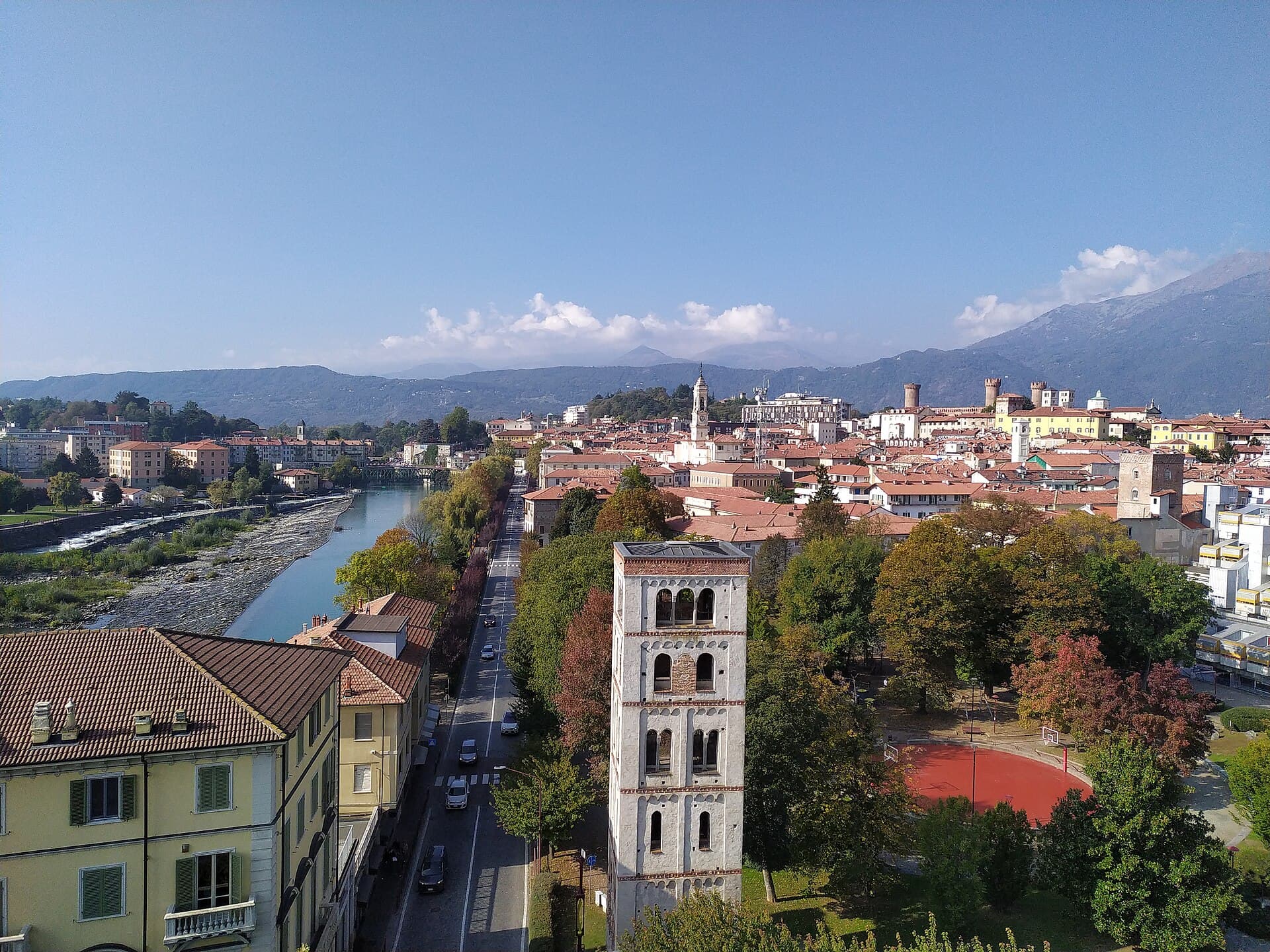 Valerio Bozzolan / CC0, via Wikimedia Commons
“Where ancient stones meet a 20th-century dream, and citrus takes flight.”
Not the postcards. The stories even locals don't know — whispered in your ear, right where they happened.
You know of food fights, but imagine one where the ammunition is citrus, and the stakes are centuries of tradition.
A UNESCO World Heritage site exists in Ivrea not for ancient ruins, but for a vision of the future that blossomed in the 20th century.
Observe Ivrea's imposing castle closely, and you might notice something absent.
Discover every secret of Ivrea
Every address, every reveal in full — in your ear, right where it happened.
You pick your stops. You walk. The voice reveals what the others miss.
No tours available yet. Check back soon — we're preparing them.
Ivrea, a city in Italy's Piedmont region, offers a compelling blend of ancient history and 20th-century industrial innovation. Situated on the Dora Baltea River, north of Turin, the city is characterized by its dramatic morainic landscape, shaped by a Pleistocene glacier. While it may not be as widely known as other Italian destinations, Ivrea holds a unique appeal, recognized by UNESCO for its exceptional example of a modernist industrial city.
The city is effectively divided into two distinct areas: the ancient city, with its medieval monuments and Roman origins, and the industrial city, a testament to the visionary urban planning of the Olivetti company. This duality provides a fascinating journey through time, from a Celtic settlement and Roman outpost to a hub of technological and social experimentation. Beyond its architectural and historical significance, Ivrea is also known for its vivid cultural traditions, most notably the historic Ivrea Carnival and its spectacular Battle of the Oranges.
Ivrea's history stretches back to the Neolithic era, with a significant Celtic settlement believed to have existed around the 5th century BC. The city first formally appears in historical records as an outpost of the Roman Republic, founded in 100 BC under the name "Eporedia." Its strategic location on a primary route between Italy and Gaul made it an important commercial and military center. The name "Eporedia" itself is thought to derive from a Gaulish term meaning "equestrian cart" or "fortress of carts."
Following the fall of the Western Roman Empire, Ivrea became the seat of a Lombard duchy from the 6th to 8th centuries. It then transitioned into a county capital under the Franks in the 9th century, eventually becoming the capital of the Marca of Ivrea. This medieval period saw Ivrea rise to prominence, with two of its rulers, Berengar II (950) and Arduin (1002), even becoming kings of Italy. The city later came under the control of the House of Savoy in 1313, who commissioned the construction of the imposing Ivrea Castle in 1358 for defensive purposes.
The 20th century marked a transformative period for Ivrea, largely due to the establishment and influence of the Olivetti company. Founded in 1908 by Camillo Olivetti as a typewriter manufacturer, the company grew rapidly, diversifying its products and expanding internationally. His son, Adriano Olivetti, a visionary engineer, politician, and industrialist, took over in 1932 and championed a unique approach that integrated industrial production with social and cultural development. Adriano Olivetti's vision led to the creation of the "Industrial City of the 20th Century," a socio-cultural project that included factories, residential buildings, and social services, all designed by renowned Italian architects and urban planners between the 1930s and 1960s. This ambitious undertaking aimed to create a utopian industrial society focused on worker well-being and technological advancement, becoming a model of "humanization" of industrial areas. In 2018, this unique urban and architectural ensemble was recognized as a UNESCO World Heritage site, acknowledging its exceptional value as an example of modernist industrial design and urban planning.
Begin your exploration in Ivrea's historic center, where medieval charm pervades. The Ivrea Castle, also known as the "Castle of the Red Towers," is a prominent 14th-century fortress built by Amadeus VI of Savoy. Nearby, the Cathedral of Santa Maria Assunta offers a thousand-year history with Romanesque origins and later Baroque and neoclassical additions. Do not miss the crypt, which houses the sarcophagus of a 1st-century quaestor. The Tower of Santo Stefano, an 11th-century Romanesque bell tower, is a surviving element of a Benedictine abbey.
Cross the Dora Baltea River to discover the Industrial City of the 20th Century, a UNESCO World Heritage site. This open-air museum showcases the architectural legacy of Olivetti, with a 2-kilometer route featuring buildings for research, production, social services, and residential dwellings. Key examples include the historic red-brick Olivetti factory, where the company's first typewriters were made, and the Social Service Centre, designed with a ship-like appearance and hexagonal layouts. The Museo Civico Pier Alessandro Garda offers insights into Ivrea's industrial and archaeological history, including an important collection of Oriental art.
If you visit in February or March, experience the Historic Ivrea Carnival and its famous Battle of the Oranges, a lively and chaotic food fight reenacting a medieval rebellion.
The ideal time to visit Ivrea depends on your interests. For those keen on experiencing the lively Carnival and Battle of the Oranges, aim for February or early March, just before Lent. Be prepared for crowds and an animated atmosphere. For general sightseeing and comfortable weather, spring (April-May) and autumn (September-October) offer mild temperatures. Summer (July-August) is warm, with average highs around 24-26°C (75-79°F), and is suitable for exploring the surrounding lakes and the nearby Aosta Valley.
Ivrea is located in the Piedmont region, approximately 55 kilometers north of Turin. It is easily accessible by car via the A5 motorway connecting Turin with the Aosta Valley, and has its own train station with regular services to Turin and Aosta. The city's historic center is compact and best explored on foot. For those interested in the Olivetti architectural sites, a dedicated 2-kilometer route, the MAAM (Open-air Museum of Modern Olivetti Architecture), is available. Guided tours, including free "Welcome Tours" on the first Saturday of each month, are offered to help visitors navigate both the ancient and industrial areas. A one- to two-day stay is generally sufficient to see the main attractions.