Ise Jingu's Main Sanctuaries
The most sacred buildings at Ise Jingu are seldom seen by the public, yet they are completely rebuilt every 20 years.
Full story unlocks in the tour
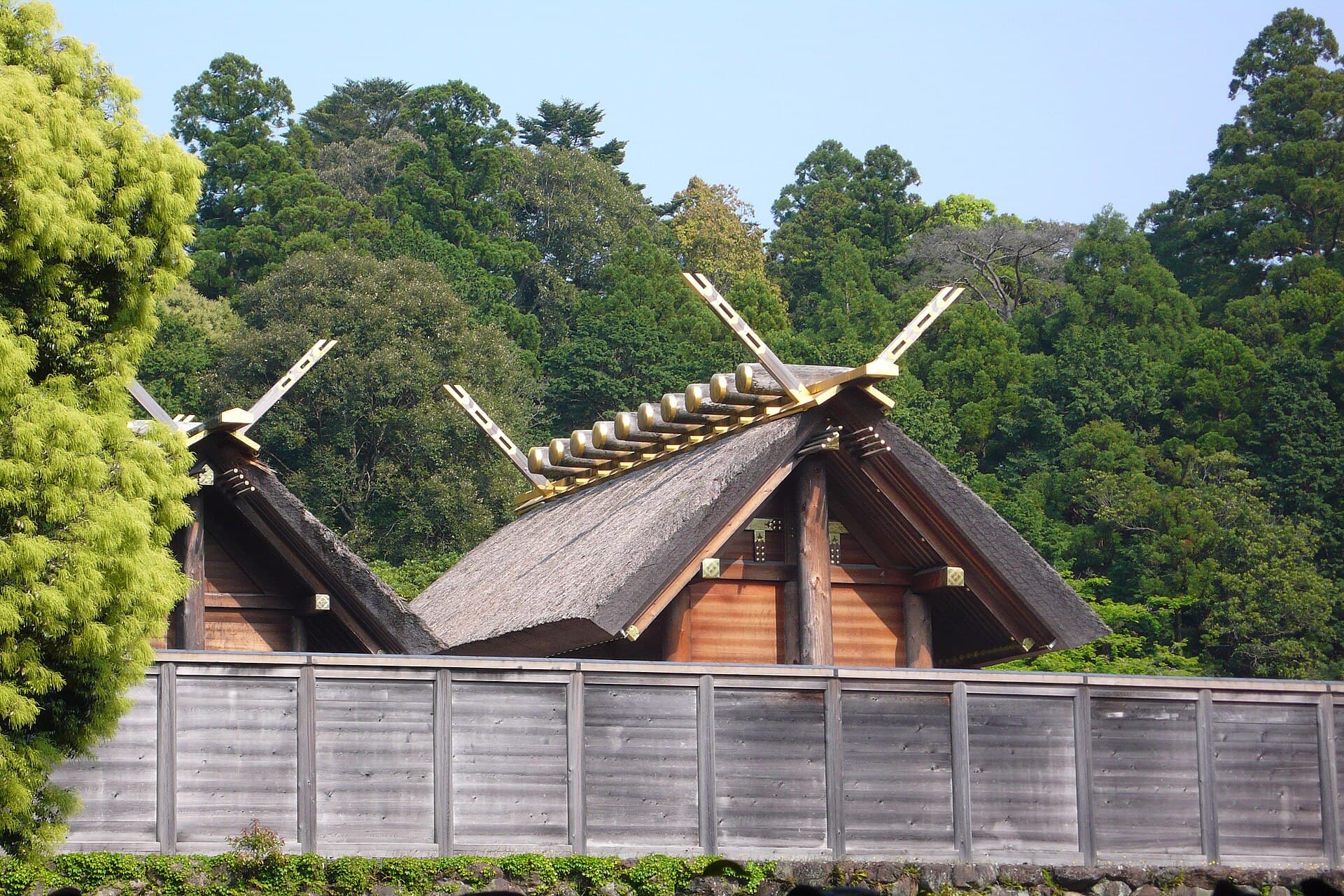 N yotarou / CC BY-SA 4.0, via Wikimedia Commons
“Where ancient traditions are rebuilt, not merely remembered.”
Not the postcards. The stories even locals don't know — whispered in your ear, right where they happened.
The most sacred buildings at Ise Jingu are seldom seen by the public, yet they are completely rebuilt every 20 years.
The iconic Akafuku Mochi, a sweet treat savored by pilgrims for centuries, carries a design that recounts the story of Ise's sacred river.
Unlike other udon, Ise's signature noodles are remarkably soft and thick, a characteristic born from a practical necessity.
Discover every secret of Ise
Every address, every reveal in full — in your ear, right where it happened.
You pick your stops. You walk. The voice reveals what the others miss.
No tours available yet. Check back soon — we're preparing them.
Ise, Japan, is a city deeply intertwined with the spiritual heart of the nation. It is home to Ise Jingu, a sprawling complex of 125 Shinto shrines, revered as the most sacred in Japan. For centuries, pilgrims have journeyed to Ise, a tradition known as Oise Mairi, seeking blessings and a connection to ancient customs.
The city's essence extends beyond its sacred sites, offering a glimpse into a profound cultural landscape where culinary traditions and historical practices are preserved. From distinctive local delicacies to the serene natural surroundings of the shrines, Ise provides an experience that resonates with the enduring faith of Japan.
Ise Jingu's origins trace back approximately 2,000 years, with the Inner Shrine (Naiku) established to enshrine Amaterasu Omikami, the sun goddess and ancestral deity of the Imperial Family. According to myth, Emperor Suinin sent his daughter, Princess Yamatohime-no-mikoto, to find a permanent home for the sacred mirror, Yata no Kagami, which eventually led her to the banks of the Isuzu River in Ise. The Outer Shrine (Geku) was founded about 500 years later to enshrine Toyouke Omikami, the deity of clothing, food, and housing, who provides meals for Amaterasu Omikami.
A defining aspect of Ise Jingu's history is the Shikinen Sengu, a monumental ritual dating back to 690 AD. Every 20 years, the shrine buildings, sacred apparel, furnishings, and divine treasures are completely rebuilt from scratch on an adjacent site of equal size. This tradition, which has been performed 62 times, with the last in 2013 and the next planned for 2033, embodies the Shinto belief in death and renewal, and ensures ancient building techniques are passed down through generations.
During the Edo period (1603-1868), Ise experienced a surge in mass pilgrimages known as Oise Mairi, with a significant portion of Japan's population visiting the shrines. This era saw the rise of local specialties like Akafuku Mochi, established in 1707 as a tea house to welcome pilgrims, and Ise Udon, which provided quick and nourishing meals for weary travelers. The area around Naiku, known as Oharai-machi and Okage Yokocho, recreates the nostalgic atmosphere of this period with traditional architecture, shops, and restaurants.
A visit to Ise traditionally begins at Geku (Outer Shrine), dedicated to Toyouke Omikami, the deity of food, clothing, and shelter. From Iseshi Station, Geku is about a 10-minute walk. After exploring Geku, visitors proceed to Naiku (Inner Shrine), the most revered sanctuary, enshrining Amaterasu Omikami. The two shrines are about 5.5 km apart, connected by a 10-15 minute bus ride. Crossing the Ujibashi Bridge at Naiku marks a transition from the everyday to the sacred. While the main sanctuaries are largely obscured from public view, the serene atmosphere of the surrounding ancient cedar forests and gravel paths is palpable.
Beyond the shrines, the historic streets of Oharai-machi and Okage Yokocho, located near Naiku, offer a lively experience. Here, traditional gabled buildings house shops selling local souvenirs and restaurants serving Ise's culinary delights. Do not miss the opportunity to try Akafuku Mochi and Ise Udon, both deeply rooted in the city's pilgrimage history. For a unique cultural insight, the Sengukan Museum near Geku explains the Shikinen Sengu ritual through diagrams, models, and videos.
The most pleasant times to visit Ise are spring (March–May) and autumn (October–November), when temperatures are mild and comfortable for walking. Spring offers cherry blossoms, while autumn brings colorful fall foliage. While popular year-round, New Year's is particularly busy with domestic pilgrims. October is significant for the Kannamesai Festival, a major harvest celebration at Ise Jingu. Summer (June–August) can be hot and humid with frequent rain, while winters (December–February) are cool but generally mild.
Ise Jingu is accessible by train, with Iseshi Station serving Geku and Isuzugawa Station for Naiku. From major cities like Nagoya, Osaka, and Kyoto, the Kintetsu Line offers convenient connections. Buses connect Geku and Naiku, with a one-way fare of 430 yen, and cash is recommended as IC cards may not be accepted. Comfortable walking shoes are essential for exploring the extensive shrine grounds. Accommodation options in Ise include traditional ryokan inns, offering an authentic Japanese experience with tatami rooms and local cuisine, as well as guesthouses and modern hotels. Dining in Ise focuses on fresh local seafood, Ise Udon, and Akafuku Mochi.