Concubine Lane
This lively alley, now filled with cafes and souvenir shops, once held a more intriguing reputation.
Full story unlocks in the tour
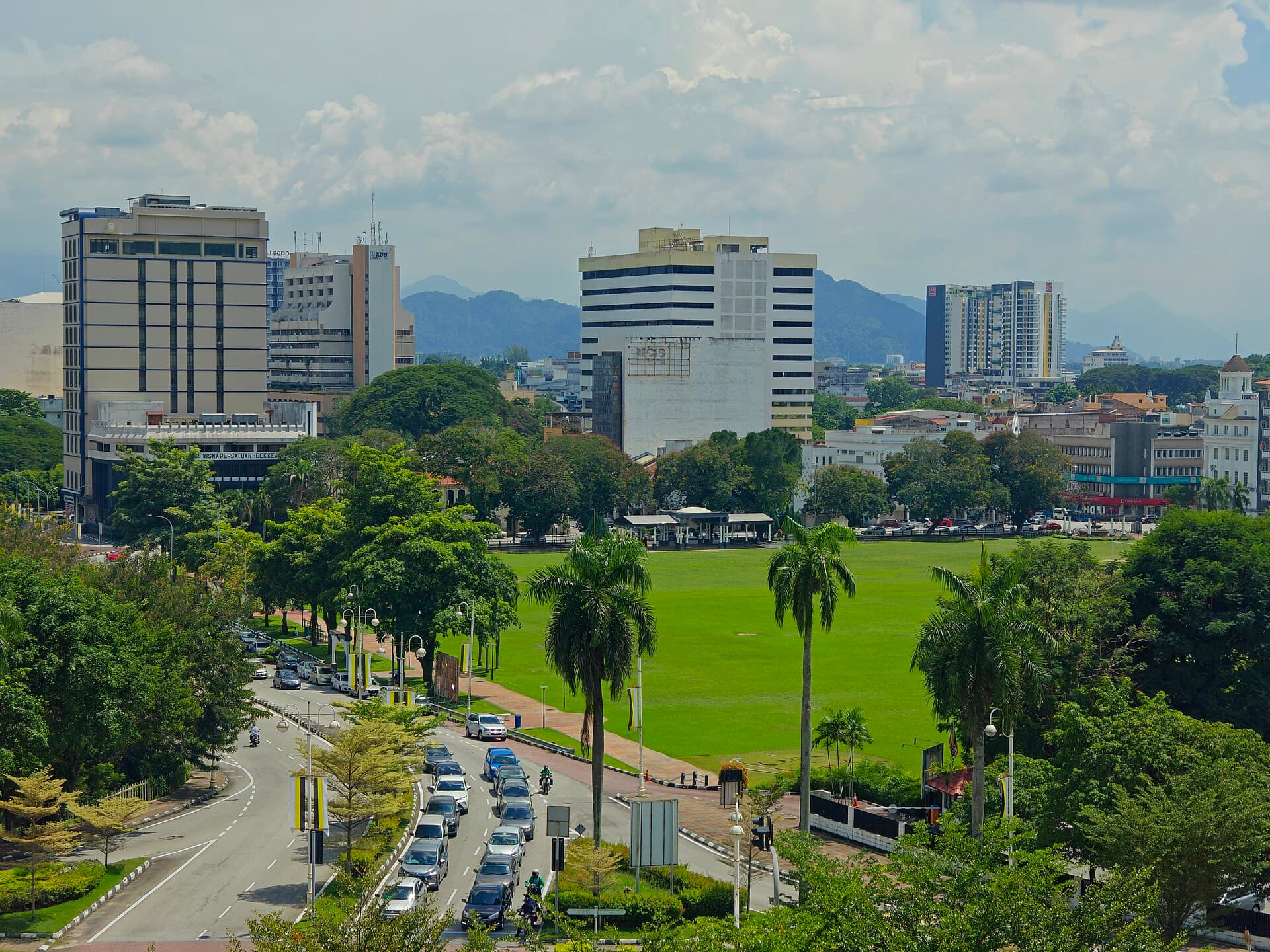 HundenvonPenang / CC BY-SA 4.0, via Wikimedia Commons
“Where colonial elegance meets karsts of limestone and legendary flavors.”
Not the postcards. The stories even locals don't know — whispered in your ear, right where they happened.
This lively alley, now filled with cafes and souvenir shops, once held a more intriguing reputation.
A grand clock tower stands in Ipoh's Old Town, dedicated to a British Resident whose demise sparked a significant historical event.
Locals attribute the distinct taste of Ipoh's celebrated dishes to a surprising natural element.
Discover every secret of Ipoh
Every address, every reveal in full — in your ear, right where it happened.
You pick your stops. You walk. The voice reveals what the others miss.
No tours available yet. Check back soon — we're preparing them.
Ipoh, the capital of Perak state in Malaysia, is a city that murmurs of a bygone era while embracing a lively present. Once a global tin mining center, its prosperity in the late 19th and early 20th centuries bequeathed a legacy of striking colonial architecture and a rich cultural fabric.
Today, Ipoh draws visitors with its singular blend of heritage, dramatic limestone karsts that shelter ancient cave temples, and a culinary landscape celebrated throughout Malaysia. It offers a slower, more authentic rhythm compared to some of its bustling neighbors, making it an ideal pause for those seeking a deeper exploration into Malaysian history and gastronomy.
## From Village to 'City of Millionaires' Ipoh began as a scattering of Malay villages along the Kinta River in the 1820s. The discovery of extensive tin deposits in the Kinta Valley in the 1880s transformed it into a flourishing settlement. Chinese, Indian, and Sumatran immigrants streamed into the area, seeking fortunes in the mines and contributing to the city's diverse character.
In 1892, a devastating fire consumed over half the town, yet this calamity paved the way for a more organized, grid-patterned reconstruction. By 1895, Ipoh was the second-largest town in the Federated Malay States. The city continued its rapid expansion through the 1920s and 1930s, fueled by the flourishing tin industry, earning it the epithet 'City of Millionaires'. A prominent Hakka miner, Yau Tet Shin, was instrumental in developing the 'New Town' area in the early 1930s.
Ipoh was declared the capital of Perak in 1937, replacing Taiping. During World War II, it was occupied by the Japanese in December 1941, and St. Michael's Institution served as the Japanese Civil Administration headquarters. After the war and Malaya's liberation, Ipoh retained its status as the state capital.
The city faced a period of decline after the collapse of tin prices in the 1970s and the depletion of its deposits, leading many to seek employment elsewhere. However, in recent decades, Ipoh has experienced a renaissance, driven by tourism and a renewed appreciation for its heritage and culinary offerings.
Ipoh's Old Town is a walkable expanse showcasing British colonial architecture, including the grand Ipoh Railway Station, often called the 'Taj Mahal of Ipoh' for its Indo-Saracenic style. Nearby, the Birch Memorial Clock Tower stands as a historical marker.
Explore the animated Concubine Lane (Lorong Panglima), Market Lane (Lorong Bandar Timah), and Wife Lane (Lorong Hale), known for their heritage shophouses, street art, cafes, and souvenir stalls. Beyond the lanes, look for lively street art and murals scattered throughout the Old Town.
The city is encircled by dramatic limestone hills, many of which shelter impressive cave temples. Sam Poh Tong Temple, a Chinese Buddhist temple, is one of the largest cave temples in Malaysia, featuring statues, wall paintings, and a serene garden with a koi pond. Kek Lok Tong Temple, also a Buddhist cave temple, offers peaceful chambers and a landscaped garden with a reflecting pond. Perak Tong Cave Temple is another notable site, home to a 12-meter golden Buddha and intricate artwork.
To delve into Ipoh's tin mining past, visit the Han Chin Pet Soo Museum, the first Hakka tin mining museum in Malaysia. It provides insights into the lives of Hakka miners and the social activities of the era. For a singular natural experience, seek out Tasik Cermin, or 'Mirror Lake,' a secluded lake accessible through a former mining tunnel.
Ipoh experiences a tropical climate, consistently warm and humid throughout the year. The most agreeable time to visit is during the drier months, from December to March, when rainfall is lower and temperatures range between 25°C and 32°C, making it ideal for exploration and outdoor activities. While afternoon thunderstorms are common year-round, they typically pass swiftly. Visiting during the wetter season (April to December) means verdant greenery and fewer crowds, but be prepared for rain.
Reaching Ipoh is straightforward; it's approximately a two-hour train ride north of Kuala Lumpur. The Electric Train Service (ETS) stops at the historic Ipoh Railway Station. For navigating the city, ride-hailing apps like Grab are readily available. The Old Town is largely walkable, allowing for exploration on foot. While many locals still refer to former colonial road names, updated maps can aid in navigation.
Ipoh is celebrated for its food, so plan to savor local specialties like Ipoh white coffee, bean sprout chicken, and various noodle dishes. Many eateries in Old Town have been operating for generations. Dress comfortably for warm, humid weather and remain hydrated. Consider booking accommodations in advance, especially during school holidays and festive seasons, as hotels can fill quickly.