E Hayes & Sons Hardware Store
Within a practical storefront, a surprising world of speed awaits.
Full story unlocks in the tour
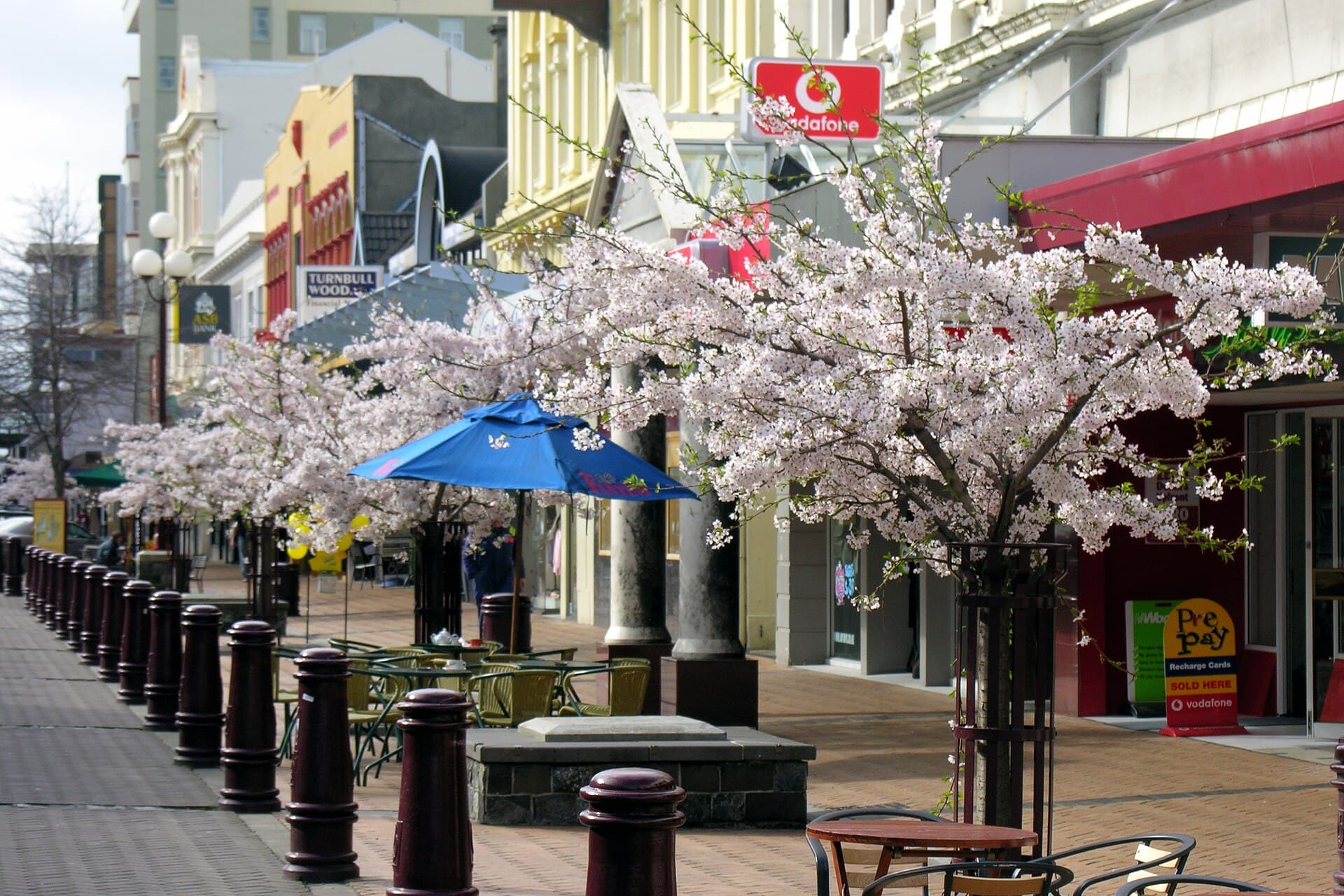 Phillip Capper from Wellington, New Zealand / CC BY 2.0, via Wikimedia Commons
“Where wide streets meet wild coast, and history hums with the roar of engines.”
Not the postcards. The stories even locals don't know — whispered in your ear, right where they happened.
Within a practical storefront, a surprising world of speed awaits.
During the construction of a hotel, over a thousand unexpected items surfaced from the earth.
An unmarked plot here conceals a chilling, forgotten story.
Discover every secret of Invercargill
Every address, every reveal in full — in your ear, right where it happened.
You pick your stops. You walk. The voice reveals what the others miss.
No tours available yet. Check back soon — we're preparing them.
Invercargill, or Waihōpai in Māori, stands as New Zealand's southernmost city, a place where broad, tree-lined avenues speak of careful urban planning and the air carries the briny scent of the nearby Foveaux Strait. It functions as the commercial heart of the Southland region, extending a welcoming atmosphere and a more deliberate pace of life than its northern counterparts. While it may not always be the primary destination for New Zealand travelers, Invercargill offers a distinctive blend of historical character, an unexpected enthusiasm for motor vehicles, and ready access to some of the South Island's most dramatic natural expanses.
The city's essence is shaped by its profound Scottish ancestry, visible in its street names and enduring architecture. Beyond the urban limits, Invercargill acts as a portal to rugged shorelines, untouched beaches, and the remote majesty of Stewart Island and The Catlins. Whether drawn by the allure of classic vehicles, the promise of the Southern Lights, or the call of the wild, Invercargill provides a singular starting point for venturing into the deep south.
The land now known as Invercargill was home to Māori for centuries before European contact. Captain James Cook navigated the southern reaches of the South Island, including Foveaux Strait, in 1770 and again three years later. European presence in the area began in the late 1700s and early 1800s, primarily driven by the pursuit of seals and whales.
In 1853, the New Zealand Company acquired the land, encompassing the future site of Invercargill, from Māori through an agreement known as the Murihiku Purchase. Just a few years later, in 1856, New Zealand officials, including Governor Thomas Gore Browne, began to plan a new township. The name Invercargill was chosen to honor Captain William Cargill, a prominent settler and the Superintendent of what was then Otago province. John Turnbull Thomson, Otago province's chief surveyor, selected the site and meticulously laid out the town's streets in 1856. The first European settlers, Irish-born sealer and whaler John Kelly and his family, arrived near the chosen site in 1856. Early street names, such as Dee, Tay, and Forth, reflect Invercargill's pronounced Scottish character.
Invercargill briefly served as the capital of Southland province from 1861 to 1870, during its brief period of autonomy from Otago province. The provincial system was dissolved in 1876, and Invercargill became a borough in 1871. The Otago gold rush in the Wakatipu district in 1863 spurred the town's population and economy. The railway line connecting Invercargill to the port of Bluff, one of New Zealand's earliest public railways, commenced operation on February 5, 1867, facilitating trade and expansion. Government-backed immigration in the 1870s further swelled the population. The iconic red-brick Invercargill Water Tower, a significant urban marker, was finished in 1889. Invercargill attained city status in 1930.
Invercargill was notably shaped by Presbyterianism, leading the town to vote for alcohol prohibition in 1905. This prohibition endured for 40 years, until 1943, though residents found ways to circumvent the regulations through outlying hotels and liquor merchants. The city is also strongly connected to motorsport, largely due to local legend Burt Munro. Munro, whose story is celebrated in the film The World's Fastest Indian, established several under-1000 cc land speed records on his modified 1920 Indian Scout motorcycle in the 1960s. His enduring legacy is honored through various transport museums and the annual Burt Munro Challenge.
Invercargill presents a range of attractions, particularly for those with an interest in transport and the outdoors. A visit to Bill Richardson Transport World is highly recommended, as it houses one of the globe's largest private collections of vehicles, featuring over 300 vintage trucks, classic cars, and even a LEGO room and wearable art displays. Complementing this is Classic Motorcycle Mecca, displaying a world-class collection of vintage motorcycles. Make sure to explore the E Hayes & Sons Motorworks Collection, a hardware store that also functions as a museum, where Burt Munro's original record-breaking Indian Scout motorcycle is on display.
For a connection with nature, Queens Park is a magnificent public space in the city center, spanning 80 hectares with meticulously kept gardens, an aviary, and walking paths. Just 10 kilometers from the city lies Sandy Point Domain, a peninsula perfect for walks and appreciating the coastal scenery. Oreti Beach, a long stretch of sand, is also a short drive away and offers the unique experience of being a drivable beach. For something truly distinctive, Demolition World offers an intriguing collection of old buildings, artifacts, and memorabilia in a junkyard setting.
The most favorable time to visit Invercargill for warm-weather activities extends from mid-January to late February, during the summer months. In this period, average daily high temperatures rise above 16°C (62°F), with January being the warmest month, averaging 18°C (65°F). While summer offers the mildest and sunniest weather, be prepared for potentially cool, windy, and rainy days, as precipitation occurs frequently throughout the year. Invercargill experiences nearly 16 hours of daylight at the summer solstice in late December, and its clear skies and low light pollution also make it a promising location to potentially witness the Aurora Australis (Southern Lights) between April and September.
Invercargill is a city that invites walking, with many points of interest in the city center readily accessible on foot. The Invercargill Central Mall, which opened in 2022, offers a contemporary shopping and dining experience. For local produce and a lively atmosphere, visit the Sunday farmers market at the train station. The city is well-connected by bus to other significant South Island destinations like Dunedin, Queenstown, and Te Anau. Invercargill Airport (IVC) provides direct flights to Auckland and Christchurch.
When preparing your luggage, layering is essential due to Southland's rapidly changing weather; a windproof and waterproof jacket is crucial, even in summer. Comfortable walking shoes are advised for exploring parks and trails. Accommodation options range from well-priced motels to hotels and self-contained apartments. Invercargill also serves as a gateway to Stewart Island, reachable by a 20-minute flight from Invercargill or a ferry from Bluff.