Villa Grock
Imperia holds a whimsical villa with an eccentric past.
Full story unlocks in the tour
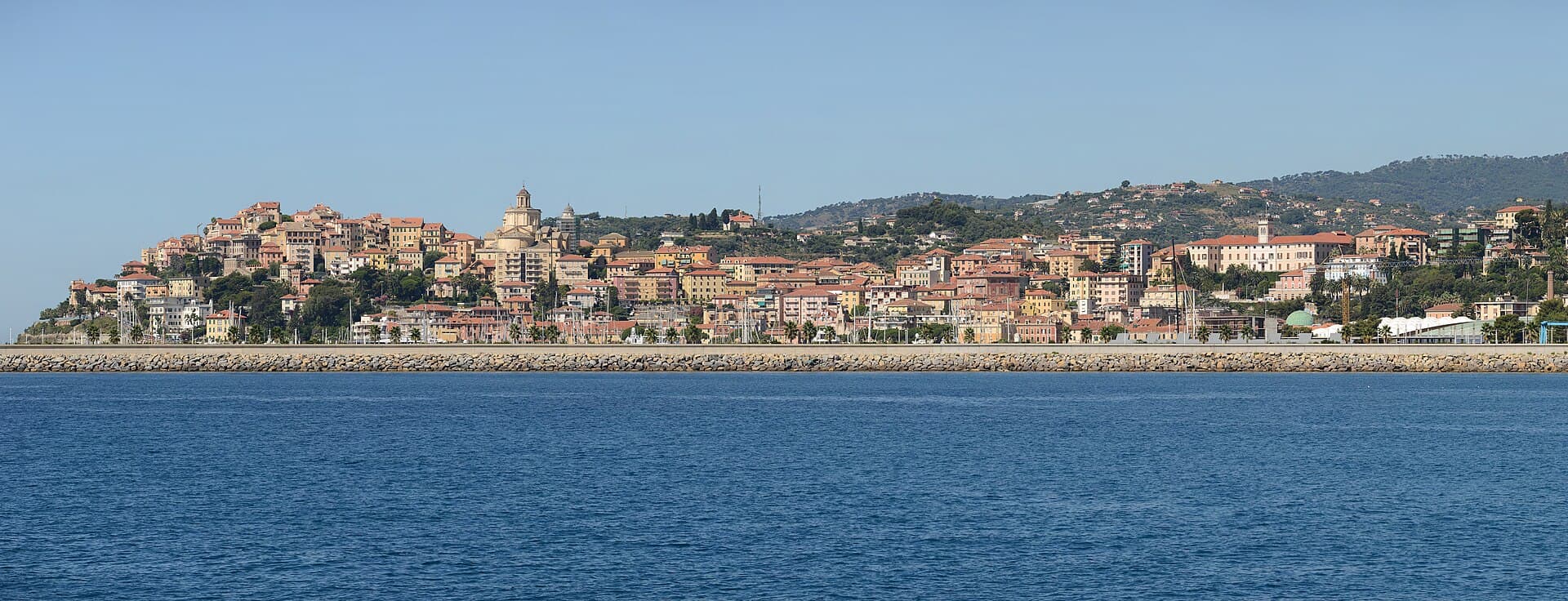 Feel free to use my photos, but please mention me as the author and if you want send me a message. or (rufre@lenz-nenning.at) / CC BY-SA 3.0 at, via Wikimedia Commons
“Where two souls of Liguria meet the sea and the scent of olives.”
Not the postcards. The stories even locals don't know — whispered in your ear, right where they happened.
Imperia holds a whimsical villa with an eccentric past.
There's a quiet stretch of sand in Imperia that most guidebooks miss.
The opening scene of a famous spy thriller was filmed right here in Imperia.
Discover every secret of Imperia
Every address, every reveal in full — in your ear, right where it happened.
You pick your stops. You walk. The voice reveals what the others miss.
No tours available yet. Check back soon — we're preparing them.
Imperia, a coastal city in the Liguria region of northwestern Italy, offers a singular blend of history, culture, and natural beauty. It was officially formed in 1923 by the unification of two historically distinct towns, Porto Maurizio and Oneglia, along with several surrounding villages. This dual identity gives Imperia a fascinating character, with each district retaining its own charm and atmosphere. Porto Maurizio, situated on a peninsula to the west of the Impero river, is known for its medieval architecture, narrow streets, and a more residential, historic feel. Oneglia, to the east, is the more modern and industrial hub, with a bustling port and commercial arteries.
The city rests between the azure Ligurian Sea and scenic hills, creating a picturesque backdrop for leisurely exploration. Imperia is recognized for its cultivation of olives and flowers, which are central to its economy and contribute to its colorful landscapes. The city's mild Mediterranean climate makes it a popular destination, particularly during the warmer months, for those seeking coastal allure without the overwhelming crowds of some other Italian Riviera towns.
The area now known as Imperia has a deep history, dating back to ancient Ligurian tribes and later becoming part of the Roman Empire. Throughout the Middle Ages, the region was a contested territory, with various city-states and maritime republics, particularly Genoa, vying for control.
Porto Maurizio, the older of Imperia's two main districts, was once a Roman port. It became a Byzantine port after the Gothic Wars in the 6th century and later fell under the control of the Order of Saint Benedict. In 1288, it was sold to the Republic of Genoa, becoming the seat of a Genoese vicar in 1354, and prospered despite shifting control between French, Milanese, and Spanish powers. Napoleon Bonaparte himself is said to have spent a night in Porto Maurizio during the Napoleonic Wars.
Oneglia, on the other hand, established itself around 935 AD, possibly after being destroyed by Saracens. In 1298, it became part of the Doria family's fiefdom, a prominent Genoese family, and was later sold to the Duke of Savoy in 1576. Oneglia remained a Savoyard enclave within the Republic of Genoa until Italian unification, often finding itself on the front lines of conflicts.
The modern city of Imperia was a creation of the 20th century. On October 21, 1923, Benito Mussolini decreed the unification of Porto Maurizio and Oneglia, along with several surrounding villages, to form a single municipality. The new city took its name from the Torrente Impero, the stream that flows between the two main districts. This administrative merger brought together two areas with distinct histories and even slightly different dialects and gastronomic traditions, creating the unique, dual-natured city visitors experience today.
Imperia's two main districts, Porto Maurizio and Oneglia, each offer unique sights. In Porto Maurizio, explore the historic Parasio area with its narrow, stone-paved streets and medieval architecture. Ascend to the Basilica of San Maurizio, the largest cathedral in Liguria, built in the late 18th to early 19th century, offering commanding views. Nearby, the Convent of Santa Chiara, originally built in the 14th century, provides expansive vistas from its loggias.
Oneglia presents a different character with its lively harbor and the old fishing houses along Calata Cuneo, now home to fishmongers and restaurants. Do not miss the Museo dell'Olivo (Olive Museum), founded by the Fratelli Carli family, which offers an insightful journey into the story and production of olive oil, a staple of the region. For a touch of eccentricity, visit Villa Grock, the former residence of the famed clown Grock, featuring fanciful architecture and a fantastical garden. The Spianata Borgo Peri is a pleasant seafront promenade lined with palm trees.
Imperia enjoys a mild Mediterranean climate, making it an appealing destination for much of the year. The best times to visit are spring and early summer, particularly from mid-April to mid-June, when temperatures are pleasant and tourist crowds are fewer. September is also a good month, especially the first half. Summers (June to August) are warm and sunny, ideal for beach activities, though it is the peak tourist season with higher prices. Autumn (September to November) is mild and humid, offering a chance to experience local harvest and culinary events. Imperia is also one of the sunniest cities in northern Italy.
Imperia is easily accessible by car via the A10 motorway, with parking available in Piazzale Maestri del Commercio Imperiese (partially paid) or at Molo Lungo (free, but check for market days). Train connections are also good, with direct trains from Genoa taking about 1.5 hours. The city is best explored on foot, allowing visitors to fully appreciate its coastal views and historic sites. Public buses are available for getting around the city and to neighboring towns. When using public transport, remember to validate your tickets.
The local cuisine is typically Mediterranean, emphasizing fresh vegetables, local olive oil, and seafood. While fresh produce is generally affordable, seafood can be expensive. The cost of living in Imperia is considered high, especially for housing, reflecting its desirability as a coastal city. However, many find the quality of life and beautiful surroundings to be worth the expense.