Market Square (Markt)
Observe the Old Town Hall's astronomical clock, and a peculiar figure with an endless appetite will catch your eye.
Full story unlocks in the tour
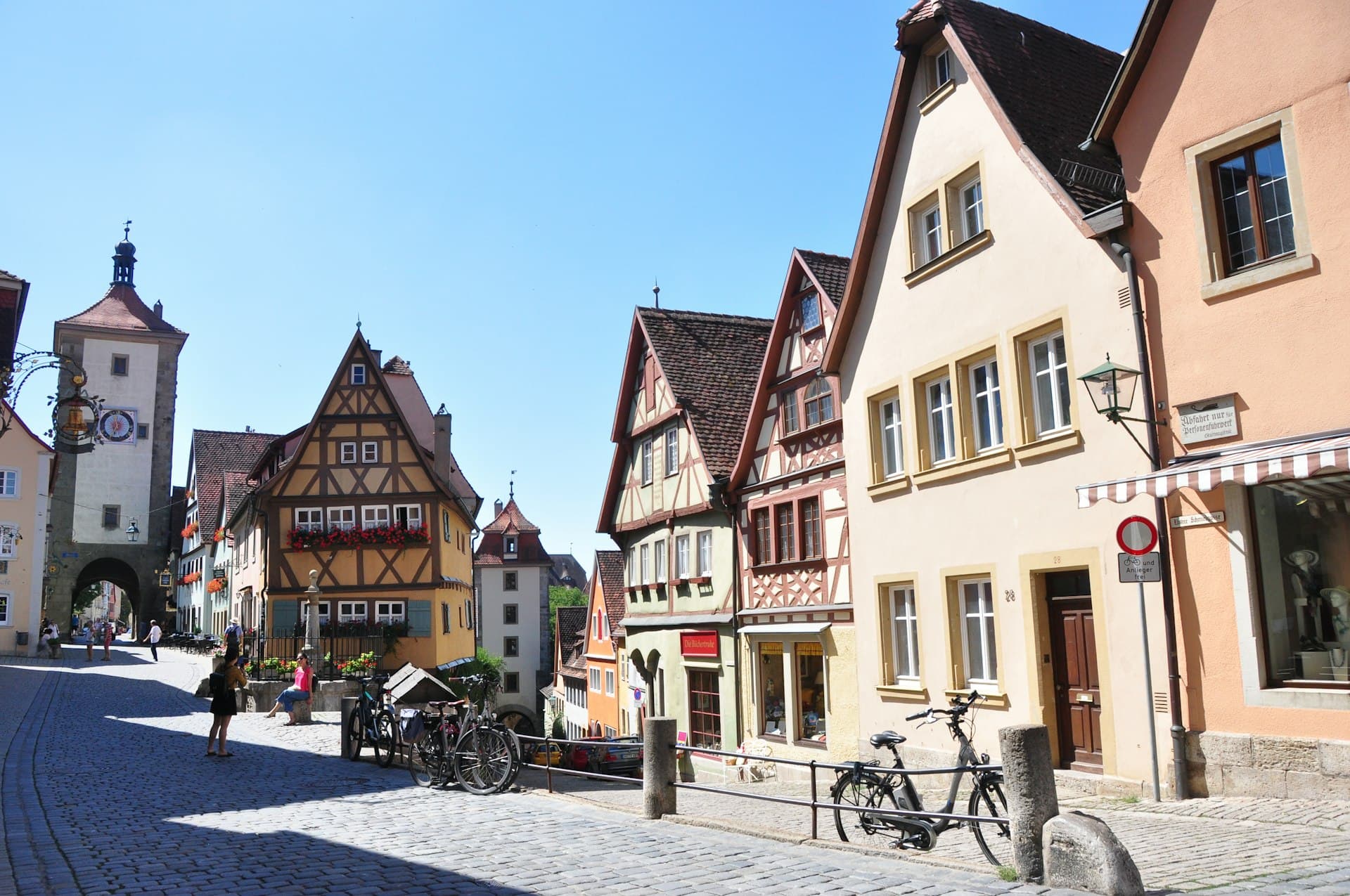 Photo: I Do Nothing But Love / Unsplash
“Where scientific innovation meets Romantic ideals amidst limestone hills.”
Not the postcards. The stories even locals don't know — whispered in your ear, right where they happened.
Observe the Old Town Hall's astronomical clock, and a peculiar figure with an endless appetite will catch your eye.
Beneath the altar of this Gothic church lies an architectural curiosity, a concealed passage with an unexpected original purpose.
Jena's most conspicuous modern landmark, a soaring cylindrical skyscraper, maintains a surprising link to the city's optical legacy.
Discover every secret of Iéna
Every address, every reveal in full — in your ear, right where it happened.
You pick your stops. You walk. The voice reveals what the others miss.
No tours available yet. Check back soon — we're preparing them.
Jena, a city in the German state of Thuringia, offers a compelling fusion of academic distinction, scientific ingenuity, and natural splendor. Resting along the Saale River and embraced by striking limestone hills, it provides both intellectual stimulation and opportunities for outdoor exploration. With a population of approximately 110,000, where nearly a quarter are students, Jena possesses a youthful and energetic atmosphere. Often referred to as the 'City of Light' due to its pioneering role in the European optical industry, Jena is a place where history, culture, and high-tech industry converge.
The city's profound heritage is apparent in its well-preserved medieval structures and its deep connections to influential figures like Johann Wolfgang von Goethe and Friedrich Schiller, both of whom resided and worked here. Around 1800, Jena became a focal point for German Romanticism and early philosophical thought, attracting numerous pioneers across various fields. From its historic university, established in 1558, to its contemporary research institutes and high-tech enterprises such as Carl Zeiss and Schott AG, Jena remains a significant center for education and research.
## From Medieval Settlement to Scientific Hub Jena's origins can be traced back to its initial mention in official documents in 1182, becoming a chartered city around 1230 under the Lords of Lobdeburg. Initially, the city's economy was rooted in winemaking, with its limestone slopes providing ideal conditions for grape cultivation.
A defining moment in Jena's history was the establishment of its university in 1558, initially as an 'academic grammar school' within a former Dominican monastery. This institution, later named Friedrich Schiller University, swiftly rose to become one of Germany's most esteemed places of study, drawing students and influential thinkers from across Europe. The university's presence transformed Jena into a significant intellectual and cultural center, attracting literary giants like Goethe and Schiller, and philosophers such as Georg Wilhelm Friedrich Hegel and Friedrich von Schelling.
The 19th century brought considerable industrial development to Jena, particularly in the field of optics. Carl Zeiss opened his first optical workshop in 1846, laying the groundwork for Jena's global standing in precision mechanics and optical instruments. Collaborations with physicist Ernst Abbe and chemist Otto Schott further cemented Jena's position as a world center for optical innovation.
Jena experienced substantial destruction during World War II, enduring heavy bombing raids in February and March 1945. Following the war, it became part of the German Democratic Republic (East Germany) in 1949. During this period, parts of the Zeiss and Schott factories were dismantled by the Soviets. Post-reunification in 1990, Jena has successfully re-established itself as a high-tech city, attracting new companies and innovation centers while modernizing its traditional industries.
Begin your exploration in the Market Square (Markt), the beating heart of the old town, encircled by historic buildings. Here, you will discover the Old Town Hall, a 14th-century structure featuring an astronomical art clock with the 'Schnapphans' figure. Close by stands the St. Michael's Church (Stadtkirche St. Michael), a graceful Gothic church completed in 1506, which contains a bronze slab from Martin Luther's tomb.
Ascend the JenTower, a cylindrical skyscraper offering a 360-degree viewing platform on its 28th floor, providing expansive panoramas of Jena and the Saale valley. For a deeper understanding of Jena's scientific legacy, visit the Optical Museum (Optisches Museum), which displays five centuries of optical inventions, including Carl Zeiss's original workshop and early cameras. The Zeiss Planetarium, the world's oldest working planetarium (opened in 1926), offers immersive journeys through the cosmos.
Those who appreciate the natural world will enjoy the Botanical Garden (Botanischer Garten), Germany's second oldest, established in 1580. It showcases diverse flora, including tropical greenhouses with water lilies and piranhas. For outdoor pursuits, explore the SaaleHorizontale hiking trail, which meanders through the limestone hills surrounding the city, offering picturesque vistas. You can also visit Schiller's Garden House (Schillers Gartenhaus), where the celebrated poet lived and worked, and observe the oval stone table where he often conversed with Goethe. Do not overlook the remaining medieval fortifications like the Johannistor gate and the Powder Tower (Pulverturm), providing glimpses into Jena's past.
Jena offers enjoyment throughout the year, but the most favorable times for warm-weather activities and pleasant exploration are from late June to early September. During July and August, average daytime temperatures hover around 19–20°C, often warming to a comfortable 24.5°C, ideal for hiking in the surrounding hills. Spring (May) and early autumn (September) also provide mild weather, with temperatures reaching 17°C and 20°C respectively, and colorful landscapes perfect for walking. While precipitation occurs year-round, it is generally not heavy, though an umbrella can be useful in any season. Winters are cool but not severe, creating a comfortable atmosphere for cultural events.
The official currency in Jena, and across Germany, is the Euro (EUR). German is the primary language spoken, though English is frequently understood, particularly by younger generations and in academic or tourist-oriented settings. Nonetheless, learning some basic German phrases is always appreciated.
Jena is a compact city, making many central sights accessible on foot. For longer distances, the city maintains an efficient and extensive public transport system operated by Jenaer Nahverkehr, comprising five tram lines and numerous bus routes. Services typically run from 4:00 AM until 1:00 AM, with some lines operating overnight. Single tickets cost €2.90 as of May 2026. For travel within the broader Thuringia region, the VMT (Verkehrsverbund Mittelthüringen) offers combined tickets for buses and trains. The Deutschlandticket (€63 per month) is valid on all local and regional trains.
Jena is well-connected by train, with two main stations: Jena Paradies for north-south routes and Jena West for east-west journeys. High-speed ICE trains connect Jena directly to cities like Berlin and Munich. Long-distance buses, primarily FlixBus, also serve Jena, offering a practical alternative for travel to cities like Berlin and Munich. The nearest international airport is in Leipzig, approximately 100 km away.