The Miaoulis Mansion, Kamini
This striking red-colored house in the fishing village of Kamini holds a secret about its past.
Full story unlocks in the tour
 Herbert Ortner, Vienna, Austria / CC BY 3.0, via Wikimedia Commons
“Where the Aegean breathes ancient tales and donkeys chart the course.”
Not the postcards. The stories even locals don't know — whispered in your ear, right where they happened.
This striking red-colored house in the fishing village of Kamini holds a secret about its past.
High above Hydra Town, a neighborhood named 'Kala Pigadia' hints at a vital resource that once sustained the island.
More than just a place to fill a prescription, this pharmacy in Hydra Town holds a surprising connection to the island's artistic legacy.
Discover every secret of Hydra
Every address, every reveal in full — in your ear, right where it happened.
You pick your stops. You walk. The voice reveals what the others miss.
No tours available yet. Check back soon — we're preparing them.
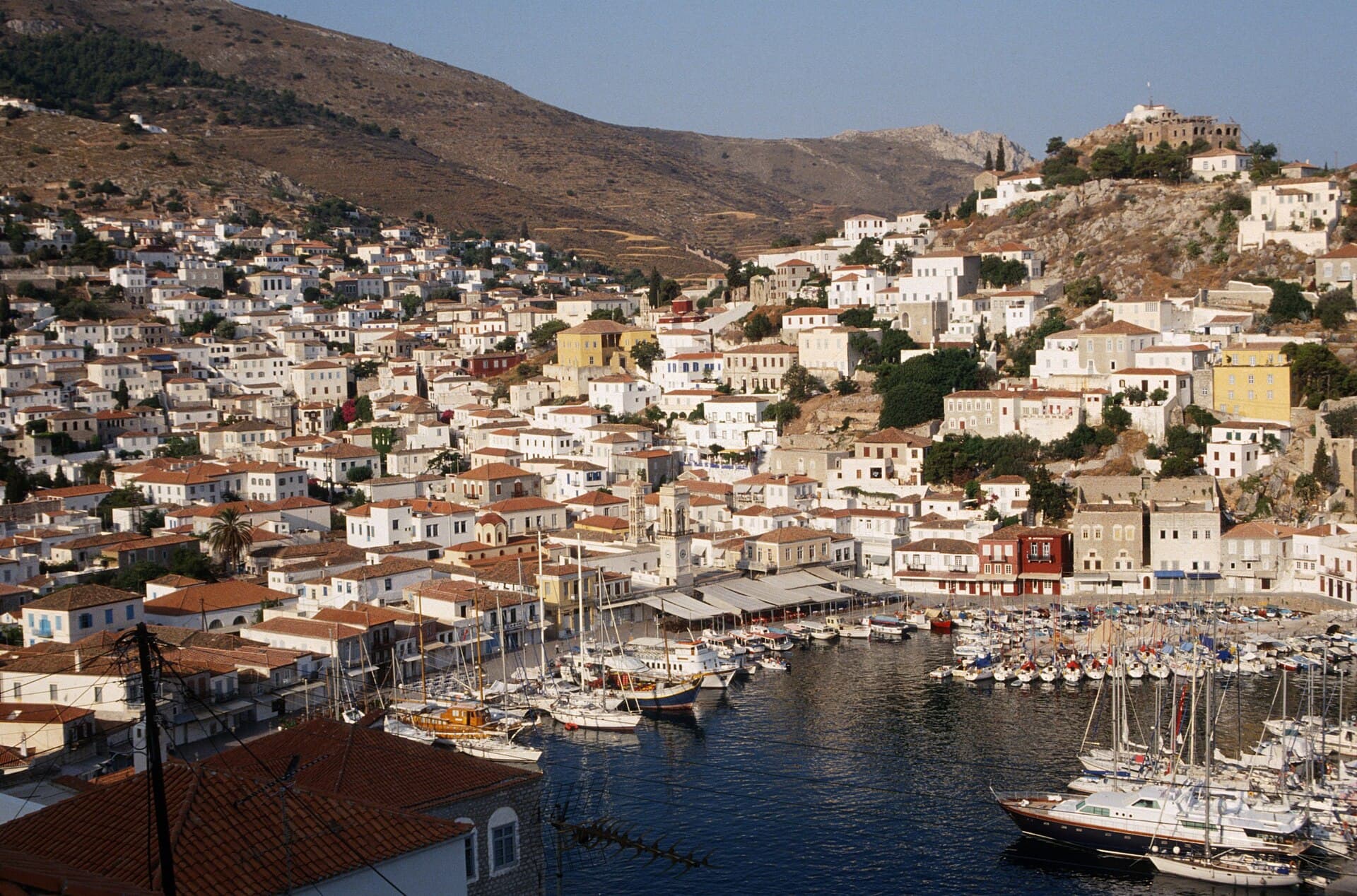
Hydra, a sparkling island in the Saronic Gulf, offers a distinct escape from the ordinary. This car-free island maintains a tranquil pace, where the clip-clop of donkeys and the gentle lapping of waves replace the drone of traffic. Its natural amphitheater-like harbor, encircled with stone mansions, cafes, and shops, creates a welcoming vista. Hydra's particular allure, a blend of preserved 18th-century architecture and an enduring artistic spirit, has captivated visitors for decades, including artists, writers, and celebrities seeking its serene beauty.
Life on Hydra unfolds at a walking pace, inviting exploration of its narrow, stone-paved alleys and scenic coastal paths. The island's commitment to preserving its traditional character means that donkeys and water taxis are the primary modes of transport, adding to its timeless appeal. Whether you are drawn to its enduring history, its thriving art scene, or simply the allure of an island where time seems to slow, Hydra offers a truly immersive Greek island experience.
The island of Hydra, known in antiquity as Hydrea due to its natural springs, has a history deeply intertwined with the sea. Early inhabitants included Mycenaeans, though much of its ancient past remains unrecorded. During the Byzantine era, evidence suggests a population, but pirate raids often led to inhabitants fleeing or retreating inland.
A significant turning point arrived in the 15th century with waves of refugees, including Orthodox Albanians, settling on the island. Despite its infertile land, Hydra's inhabitants turned to maritime trade, establishing its first school for mariners in 1645. The 17th century saw the island's naval and commercial development flourish, reaching its peak during the Napoleonic Wars. Hydriot merchants profited by circumventing the British blockade of French ports, earning the island the nickname "Little England." This prosperity is evident in the grand mansions built by sea captains that still encircle the harbor today.
Hydra played a pivotal role in the Greek War of Independence, which began in 1821. The island's formidable fleet, numbering around 130 ships and manned by 10,000 sailors, became a cornerstone of the Greek naval forces. Wealthy shipping magnates like Lazaros Kountouriotis generously donated their fortunes and fleets to the cause, and figures such as Admiral Andreas Miaoulis led the charge against the Ottoman navy. The island's contribution was immense, though it came at a significant cost, with many ships lost in the struggle.
Following independence, Hydra experienced an economic downturn. However, in the mid-20th century, the island found a new identity as an artistic hub. The 1956 film Boy on a Dolphin, starring Sophia Loren, brought international attention to Hydra. By the 1960s, it had become a favored retreat for artists, writers, and celebrities, including Leonard Cohen and Henry Miller. Today, Hydra remains committed to preserving its unique character, with stringent planning regulations ensuring that its traditional architecture and car-free environment endure. This dedication has earned it recognition as a unique destination for its "integrity of place."
The main harbor of Hydra Town is the island's beating heart, a crescent of cafes, restaurants, and shops framed by traditional stone buildings. Wander the waterfront to admire fishing boats and yachts, or settle into a cafe for a Greek coffee.
Explore the historical mansions that speak to Hydra's prosperous past. The Lazaros Kountouriotis Mansion, now an annex of the National Historical Museum, showcases family heirlooms, traditional art, and paintings by artists like Pericles and Konstantinos Byzantios. The Georgios Kountouriotis Mansion houses the Museum of Post-Byzantine Art and History of Hydra. The Historical Archives Museum of Hydra offers further insight into the island's maritime history and its role in the War of Independence.
For expansive views, hike to the Profitis Ilias Monastery, founded in 1813 and situated on the slopes of Mount Eros. The ascent takes about 1.5 hours and offers sweeping vistas of the island and the Aegean Sea. Along the coast, the bastions on either side of the harbor, built to defend against invasion in the 18th century, provide excellent sunset viewing spots. Consider a walk to the nearby fishing village of Kamini, a peaceful spot with a small pebbly beach and traditional tavernas. Water taxis can take you to more secluded beaches like Vlychos or Agios Nikolaos.
Hydra enjoys a Mediterranean climate, making it a year-round destination. The peak tourist season is during the summer months (June through August), offering warm weather, bright sunshine, and a lively atmosphere, though it can be crowded. For a more peaceful experience with pleasant temperatures, consider visiting during the shoulder seasons: April to May or September to October. During these periods, the weather is still warm, ideal for walking and exploring, and tourist numbers are milder. Winters are mild, with temperatures rarely dropping below freezing, and can offer a tranquil escape.
Access to Hydra is exclusively by sea, with frequent ferry connections from Piraeus Port in Athens, typically taking 1 to 2 hours. Several ferry companies operate daily routes, with increased frequency during summer. There is no airport on Hydra; the closest is Athens International Airport.
One of Hydra's most defining characteristics is its car-free environment. Motorized vehicles, including cars, motorbikes, and even bicycles, are prohibited. Transportation on the island relies on walking, donkeys, mules, and water taxis. Donkeys and mules are commonly used for carrying luggage and supplies, particularly to accommodations on higher ground. Water taxis offer a convenient way to reach various beaches and secluded coves around the island. The island is generally considered very safe.