El Dahar (Old Town)
While Hurghada is celebrated for its contemporary resorts, a walk through the city's venerable heart reveals a distinct rhythm.
Full story unlocks in the tour
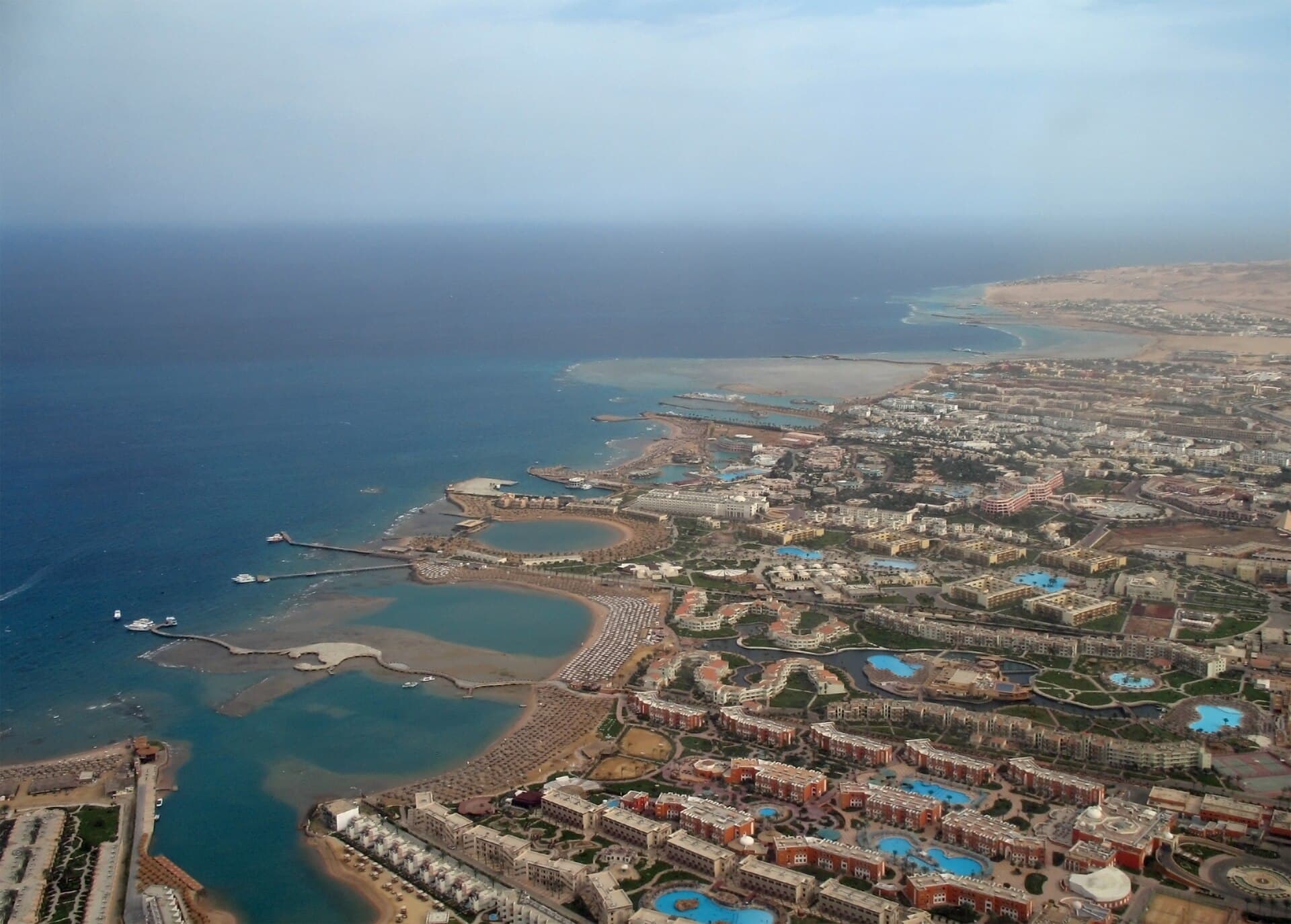 Marc Ryckaert / CC BY 3.0, via Wikimedia Commons
“Where the desert meets the Red Sea, a realm of profound contrasts unfolds.”
Not the postcards. The stories even locals don't know — whispered in your ear, right where they happened.
While Hurghada is celebrated for its contemporary resorts, a walk through the city's venerable heart reveals a distinct rhythm.
Beyond the active coastline, the desert surrounding Hurghada holds an extraordinary acoustic phenomenon.
Divers exploring the Red Sea near Hurghada have reported observations that defy simple explanation.
Discover every secret of Hurghada
Every address, every reveal in full — in your ear, right where it happened.
You pick your stops. You walk. The voice reveals what the others miss.
No tours available yet. Check back soon — we're preparing them.
Hurghada, a city extending along the Red Sea coast, has evolved from a modest fishing settlement into a prominent international resort destination. It is a place where the stark grandeur of the Eastern Desert converges with the brilliant, clear waters of the Red Sea. With sunshine throughout the year, Hurghada draws millions of guests annually, enticed by its diverse marine ecosystems, extensive coral formations, and a wide array of aquatic activities.
The city presents a fusion of experiences, from the animated ambiance of its contemporary marina and resort areas to the more traditional character of El Dahar, its older district. Whether you seek underwater expeditions like diving and snorkeling, desert explorations, or simply repose on sun-drenched shores, Hurghada provides a dynamic setting for an Egyptian escape.
Hurghada's origins are relatively recent when compared to many other Egyptian urban centers. It was formally established in the early 20th century, around 1905, as a small fishing village inhabited by Ababda fishermen. The city's name is thought to derive from the 'Ghardaq' plant (Nitraria), a shrub that grew abundantly in the area. For many decades, it remained a quiet, secluded community, with its economy primarily centered on fishing and, after 1913, oil extraction.
A significant transformation occurred in the 1980s when the Egyptian government and international investors recognized Hurghada's potential as a prime tourist destination. Its strategic position on the Red Sea, coupled with its transparent waters and extensive coral reefs, made it an appealing location for development. This era witnessed rapid expansion, with the construction of numerous resorts, hotels, and diving centers.
During the War of Attrition (1967–70), Shadwan Island, east of Hurghada, was fortified by Egyptian troops, underscoring the region's strategic importance. By the early 21st century, Hurghada had firmly cemented its reputation as one of the most sought-after beach and diving destinations in the Middle East. The city's growth continued with the inauguration of the Hurghada Marina in 2008 and a new international airport terminal in 2015, further enhancing its accessibility and appeal to visitors. Today, Hurghada is a lively city, continually developing while striving to balance its rapid expansion with the preservation of its natural marine environment.
Hurghada's primary allure is the Red Sea, providing exceptional opportunities for snorkeling and diving amidst lively coral reefs and varied marine life. Boat excursions to islands such as Giftun, Orange Bay, and Mahmya offer chances to unwind on pale sandy shores and explore protected marine sanctuaries. For those who prefer to remain dry, glass-bottom boat tours and the Sindbad Submarine offer views of the underwater world.
Beyond the coast, the Eastern Desert beckons with adventures like quad biking, jeep safaris, and camel rides to Bedouin communities, often including traditional dinners and stargazing. Within Hurghada city itself, explore El Dahar (the old town) for a glimpse into local existence, its markets, and the Abdulmoneim Riyad Mosque. The Hurghada Grand Aquarium displays a wide array of marine species, including a glass tunnel for intimate observations. For a contemporary contrast, Hurghada Marina Boulevard presents a selection of eateries, cafes, and boutiques along a yacht-lined promenade.
Hurghada welcomes visitors throughout the year, though the optimal time for your visit depends on your preferences. The busiest tourist period extends from October to April, offering agreeable temperatures ranging from 20°C to 30°C, perfect for outdoor pursuits and comfortable beach conditions without extreme heat. For those prioritizing water activities like diving and snorkeling, the months from May to September provide the warmest sea temperatures and excellent visibility. Summer (June-August) can be quite hot, with daily highs often surpassing 35°C, making early mornings or late afternoons more suitable for desert excursions. To avoid the largest gatherings, consider the shoulder seasons of late spring (April-May) or early autumn (September-October).
The local currency is the Egyptian Pound (EGP), and while credit cards are accepted in most hotels, it is advisable to carry smaller denominations of cash for taxis, gratuities, and local markets. ATMs are widely available. Tap water is not suitable for drinking; always use bottled water. For internet access, local SIM cards from providers like Vodafone or Orange are readily obtainable and offer reliable service.
When traversing Hurghada, taxis are a convenient choice, but it is important to agree upon the fare before commencing your journey, as most do not utilize meters. For a more local experience, microbuses are also available. While Hurghada is generally considered secure for visitors, particularly within resort areas and on organized excursions, it is always wise to exercise standard travel awareness. When visiting local districts or religious sites outside of resorts, dressing modestly by covering shoulders and knees is a gesture of respect.