Barrio Reina Victoria
This neighborhood, with its distinct architectural style, tells a story of an unexpected foreign influence in Huelva.
Full story unlocks in the tour
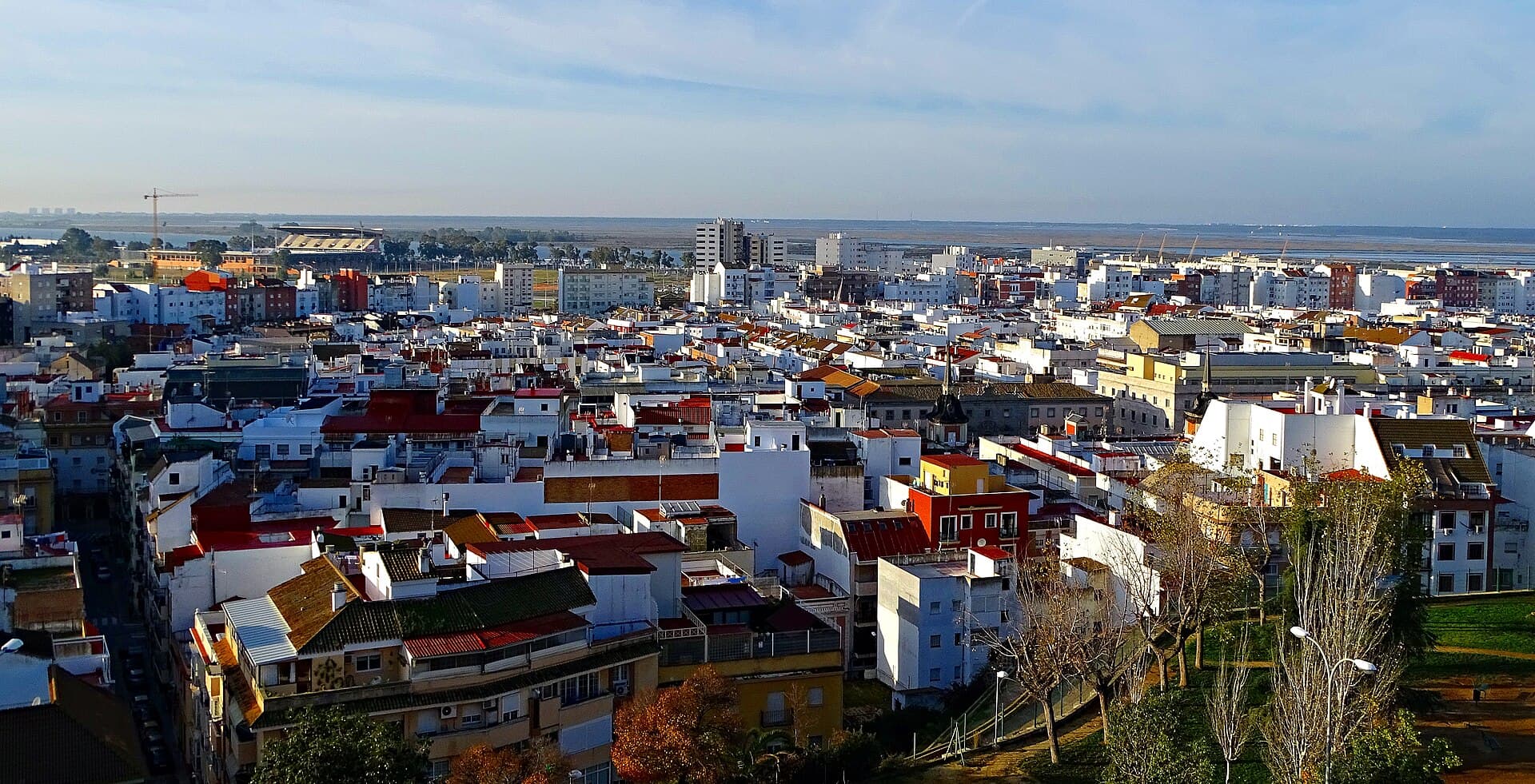 Jose A. / CC BY 2.0, via Wikimedia Commons
“Where history's currents meet the Atlantic breeze.”
Not the postcards. The stories even locals don't know — whispered in your ear, right where they happened.
This neighborhood, with its distinct architectural style, tells a story of an unexpected foreign influence in Huelva.
A colossal statue guards the confluence of two rivers, but its identity is often debated.
Huelva's main theater was built with a forward-thinking design that anticipated a new form of entertainment.
Discover every secret of Huelva
Every address, every reveal in full — in your ear, right where it happened.
You pick your stops. You walk. The voice reveals what the others miss.
No tours available yet. Check back soon — we're preparing them.
Huelva, a port city in southwestern Andalusia, Spain, rests at the confluence of the Tinto and Odiel rivers, where they flow into the Atlantic Ocean. This strategic location has molded its identity across epochs, from an ancient trading post to a pivotal point in the Age of Discovery. Today, Huelva serves as the capital of its province and a portal to the Costa de la Luz, known for its expansive beaches, and the biodiverse Doñana National Park.
The city offers a blend of historical depth, natural splendor, and cultural richness, often overlooked by mass tourism. Visitors can explore its maritime heritage, marked by its connection to Christopher Columbus's first voyage to the Americas, and uncover a distinctive architectural landscape influenced by its industrial past. Huelva's authentic atmosphere and unhurried pace of life provide a window into traditional Spain.
## Ancient Roots and Mythical Connections Huelva's history stretches back to prehistoric times, making it one of the oldest cities in Western Europe. Around the 7th century BC, Phoenician and Greek merchants established a trading settlement and port, exporting minerals throughout the Mediterranean. This period is associated with the Tartessian culture, a fabled place of great prosperity that some believe was located in Huelva. The Romans later expanded the port, renaming the city Onuba Æstuaria, and used it to export copper and silver from the nearby Río Tinto mines. Remnants of a Roman aqueduct from the 1st century AD can still be found in the Conquero area. Under Moorish rule, Huelva was known as Ghelbah and served as a trading post with North Africa.
## The Age of Discovery and Industrial Transformation After the Reconquest by Alfonso X in 1257, Huelva became part of the kingdom of Seville. By the 15th century, it was a significant port, but its standing truly soared in 1492 when Christopher Columbus prepared and embarked on his first voyage to the New World from the nearby La Rábida monastery and Palos de la Frontera. This pivotal event cemented Huelva's place in global history.
The late 19th century brought a new wave of transformation with the influx of foreign capital from mining interests, primarily British companies exploiting the Río Tinto mines. This industrial surge reshaped Huelva's urban landscape, with the construction of industrial structures like mineral wharves, workshops, and railways. The Casa Colón, inaugurated in 1883 as the Hotel Colón, became a symbol of British influence and later a significant cultural center. The city also saw the creation of Barrio Reina Victoria, an English-inspired garden city for mining workers.
## Modern Huelva Huelva was declared a provincial capital in 1833. While mining remained a driving force until the 1960s, the city's economy diversified. Today, Huelva continues to embrace its extensive past while looking to the future, serving as a cultural hub and a starting point for exploring the natural wonders of its province.
Begin your exploration at the Plaza de las Monjas, a central open space in the historic heart of Huelva. This plaza, which has held various names throughout history, is surrounded by notable buildings and features a Columbus Monument. Nearby, the Casa Colón, a grand complex originally built as the Hotel Colón in 1883, now functions as a congress and exhibition center, hosting cultural events like the Ibero-American Film Festival.
For a glimpse into Huelva's industrial past, stroll through Barrio Reina Victoria, also known as Barrio Obrero. This distinctive neighborhood features houses and bungalows laid out in a grid, reflecting its origins as housing for British mining company employees. Another significant industrial landmark is the Muelle del Tinto, an old mineral loading pier that offers expansive views of the city and the Marismas del Odiel Natural Park, especially beautiful as the sun dips below the horizon.
Do not miss the Monumento a la Fe Descubridora, a striking 37-meter-tall statue at the confluence of the Tinto and Odiel rivers, commemorating the Age of Discovery. The Muelle de las Carabelas, located in Palos de la Frontera, features life-size replicas of Columbus's ships, the Niña, Pinta, and Santa María, offering an immersive historical experience. Finally, for a deeper dive into the region's heritage, the Museo de Huelva houses archaeological artifacts from various civilizations, including Phoenician, Greek, Roman, and Moorish periods, alongside a fine arts section.
The most pleasant times to visit Huelva are spring (April–June) and autumn (September–November). During these months, temperatures are stable and agreeable, ranging from 16–24°C (60–76°F), making it ideal for exploring the city and its natural surroundings. While summer (July and August) is suitable for beach activities on the Costa de la Luz, it can be quite warm, with average highs around 28–35°C (82–95°F). Winter offers cooler weather, suitable for indoor cultural exploration.
Huelva is readily accessible, with excellent road connections to Seville and Lisbon. If flying, Seville Airport is the closest major hub, with regular bus services to Huelva city. While public transport exists within the city, renting a car is highly recommended for exploring the wider province, especially for reaching natural parks like Doñana and the Sierra de Aracena, and smaller mountain villages. Accommodation options range from hotels in Huelva city for convenience to coastal resorts in Mazagón or Matalascañas for beach access, and charming stays in Aracena for mountain excursions. Local culinary highlights include fresh white prawns, Iberian ham from Jabugo and Aracena, and wines from the Condado de Huelva region.