Howth Castle
A formidable pirate queen once held a prominent local family to ransom.
Full story unlocks in the tour
 瑞丽江的河水 / CC BY-SA 4.0, via Wikimedia Commons
“Where Dublin Bay greets the wild Irish Sea, and old stories drift on the salty air.”
Not the postcards. The stories even locals don't know — whispered in your ear, right where they happened.
A formidable pirate queen once held a prominent local family to ransom.
The footsteps of a king are still visible on the pier.
A small island off Howth holds a curious connection to a French emperor.
Discover every secret of Howth
Every address, every reveal in full — in your ear, right where it happened.
You pick your stops. You walk. The voice reveals what the others miss.
No tours available yet. Check back soon — we're preparing them.
Howth, a captivating peninsula village in County Fingal, Ireland, offers a delightful escape just 14 kilometers northeast of Dublin city center. Once an island, it is now connected to the mainland by a sandy isthmus at Sutton Cross. This coastal haven, with a population of approximately 8,400 residents, draws both Dubliners and travelers seeking invigorating sea air, dramatic landscapes, and a relaxed pace.
Known for its rugged cliffs, expansive heathland, and a busy fishing port, Howth provides a singular blend of natural beauty and maritime heritage. The village's character is shaped by the interplay of its working harbor against the backdrop of the Irish Sea, offering constantly shifting light and a sense of lively activity. Whether you are drawn to invigorating cliff walks, exploring historical sites, or indulging in fresh seafood, Howth promises a rewarding experience.
Howth's history extends back to prehistoric times, with evidence of early settlers around 3000 BC when it was still an island. Its name is believed to be of Norse origin, derived from 'Hoved' or 'Hǫfuð,' meaning 'head,' referring to the headland. The Vikings first settled here around 819 AD, establishing it as a strategic base. After their defeat by Brian Ború in 1014, many Norse retreated to Howth, maintaining a presence until their final defeat in Fingal in the mid-11th century.
The Anglo-Norman invasion of Ireland in 1169 marked a significant turning point for Howth. Without the support of either Irish or Scandinavian powers, Howth fell to the Normans in 1177. Almeric, the first Lord of Howth, arrived with John de Courcy in 1177 and secured possession of the peninsula, reportedly taking the name St. Lawrence in gratitude for a victory on St. Lawrence's day. He built his first castle overlooking the harbor, with a new castle on the present site by 1235. The St. Lawrence family maintained a continuous link to Howth Castle until 2019, making it one of Ireland's oldest continuously occupied buildings.
From at least the 14th century, Howth functioned as a fishing village and a minor trading port. The harbor itself was constructed in the early 19th century, initially serving as Dublin's main port for ships from England. However, silting issues eventually led to its commercial decline as a major shipping port, though fishing continued to flourish. The late 1870s saw a peak in the herring industry, with up to 1,000 herring boats counted in the harbor.
The arrival of the railway in the 19th century transformed Howth into a popular destination for day trips from Dublin, drawing visitors with its sea air, rugged coastline, and village charm. While the scenic Hill of Howth Tramway, which once ran around the peninsula, was discontinued in 1959, Howth remains easily accessible by public transport from Dublin. Today, it continues to be a lively coastal suburb, balancing its active fishing industry with a thriving leisure marina and a strong appeal for tourism.
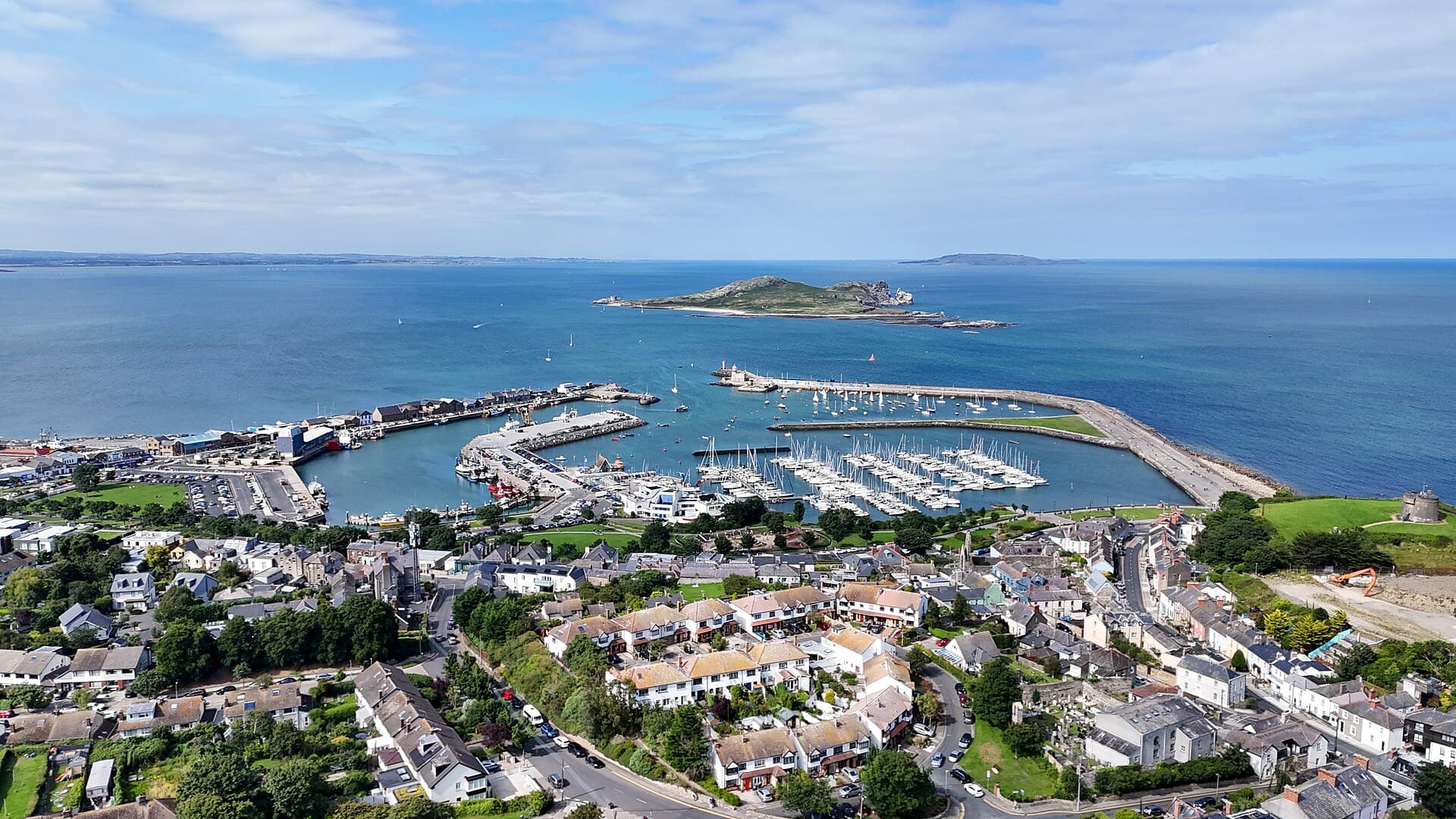
Begin your exploration at Howth Harbour, a lively hub where fishing boats unload their catch and seals often make an appearance, hoping for scraps. From the West Pier, you can embark on a boat trip to Ireland's Eye, an uninhabited island known for its seabirds and a Martello Tower.
For expansive views, the Howth Cliff Walk offers several routes, ranging from easy to challenging, all providing sweeping vistas of Dublin Bay, the Irish Sea, and the Wicklow Mountains. The shortest, the Cliff Path Loop (Green Route), is a moderate 6 km trail. Along the trails, you might spot the Baily Lighthouse, an iconic landmark operational since 1814.
Howth Market, located opposite the DART station, is a lively spot open on weekends and bank holidays, featuring stalls with fresh produce, baked goods, crafts, and international foods. While Howth Castle is a private residence, its grounds and rhododendron gardens are often accessible, particularly in bloom from late April through May. The grounds also contain a 4,000-year-old portal dolmen. For a unique experience, visit Ye Olde Hurdy-Gurdy Museum of Vintage Radio, housed in a Martello Tower overlooking the village.
Howth is a year-round destination, with each season offering a different experience. For the most pleasant weather and comfortable walking conditions, late June to early September is ideal, though it is also the busiest period. Spring (March to May) and autumn (September to November) offer milder temperatures and fewer crowds, making them excellent choices for the cliff walks. May is particularly recommended for the blooming rhododendrons at Howth Castle. While winter is quieter, it can be windy and dramatic, offering a different kind of coastal beauty. Always check the local weather forecast, as conditions can change rapidly by the sea.
Howth is easily accessible from Dublin city center by public transport. The DART (Dublin Area Rapid Transit) train provides a scenic 25-30 minute journey directly to Howth station, with services running every 30 minutes. Dublin Bus routes, such as the 31 and 31B, also connect the city center to Howth village and Howth Summit, with travel times ranging from 30 to 60 minutes.
If driving, Howth is approximately 14-18 km from O'Connell Street. However, parking can be challenging, especially on busy summer weekends. There is a free car park near the harbor and at the Summit, but spaces are limited. Paid street parking is also available but scarce. The Howth Cliff Walk trails are generally considered easy to moderate, but some routes have steep inclines and rocky terrain, so appropriate footwear is advised. Most trails are unsuitable for very young children or strollers. Always exercise caution along the exposed cliff edges.