Roode Steen
This central square, now a lively gathering place, holds a darker, more vivid past than its charming cafes suggest.
Full story unlocks in the tour
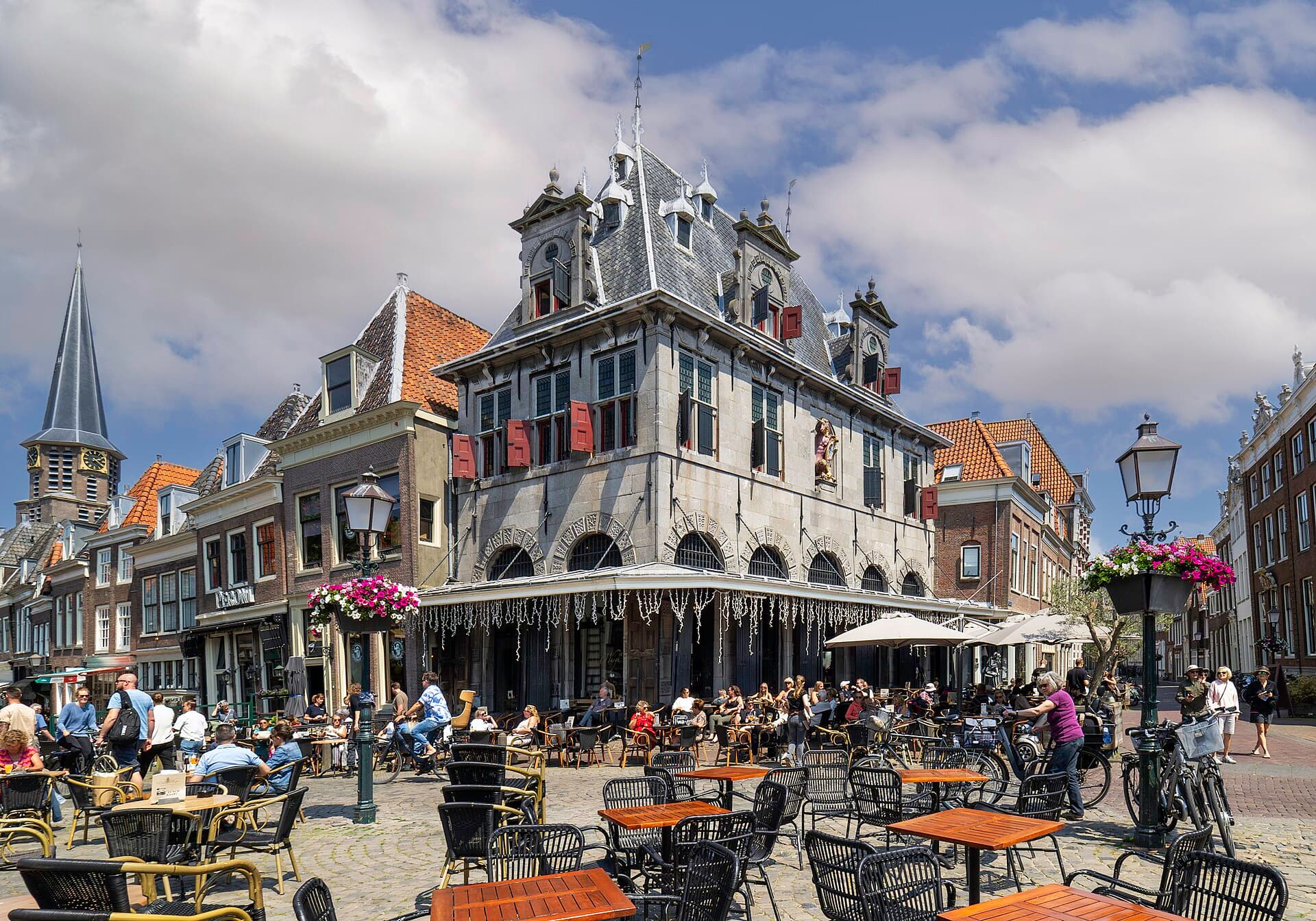 Frans Berkelaar / CC BY 2.0, via Wikimedia Commons
“Where Golden Age grandeur meets tranquil waters.”
Not the postcards. The stories even locals don't know — whispered in your ear, right where they happened.
This central square, now a lively gathering place, holds a darker, more vivid past than its charming cafes suggest.
The serene harbor, with its historic ships, was once the launching point for an explorer whose name now marks a formidable global landmark.
This impressive building, a testament to Hoorn's Golden Age prosperity, was once at the center of an international art scandal.
Discover every secret of Hoorn
Every address, every reveal in full — in your ear, right where it happened.
You pick your stops. You walk. The voice reveals what the others miss.
No tours available yet. Check back soon — we're preparing them.
Hoorn, a historic port city in North Holland, offers a captivating glimpse into the Dutch Golden Age. Just 35 kilometers north of Amsterdam, it provides a quieter, yet equally profound, historical experience without the overwhelming crowds.
The city's well-preserved historic center contains over 300 national monuments, showcasing Dutch Renaissance revival architecture with intricate gabled facades and inviting paths. Its location on the Markermeer, a large freshwater lake, adds to its scenic appeal, making it an ideal destination for those seeking both historical exploration and serene waterfront beauty.
From its horn-shaped harbor, which gave the city its name, to its active markets and significant museums, Hoorn invites visitors to wander its alleys and discover traces of its prosperous past.
The history of Hoorn dates back to the 12th century, with a small settlement emerging on the shores of the Zuiderzee bay. The city's name is thought to derive from the horn-shaped curve of its harbor. Hoorn officially gained city rights in 1357 from William V, Count of Holland, after a payment of 1,550 schilden, a pivotal moment that granted it legal and economic autonomy.
Hoorn's strategic location on a convenient bay allowed it to flourish as a natural harbor for merchant ships, becoming the main market of West Friesland. The city's economy was built on shipbuilding and seafaring, with local shipyards renowned for their quality. This maritime prowess laid the groundwork for its future prosperity, accumulating capital and seafaring experience that would prove crucial during the Dutch Golden Age.
During the 16th and 17th centuries, Hoorn experienced its Golden Age, becoming a major port city and a prosperous center of trade. In 1572, Hoorn sided with William of Orange in the Dutch Revolt against Spanish rule, securing its freedom early and benefiting from free trade opportunities. This period saw Hoorn become one of the six chambers of the powerful Dutch East India Company (VOC), a trading company founded in 1602 to protect Dutch trade in the Indian Ocean. The VOC, effectively a 'state outside the state,' held a monopoly on sea-borne trade with Asia and had the power to wage war and establish colonies. Hoorn's fleet sailed the world, returning laden with exotic spices like pepper, nutmeg, cloves, and mace, which were sold for significant profits.
Prominent figures from Hoorn shaped this era. Jan Pieterszoon Coen, a controversial figure known for his violent raids in Southeast Asia, founded Batavia (present-day Jakarta), the capital of the Dutch East Indies, initially intending to name it New Hoorn. A statue of Coen stands in the city's central square, Roode Steen. Willem Schouten, another Hoorn native, was the first European to round the southernmost tip of South America in 1616, naming it Cape Horn after his hometown.
Towards the end of the 18th century, Hoorn struggled to compete with Amsterdam and eventually lost its status as a primary port city. It transitioned into a regional trade center, primarily serving the smaller villages of West Friesland. After the construction of the Afsluitdijk in 1932, which separated the Zuiderzee from the North Sea, Hoorn became an inland harbor on the freshwater Markermeer. However, the city diversified, developing a horticulture industry and later becoming a residential area for Amsterdam commuters due to its proximity.
Today, Hoorn is a city that beautifully blends its rich past with modern living. Its historic city center, with over 300 national monuments, is a testament to its Golden Age prosperity, attracting visitors who wish to explore its charming streets and maritime heritage.
Begin your exploration at the Roode Steen, Hoorn's central square, surrounded by historic monuments. Here you'll find the Westfries Museum, housed in a beautiful 1632 building, offering insights into the Dutch Golden Age with exhibits on art, culture, and commerce. Across the square is De Waag, a weigh house built in 1609, now a cozy cafe.
Wander through the historic harbor, a focal point of Hoorn's maritime heritage. Admire the Hoofdtoren, a 16th-century defensive tower that now houses a restaurant, offering views of the harbor and traditional sailing ships. The Oostereiland features historic ships and a small exhibition area, perfect for a stroll. Do not overlook the Oosterpoort, the only remaining city gate, built in 1578 with a house constructed on top in 1601.
For a unique experience, consider a ride on the historic steam train that travels between Hoorn, Medemblik, and Enkhuizen, offering a journey through time and picturesque West Frisian landscapes. The Museum of the 20th Century, located in an old prison on Oostereiland, provides a fascinating look at Dutch life in the last century. Hoorn also has a newly built city beach, the largest in the Netherlands, near the city center, offering a place to relax by the Markermeer.
The best time to visit Hoorn for pleasant weather and outdoor activities is from late June to early September. During July, August, and September, temperatures are typically between 18°C and 20°C. Summers are alive with festivals and events, including the traditional cheese market held on Thursdays from mid-June to August at Roode Steen. Spring and fall also offer mild weather and fewer tourists, ideal for sightseeing.
Hoorn is easily accessible, located about 35-40 kilometers north of Amsterdam. You can reach Hoorn from Amsterdam Centraal by train in approximately 30-35 minutes. If flying, Amsterdam Schiphol Airport (AMS) is the closest major airport, with direct train connections to Hoorn.
The historic city center is compact and highly walkable, making it easy to explore on foot. Parking is available at various locations, including Parkeergarage 't Jeudje, P+R Station, and Parkeerterrein Nieuwe Wal. The Tourist Information Point (TIP) on Oostereiland provides helpful maps and information. Hoorn is considered a safe city, allowing for relaxed exploration of its streets and alleys.