Iolani Palace
Honolulu holds a unique distinction among U.S. cities, one that speaks to a royal past often overlooked.
Full story unlocks in the tour
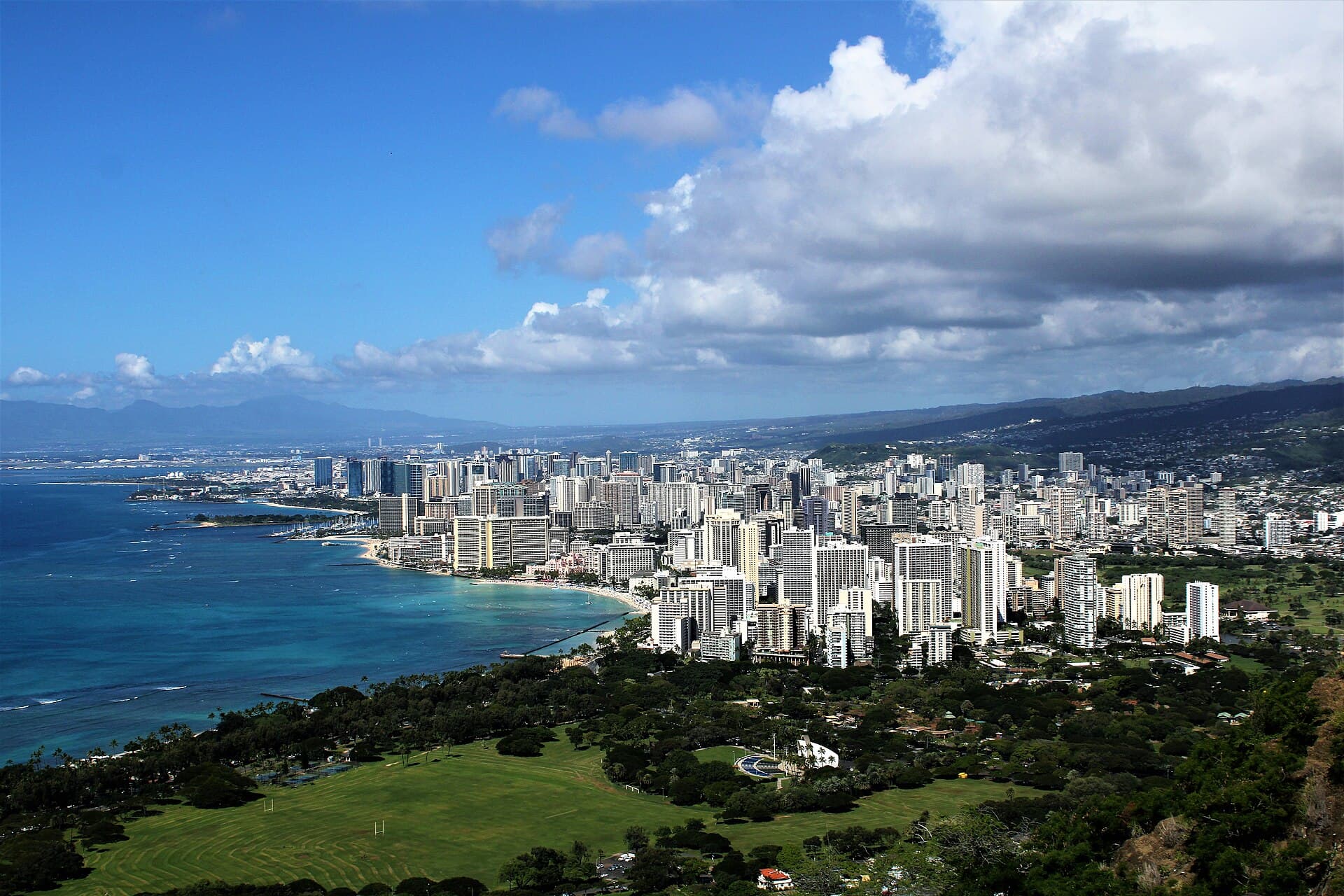 Farragutful / CC BY-SA 4.0, via Wikimedia Commons
“Where emerald mountains meet turquoise seas, and ancient traditions dance with modern rhythms.”
Not the postcards. The stories even locals don't know — whispered in your ear, right where they happened.
Honolulu holds a unique distinction among U.S. cities, one that speaks to a royal past often overlooked.
When you consider Honolulu's size, you might be surprised to learn it's technically one of the largest cities in the world.
Before it became a world-famous tourist destination, Waikiki Beach had a very different, more exclusive purpose.
Discover every secret of Honolulu
Every address, every reveal in full — in your ear, right where it happened.
You pick your stops. You walk. The voice reveals what the others miss.
No tours available yet. Check back soon — we're preparing them.
Honolulu, the capital of Hawaii, is a metropolitan center on the southeastern coast of Oʻahu, where Pacific, Asian, and Western cultures converge. This city, whose name means 'sheltered harbor' or 'calm port' in Hawaiian, offers a unique blend of urban excitement and natural splendor. From its iconic beaches to its volcanic landscapes, Honolulu serves as a gateway to the Hawaiian Islands, drawing millions of visitors each year.
More than just a popular tourist destination, Honolulu is a significant center for business, commerce, finance, hospitality, and military defense in Oceania. It is also the educational nucleus of the state, home to institutions like the University of Hawaii and the Bishop Museum, which houses the world's largest collection of Hawaiian and Pacific cultural artifacts. The city's geography, with its natural harbor, has long made it a desirable port, contributing to its growth and importance in the Pacific region.
## Ancient Origins and Royal Rule Honolulu's history stretches back to the 11th century with the arrival of the first Polynesian settlers on Oʻahu. These skilled navigators established a settlement in the area now known as Honolulu, a location chosen for its naturally protected bay.
The late 18th century marked a pivotal period with the arrival of King Kamehameha I, also known as Kamehameha the Great. He united the Hawaiian Islands into a single kingdom and, in 1809, relocated his court to what is now downtown Honolulu. Although he later moved the capital, his son, Kamehameha III, permanently established Honolulu as the capital of the Hawaiian Kingdom in 1845.
## A Growing Port and International Influence In 1794, Captain William Brown of Great Britain became the first foreigner to sail into Honolulu Harbor, then known as 'Brown's Harbor'. This opened the port to more foreign ships, transforming Honolulu into a focal point for merchant vessels traveling between North America and Asia. The early 19th century saw the settlement evolve from a collection of homes into a bustling city.
Throughout the 19th century, Honolulu flourished as a base for sandalwood traders and whalers. The city experienced brief occupations by the British in 1843 and the French in 1849 before being returned to King Kamehameha III. American Christian missionaries also arrived in the early 1800s, contributing to the cultural and social changes on the islands.
## Modern Era and World War II In 1893, the Hawaiian monarchy was overthrown by an anti-monarchy group, primarily composed of U.S. citizens, leading to Hawaii's annexation by the United States in 1898. Honolulu remained the capital, and its strategic importance grew, becoming the headquarters for the U.S. Navy Pacific Fleet.
The city gained worldwide recognition following the Empire of Japan's attack on Pearl Harbor on December 7, 1941, an event that prompted the United States' entry into World War II. Pearl Harbor continues to be a major U.S. Navy base, hosting the United States Pacific Fleet, the world's largest naval command. Following the war, Honolulu experienced a significant economic and tourism boom, leading to rapid growth and solidifying its status as a major global destination.
Begin your exploration at Waikīkī Beach, one of the world's most recognizable beaches, once a playground for Hawaiian royalty. For expansive views of Waikīkī, Honolulu, and the Pacific Ocean, embark on an easy hike to the top of Lē'ahi (Diamond Head), an extinct volcano. Entry for pedestrians is around $2, and for vehicles, it's about $6.
Delve into history at the Pearl Harbor National Memorial, a profoundly moving site where the Japanese attack in 1941 brought the U.S. into World War II. You can visit the museum and the USS Arizona Memorial, with basic entry being free.
In downtown Honolulu, discover Iolani Palace, the only royal palace in the United States, offering a glimpse into Hawaii's monarchical past. Nearby, the Arts District Honolulu, spanning 12 blocks in Chinatown, is a center for arts and cultural institutions.
For an underwater experience, visit Hanauma Bay Nature Preserve, one of Hawaii's premier snorkeling areas. The Honolulu Museum of Art is Hawaii's largest fine arts museum, while the Bernice Pauahi Bishop Museum holds the largest collection of natural history items and Hawaiian and Pacific culture artifacts in Hawaii. Families might enjoy the Honolulu Zoo, home to over 1,230 animals, including the only Komodo dragons in Hawaii, and the Waikiki Aquarium, a marine biology lab. For shopping, the Ala Moana Center is the world's largest open-air shopping center.
Honolulu enjoys a hot semi-arid climate with warm temperatures year-round, making it a desirable destination at any time. The average temperature typically ranges from 68°F to 87°F. The warmest temperatures and driest weather occur between March and September, ideal for beach activities and exploring the landscape. The shoulder seasons of April to May and September to October offer pleasant weather with fewer crowds. The period from December to March is slightly cooler and wetter, but still comfortable, and sees higher tourist numbers around holidays.
The primary airport serving Honolulu and the state of Hawaii is Daniel K. Inouye International Airport (HNL), located approximately three miles northwest of Honolulu's central business district. It is the largest airport in Hawaii and a major hub for trans-Pacific travel.
Honolulu offers an island-wide public transportation system, including TheBus and the Skyline rail system. TheBus provides an affordable and dependable way to explore Oʻahu, with routes serving most major regions. The Skyline offers a fast way to travel, bypassing traffic, and you can use a HOLO card for seamless transfers between both systems. Rental cars, taxis, ride-share services, and hotel shuttles are also available.
Honolulu is considered one of the safest cities in the United States. However, general safety precautions are always advisable, such as being aware of your surroundings, protecting valuables, and avoiding walking alone late at night. When swimming, it's recommended to go to lifeguarded beaches and be mindful of ocean conditions, which can change quickly. Staying hydrated and protecting yourself from the sun are also crucial due to the tropical climate.