The Peak Tram
The Peak Tram, a century-old marvel, carries a secret that makes its ascent even more peculiar than you might imagine.
Full story unlocks in the tour
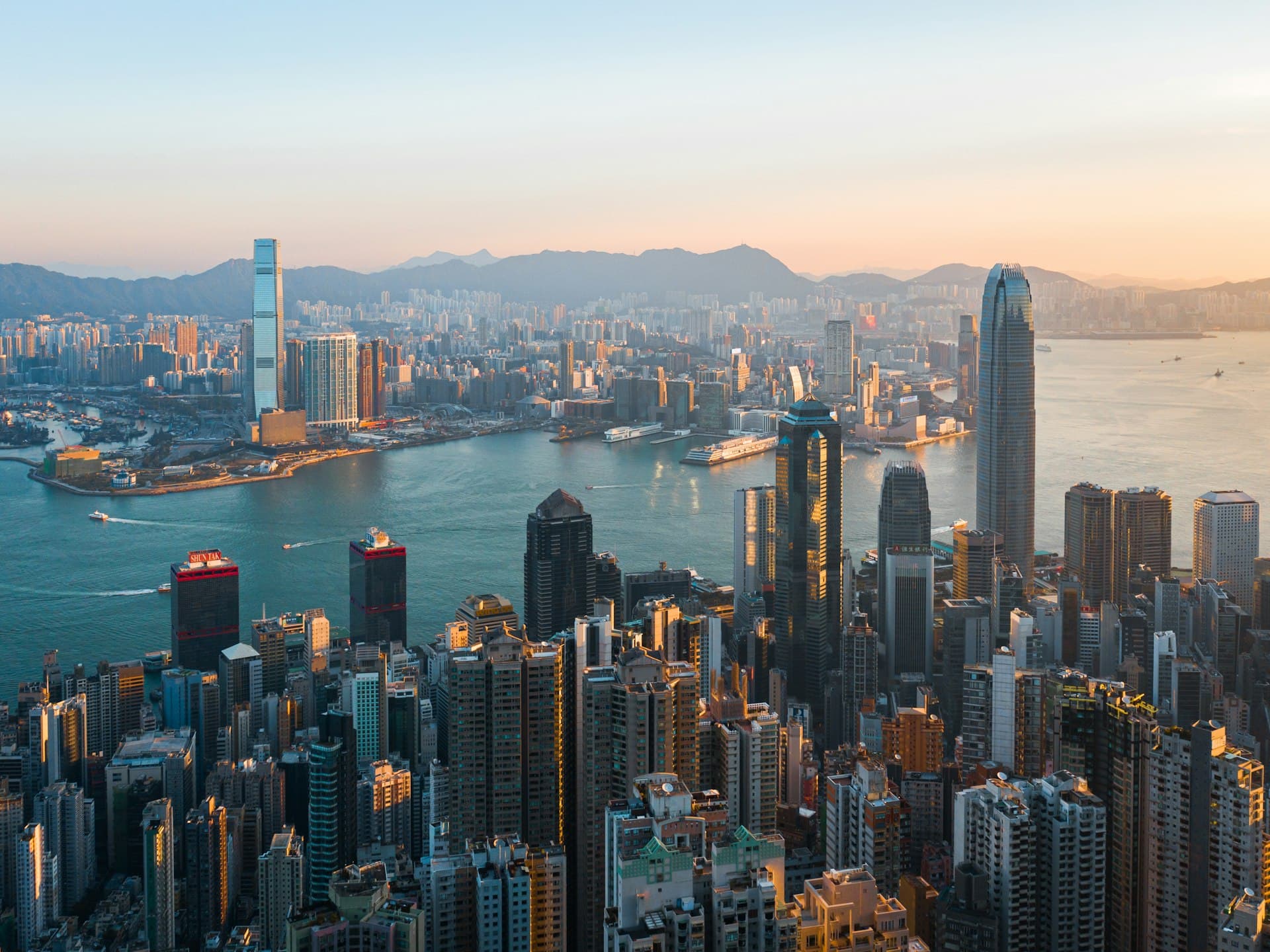 Photo: M / Unsplash
“Where emerald peaks meet a neon sea.”
Not the postcards. The stories even locals don't know — whispered in your ear, right where they happened.
The Peak Tram, a century-old marvel, carries a secret that makes its ascent even more peculiar than you might imagine.
Amongst the fortune tellers and street food stalls of Temple Street, a particular kind of performer offers an act with a surprising, practical origin.
The well-known Star Ferry, a symbol of Hong Kong, once announced its arrival in a unique way, a practice long since retired.
Discover every secret of Hong Kong
Every address, every reveal in full — in your ear, right where it happened.
You pick your stops. You walk. The voice reveals what the others miss.
No tours available yet. Check back soon — we're preparing them.
Hong Kong stands as a city of captivating contrasts, where towering skyscrapers rise alongside ancient temples and verdant mountains. This dynamic metropolis pulses with an energy both exhilarating and deeply rooted in tradition. From the lively street markets of Mong Kok to the tranquil hiking trails of Lantau Island, Hong Kong offers a spectrum of experiences for every traveler. Its distinctive blend of East and West, a legacy of its colonial past and enduring Chinese heritage, creates a cultural landscape unlike any other.
The city’s dramatic skyline, particularly when observed from Victoria Peak or across Victoria Harbour, is instantly recognizable and undeniably grand. Yet, beyond the glittering facade, Hong Kong reveals a complex identity. Here, dim sum is an art form, feng shui influences architectural design, and the rhythm of daily life is a constant interplay between the fast-paced and the contemplative. Prepare to be swept up in its lively street life, to savor its world-renowned cuisine, and to uncover the many layers of this extraordinary urban setting.
Hong Kong’s history unfolds as a compelling narrative of transformation, beginning as a collection of fishing villages and evolving into one of the world’s most significant financial centers. Before the arrival of the British, the area was sparsely populated, with small communities engaged in fishing, pearl farming, and salt production. The strategic deep-water harbor, however, would soon draw international attention.
The First Opium War (1839-1842) marked a pivotal turning point. Following China’s defeat, the Treaty of Nanking ceded Hong Kong Island to Britain in 1842. This acquisition was initially met with some skepticism by the British, but its potential as a trading post quickly became clear. Over the subsequent decades, British control expanded to include Kowloon Peninsula (1860) and the New Territories (1898), leased for 99 years. Under British administration, Hong Kong thrived as a free port, drawing merchants and migrants from both China and the West.
The early 20th century saw continued development, though punctuated by periods of instability, including the Japanese occupation during World War II (1941-1945). Post-war, Hong Kong experienced an economic miracle, propelled by a growing manufacturing industry and its role as a gateway to mainland China. This period saw a substantial influx of immigrants, particularly from mainland China, contributing to the city’s rapid population growth and industrious spirit.
The 1984 Sino-British Joint Declaration prepared the way for the transfer of sovereignty over Hong Kong to China in 1997. Under the 'One Country, Two Systems' principle, Hong Kong was to maintain a high degree of autonomy, its capitalist system, and its way of life for 50 years. Since the handover, Hong Kong has continued to affirm its identity as a global financial hub and a cultural melting pot, navigating its unique position within China while preserving its distinct character.
Begin your exploration with a ride on the historic Peak Tram to Victoria Peak, offering expansive views of the city’s skyline, Victoria Harbour, and the surrounding islands. For a taste of local life, wander through the lively stalls of the Temple Street Night Market in Jordan, where you can browse everything from electronics to traditional Chinese crafts and sample street food.
No visit to Hong Kong is complete without a journey across Victoria Harbour on the Star Ferry, a remarkably affordable and scenic way to travel between Hong Kong Island and Kowloon. Explore the lively neighborhoods of Mong Kok, known for its themed markets like the Ladies' Market and Goldfish Market, offering a glimpse into everyday Hong Kong.
For a moment of quiet reflection, visit the Man Mo Temple on Hollywood Road, a beautifully preserved temple dedicated to the God of Literature (Man) and the God of War (Mo). Finally, immerse yourself in the art and history at the Hong Kong Museum of History, which provides a comprehensive overview of the city’s compelling past.
The best time to visit Hong Kong is during autumn and early winter, from October to December. During these months, the weather is generally sunny, dry, and pleasantly mild, with average temperatures ranging from 20°C to 28°C (68°F to 82°F). This period avoids the hot, humid summers and the cooler, sometimes damp, early spring.
Hong Kong’s public transport system is efficient and extensive. The MTR (Mass Transit Railway) offers the fastest way to navigate the city. Purchase an Octopus card for seamless travel on MTR, buses, trams, and ferries. Tipping is not customary in casual eateries, but a 10% service charge is often added in higher-end restaurants. The currency is the Hong Kong Dollar (HKD). English is widely spoken, especially in tourist areas and business districts. Remember to carry an adapter for Type G power outlets.