Hluboká Castle's Library
Beyond the intricate wood carvings and vast collection of volumes, a secret from another grand Czech castle found its way here.
Full story unlocks in the tour
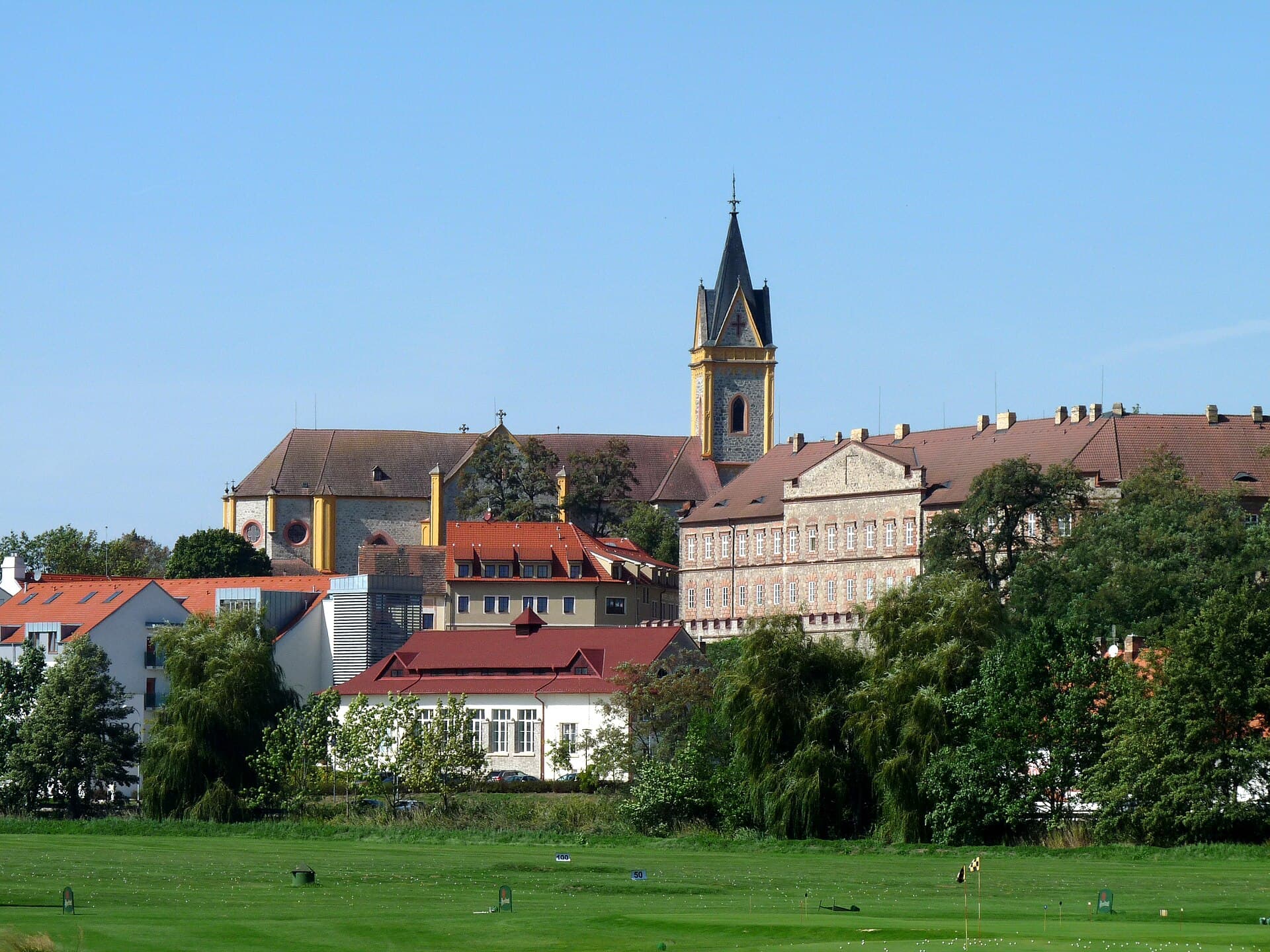 Czeva / CC BY-SA 3.0, via Wikimedia Commons
“Where a storybook castle ascends from the South Bohemian terrain.”
Not the postcards. The stories even locals don't know — whispered in your ear, right where they happened.
Beyond the intricate wood carvings and vast collection of volumes, a secret from another grand Czech castle found its way here.
This historical kitchen was not merely for preparing meals; it was surprisingly advanced for its era.
While the castle itself is a remarkable sight, its surrounding landscape offers a subtle acknowledgment of its former residents' passion.
Discover every secret of Hluboká nad Vltavou
Every address, every reveal in full — in your ear, right where it happened.
You pick your stops. You walk. The voice reveals what the others miss.
No tours available yet. Check back soon — we're preparing them.
Hluboká nad Vltavou, a town in the South Bohemian Region of the Czech Republic, is primarily recognized for its distinguished Hluboká Castle. This architectural wonder, frequently likened to a storybook castle, stands grandly above the Vltava River and ranks among the most frequented locations in the country. The town itself, with approximately 5,700 residents, offers a fusion of history, culture, and natural splendor, establishing it as an ideal destination for travelers seeking more than just a castle visit.
Beyond the castle, Hluboká nad Vltavou provides opportunities for outdoor pursuits, cultural exploration, and repose. The town's infrastructure supports tourism with various accommodations, eateries, and recreational facilities. Whether you are drawn to the allure of a magnificent historical residence, the tranquility of sweeping gardens, or active endeavors along the Vltava, Hluboká nad Vltavou presents an engaging experience in the heart of South Bohemia.
Hluboká Castle's origins trace back to the mid-13th century, when Bohemian kings, including Přemysl Otakar II, established it as a royal guard castle. As a royal property, it was frequently pledged, leading to a succession of noble families holding its ownership.
Among the significant early owners were the Pernštejn family, who, in 1490, founded the nearby Bezdrev pond, the second largest in Bohemia. In 1561, the Lords of Hradec acquired the Hluboká estate and, two years later, initiated the transformation of the original Gothic castle into a Renaissance chateau. The Malovec family from Malovice held the estate at the end of the 16th century but lost it in 1619 due to their Protestant faith. The Spanish general Don Balthazar de Marradas then acquired the estate in 1623 as compensation for war debts.
The most profound architectural changes occurred after 1661 when the Schwarzenberg family took ownership, retaining it until 1947. Initially, they rebuilt the chateau in the Baroque style in the early 18th century. However, the castle's current romantic Neo-Gothic appearance, resembling England's Windsor Castle, was the result of a grand reconstruction between 1839 and 1871. This ambitious project was inspired by Prince Jan Adolf II of Schwarzenberg and his wife Princess Eleonora, who were deeply influenced by their travels to Great Britain and Queen Victoria's coronation in 1838. The reconstruction began under the plans of Viennese architect Franz Beer, with Schwarzenberg architect Damasius Deworetzky continuing the design of the opulent interiors after Beer's death. The Schwarzenbergs lost the castle in 1947 under a special law, Lex Schwarzenberg, and it subsequently became state property. In 1907, Hluboká was officially declared a town by imperial decision.
The primary attraction of Hluboká nad Vltavou is, without question, Hluboká Castle. Visitors can explore its ornately decorated interiors through various guided tours, which may include representative rooms, private apartments, the chateau kitchen, and the castle tower. The castle's exterior, with its towers, turrets, and intricate facades, is equally captivating, and the surrounding expansive English-style gardens are free to wander.
Adjacent to the castle, the former riding hall now houses the Aleš South Bohemian Gallery, which features an extensive collection of Gothic art, Flemish 17th-century paintings, and 20th-century Czech modern art. For those interested in local history and nature, the Baroque hunting lodge Ohrada Castle, constructed between 1708 and 1713, hosts a museum of hunting and fishing. Next to Ohrada Castle is the Hluboká Zoo, also known as Ohrada Zoo, which focuses on European small animals.
The area also offers numerous outdoor activities. Cycling paths and hiking trails traverse the scenic South Bohemian landscape, including routes around the castle park, Munický Pond, and along the Vltava River to České Budějovice. The BABA Viewpoint provides calming views over the river, ideal for sunrise or sunset. For sports enthusiasts, a comprehensive sports and relaxation complex offers golf, tennis, volleyball, and an 'adrenaline park' with a ropes course.
Hluboká Castle is open year-round, a rarity among Czech castles, though opening hours vary by season. The summer months, from June to September, are generally considered the best time to visit for outdoor activities, with comfortable temperatures. July and August are the busiest season, with the castle open daily. However, for those seeking a quieter experience and the beauty of blooming roses, late spring and early summer are highly recommended. During the off-season (November to March), the castle interiors are typically closed on Mondays, but the exteriors and park remain accessible.
Hluboká nad Vltavou is easily accessible. If traveling by car, it's about a two-hour drive from Prague, 35 minutes from Český Krumlov, and 15 minutes from České Budějovice. Paid parking is available near the Penny Market on Nad parkovištěm street, with an uphill walk to the castle, or a tourist train during the busy season. Public transport options include regular buses from České Budějovice, or a train to Hluboká nad Vltavou Zámostí station, which is about 2 km from the castle.
To enter the castle interiors, a guided tour is required, with several routes available in multiple languages, including English. Ticket prices vary depending on the chosen tour. The castle grounds and gardens are free to enter. Photography and filming are generally prohibited inside the castle, and visitors are asked not to touch exhibits or stray from their guide. Wheelchair access is available for some tours and areas, but it's advisable to inform staff in advance. Pets are not allowed inside the castle interiors, though dogs on a leash are permitted in the gardens and park.