A-Bomb Dome
Before it became a stark symbol of devastation, this skeletal structure served a surprising purpose.
Full story unlocks in the tour
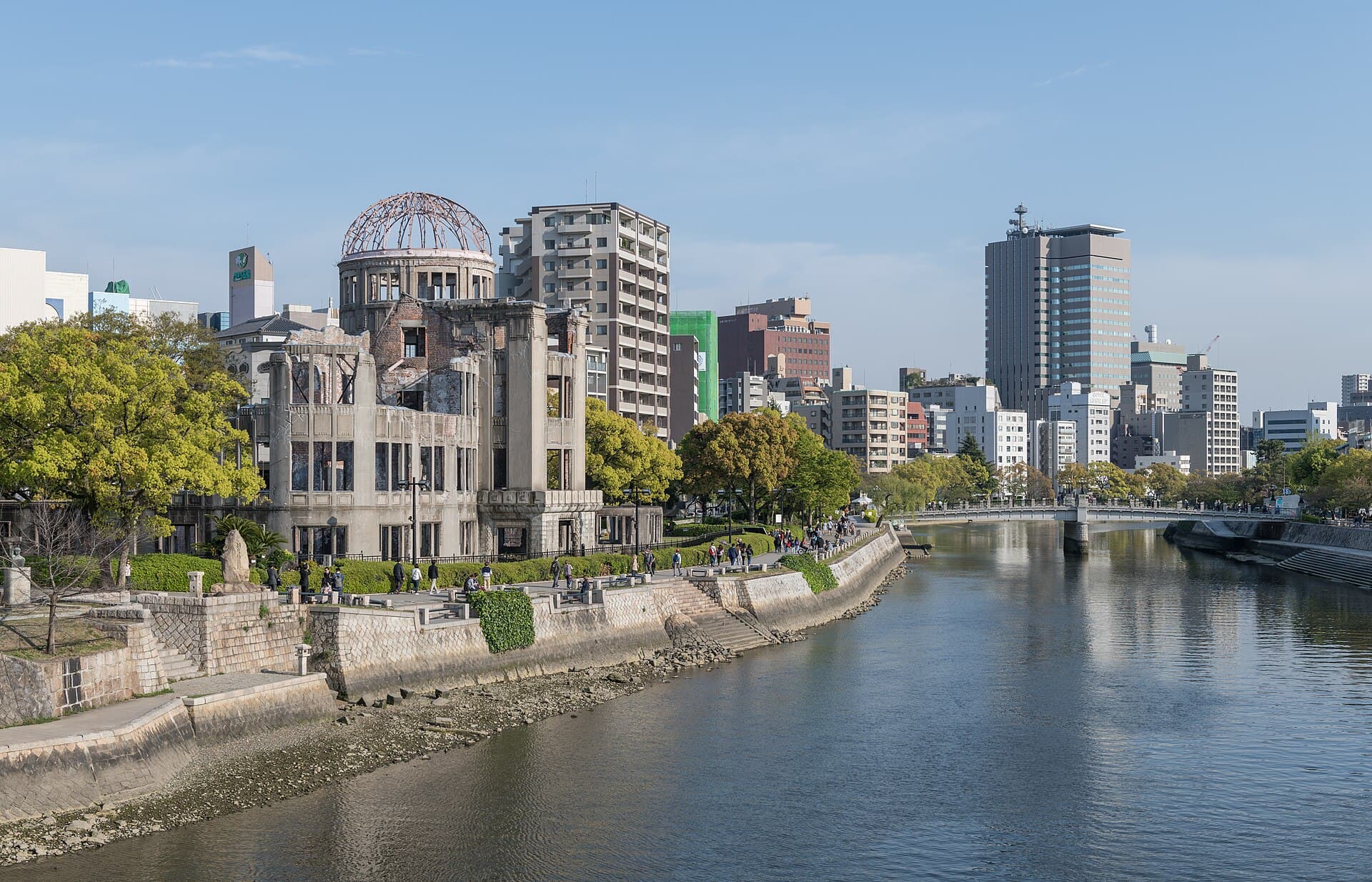 DXR / CC BY-SA 4.0, via Wikimedia Commons
“From the ashes, a city of peace and enduring spirit emerges, inviting contemplation and exploration.”
Not the postcards. The stories even locals don't know — whispered in your ear, right where they happened.
Before it became a stark symbol of devastation, this skeletal structure served a surprising purpose.
Miyajima is known for its floating torii gate, but a less obvious attraction on the island holds a world record.
The beloved local dish, Hiroshima-style okonomiyaki, didn't just satisfy appetites; it played a crucial role in the city's rebirth.
Discover every secret of Hiroshima
Every address, every reveal in full — in your ear, right where it happened.
You pick your stops. You walk. The voice reveals what the others miss.
No tours available yet. Check back soon — we're preparing them.
Hiroshima, a city etched into global consciousness by the events of August 6, 1945, has since transformed into a powerful symbol of peace, fortitude, and hope. While its poignant history is undeniably a central aspect of any visit, Hiroshima is far more than its past. It is a lively, modern city with a beautiful riverside landscape, a flourishing culinary scene, and a warm, welcoming spirit.
Beyond the solemn reflection offered by the Peace Memorial Park and Museum, visitors will discover a city that has gracefully rebuilt itself, offering serene gardens, a reconstructed castle, and a lively downtown area. Hiroshima also serves as a gateway to natural splendor, with the scenic Seto Inland Sea and its many islands, including the iconic Miyajima, just a short journey away. This guide invites you to explore the many facets of Hiroshima, from its profound memorials to its everyday charms, uncovering a story of human strength and a commitment to a world without nuclear weapons.
Hiroshima's origins trace back to 1589, when the powerful warlord Mōri Terumoto established it as a castle town on the Ōta River delta. The name "Hiroshima" itself means "wide island." Hiroshima Castle was swiftly constructed, and by 1593, Mōri had moved in. Following the Battle of Sekigahara, control of Aki Province, including Hiroshima, was granted to Masanori Fukushima, who supported Tokugawa Ieyasu. From 1619 until 1871, the city was governed by the Asano clan.
With the Meiji Restoration in 1868, Hiroshima underwent a rapid transformation, evolving into a significant urban and industrial center. It officially gained city status in 1889. During the imperial era, Hiroshima became a center for military activities, playing crucial roles in conflicts such as the First Sino-Japanese War and the Russo-Japanese War. The Imperial General Headquarters was even established in Hiroshima during the First Sino-Japanese War, temporarily elevating the city's status to nearly that of the capital. Ujina Port was expanded for military use, becoming a key point for deploying troops and supplies.
On August 6, 1945, at 8:15 a.m., Hiroshima became the first city in history to be targeted by a nuclear weapon when the United States dropped the atomic bomb "Little Boy." The blast instantly killed at least 70,000 people, with estimates of total deaths by the end of the year ranging from 90,000 to 166,000 due to injury and radiation. Approximately 70% of the city's buildings were destroyed, with another 7% severely damaged. The city's population before the bombing was around 345,000.
In the immediate aftermath, on September 17, 1945, Hiroshima was further devastated by the Makurazaki Typhoon, which destroyed more than half the city's bridges and caused extensive damage to infrastructure. Despite the catastrophic destruction, Hiroshima embarked on an extraordinary journey of reconstruction. From 1945 to 1952, the city was under occupation. The Hiroshima Peace Memorial Park was established in 1954, built on an open field created by the bombing. Today, Hiroshima stands as a testament to peace and urban fortitude, with its population growing to approximately 1.2 million, making it the tenth largest municipality in Japan.
Hiroshima offers a blend of poignant historical sites and lively modern attractions. The Hiroshima Peace Memorial Park is an essential visit, encompassing the Atomic Bomb Dome, a UNESCO World Heritage site and a stark reminder of the 1945 bombing. Within the park, the Peace Memorial Museum provides a powerful and comprehensive account of the event, while the Children's Peace Monument, adorned with paper cranes, memorializes the youngest victims.
Beyond the Peace Park, explore Shukkei-en Garden, a serene Japanese landscape garden established in 1620, offering a tranquil escape in the city center. Hiroshima Castle, though a reconstruction after the bombing, houses a museum detailing the city's history and offers expansive views from its top floor. For a different perspective, the Orizuru Tower provides an observation deck with city views, including the Peace Memorial Park, and an interactive origami experience. Consider a day trip to Miyajima Island, home to the iconic "floating" Itsukushima Shrine and its torii gate, a UNESCO World Heritage site and one of Japan's most scenic views. On Miyajima, consider taking the ropeway up Mount Misen for sweeping views of the Seto Inland Sea.
Hiroshima experiences a humid subtropical climate, making spring (March to May) and autumn (October to early December) the most pleasant times to visit. Spring brings comfortable temperatures and the beauty of cherry blossoms, which typically peak in the first week of April around the Peace Memorial Park, Hiroshima Castle, and Shukkei-en Garden. Autumn offers crisp, comfortable weather and lively fall foliage from late October, though early November might be too early for peak colors. Summers (June to August) are hot and humid with more rain, while winters (mid-December to February) are mild to cool, with a chance of light snow, offering fewer crowds and lower prices.
Getting to Hiroshima is convenient via the JR Tokaido-Sanyo Shinkansen (bullet train) from major cities like Tokyo, Osaka, Kyoto, and Nagoya. Hiroshima also has an international airport with direct flights to some Asian cities. Within the city, public transportation is efficient, primarily relying on streetcars (Hiroden), buses, and JR trains. The Hiroden tram network is the largest in Japan, with many routes connecting to key attractions. IC cards like Suica or ICOCA can be used on most public transport, offering seamless travel. Tipping is not customary in Japan, and a 10% consumption tax is applied to most goods and services. Hiroshima has expanded its public Wi-Fi network across major tourist areas, including the Atomic Bomb Dome and Hiroshima Station, making it easier to stay connected.