The Main Keep's Exterior
From the outside, Himeji Castle's main keep appears to have five stories, a testament to its elegant design. But within its white walls, there's more than meets the eye.
Full story unlocks in the tour
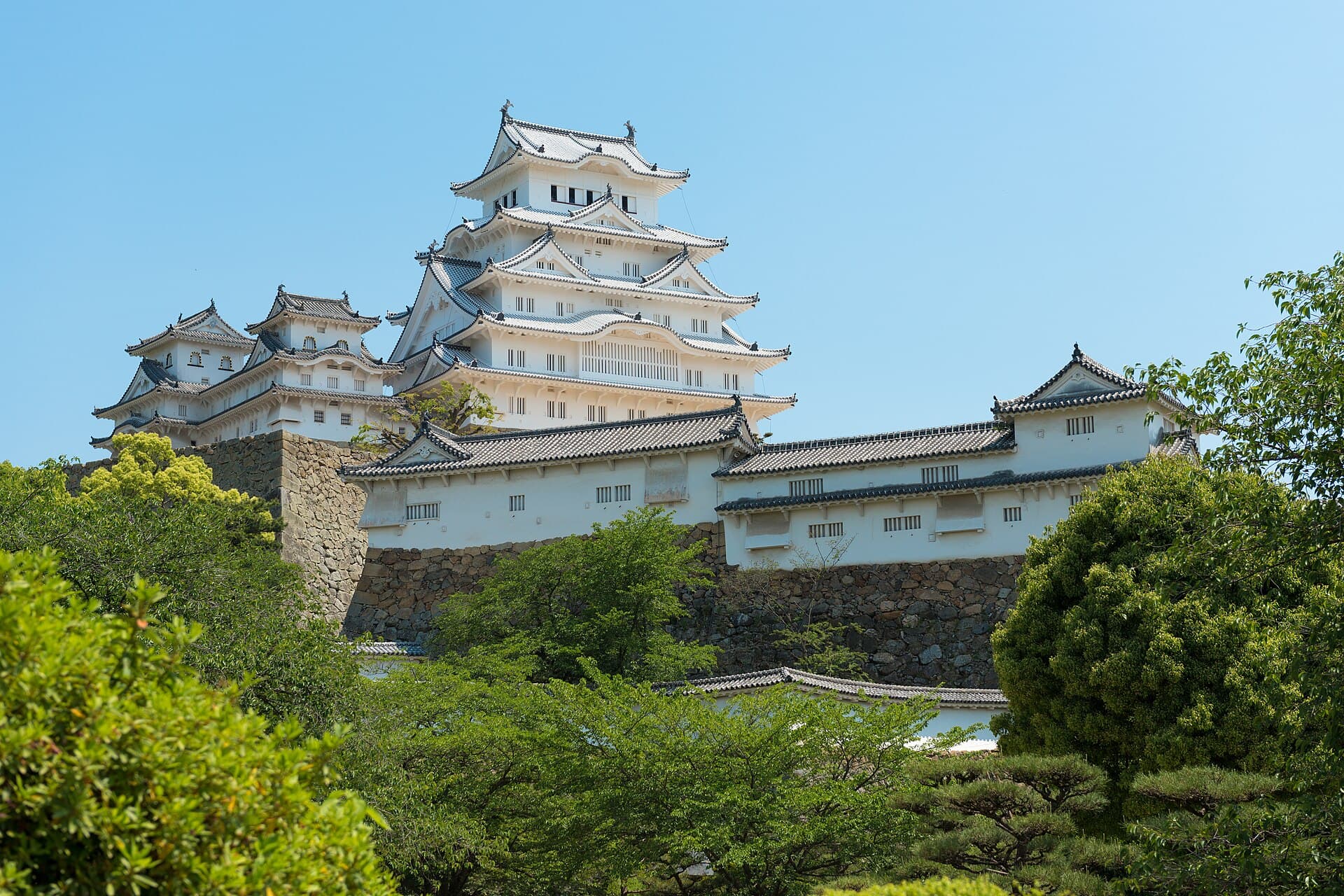 Nikos Kitsakis / CC BY-SA 4.0, via Wikimedia Commons
“Himeji Castle: Where the White Heron takes flight, and history echoes through a labyrinth of stone.”
Not the postcards. The stories even locals don't know — whispered in your ear, right where they happened.
From the outside, Himeji Castle's main keep appears to have five stories, a testament to its elegant design. But within its white walls, there's more than meets the eye.
The formidable stone walls of Himeji Castle, built to withstand centuries of conflict, hold a surprising secret within their construction.
Deep within the castle grounds, a particular well is said to be haunted by a spectral presence, a story that has echoed through Japanese folklore for centuries and even inspired a modern horror classic.
Discover every secret of Himeji
Every address, every reveal in full — in your ear, right where it happened.
You pick your stops. You walk. The voice reveals what the others miss.
No tours available yet. Check back soon — we're preparing them.
Himeji, a city in Hyogo Prefecture, Japan, is known for its magnificent Himeji Castle, a UNESCO World Heritage site and a designated National Treasure. Often called 'White Heron Castle' (Shirasagi-jo) due to its brilliant white exterior and elegant, layered roofs resembling a bird taking flight, it stands as a premier example of prototypical Japanese castle architecture. The castle complex, comprising 83 structures, showcases advanced defensive systems from Japan's feudal period.
Unlike many other Japanese castles, Himeji Castle has remained largely intact for nearly 700 years, surviving civil wars, the end of feudalism, and even the bombing of Himeji during World War II, a testament to its robust construction and perhaps a touch of luck. Its enduring beauty and historical significance make it a popular destination for both domestic and international travelers, offering a profound glimpse into Japan's past and architectural ingenuity.
The origins of Himeji Castle trace back to 1333, when Akamatsu Norimura, the shugo (military governor) of Harima Province, constructed a fort on Himeyama hill during the Genkō War. This initial fortification was dismantled and rebuilt as Himeyama Castle in 1346 by his son, Sadanori. Over the next two centuries, the castle underwent further remodeling. In 1545, the Kuroda clan took control, and Kuroda Shigetaka completed another remodel, officially naming it Himeji Castle in 1561.
A pivotal expansion occurred in 1580 when Kuroda Yoshitaka presented the castle to the powerful warlord Toyotomi Hideyoshi. Hideyoshi significantly expanded the castle in 1581, adding a three-story keep and fortifying it with newly developed architectural techniques, including stone ramparts and turrets. However, the castle complex seen today largely stems from the extensive overhaul initiated by Ikeda Terumasa. After the Battle of Sekigahara in 1600, Tokugawa Ieyasu awarded Himeji Castle to his son-in-law, Ikeda Terumasa, for his crucial support. Between 1601 and 1609, Ikeda Terumasa completely rebuilt and expanded the castle, replacing, repairing, and extending the existing fortifications, including adding stories to the main keep and constructing three moats. This ambitious undertaking transformed Himeji into an impenetrable fortress, incorporating revolutionary warfare and defense technology of the era. The expenditure of labor for this expansion is estimated to have totaled 2.5 million man-days.
Further additions to the complex were made between 1617 and 1618 by Honda Tadamasa, who inherited the castle. He notably added a special tower, the keshō yagura (Dressing Tower), for his daughter-in-law, Princess Sen. For centuries, Himeji Castle served as a private residence, a garrison, an armory, and a political center, symbolizing the power and prestige of its resident lords. Despite the destruction of many Japanese castles during the Meiji era (1868–1912), Himeji Castle was spared from demolition due to the efforts of army colonel Nakamura Shigeto. It was designated a National Treasure in the early 1930s and recognized as one of Japan's first UNESCO World Heritage Sites in 1993, a testament to its enduring architectural beauty and historical significance.
Himeji Castle is a sprawling complex of 83 buildings, with its main keep dominating the skyline. Begin your exploration at the Otemon Gate, the castle's main entrance, which leads into a large, tree-lined courtyard popular for cherry blossom viewing. The path to the main keep is intentionally labyrinthine, designed with numerous turns and blind spots to disorient potential attackers, showcasing the castle's advanced defensive strategies.
Inside the main keep, you'll find six floors above ground and a basement, despite its five-story exterior appearance. Ascend the narrow, steep staircases to reach the top, where panoramic views of Himeji City await. Throughout the castle, observe the detailed architecture, including the kamon (feudal family crests) on roof tiles, signifying the various lords who inhabited the castle. Do not overlook the Hyakkendōrōka, a long corridor once used by female attendants, offering a glimpse into daily castle life. Adjacent to the castle is Koko-en Garden, a traditional Japanese garden established on the former grounds of the West Residence. It features nine distinct walled gardens, each with a different theme, including a tea garden and a koi pond.
The best times to visit Himeji are during spring (late March to May) and autumn (September to November). Spring brings the iconic cherry blossoms, typically peaking from late March to early April, transforming the castle grounds into a picturesque scene. This is also the busiest period, so arriving early is recommended. Autumn offers mild weather, clear skies, and bright fall foliage, particularly at Koko-en Garden and Shoshazan Engyo-ji Temple. Summers (June to August) are hot and humid, with a rainy season in June, while winters (December to February) are mild and quiet, with the rare chance of snow on the white keep.
Himeji Castle is approximately a 15-minute walk from Himeji Station, with Otemae-dori Street leading directly to the main Otemon Gate. A convenient Himeji Loop Bus also services major attractions, including the castle. For those with a Japan Rail Pass, Himeji is easily accessible as a day trip from Kyoto (45 minutes by bullet train) or Osaka (30 minutes by Shinkansen).
Admission for overseas visitors is ¥2,500, with children under 18 entering free (as of March 1, 2026). A combined ticket for Himeji Castle and Koko-en Garden is ¥2,600. Tickets can be purchased online up to 90 days in advance to bypass queues, especially during peak seasons. The castle is open daily from 9:00 AM to 5:00 PM, with last entry at 4:00 PM. Allow at least 90 minutes to explore the keep and three or more hours for the castle and Koko-en Garden. Be prepared to remove your shoes inside the castle and navigate steep stairs. Wheelchair access is limited inside the main keep, but parts of the grounds are accessible. Pets are not allowed in the paid admission area.