Hexham Abbey Crypt
Beneath the soaring arches of Hexham Abbey, a chamber reveals itself, constructed from fragments of Roman antiquity.
Full story unlocks in the tour
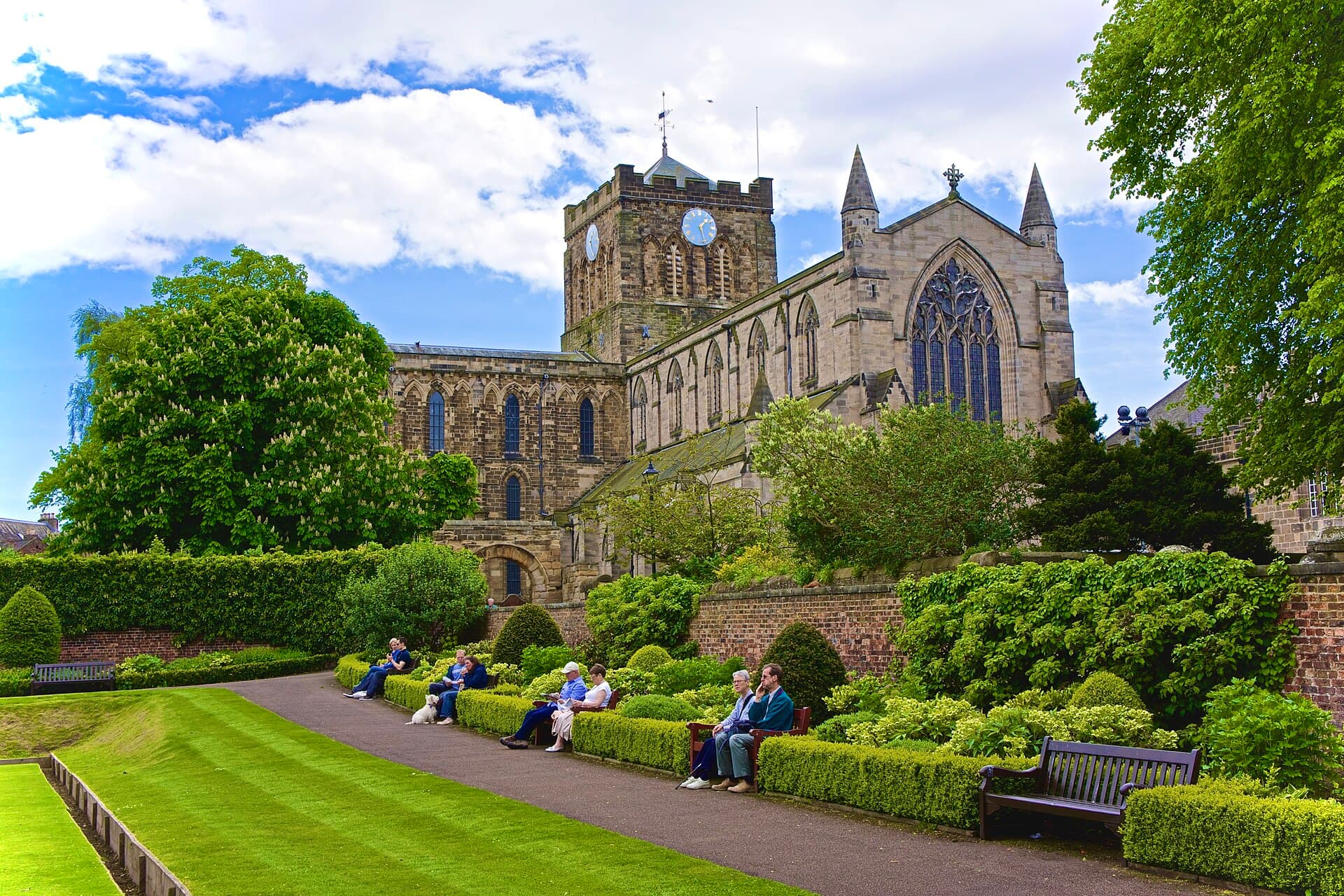 Paul Buckingham / CC BY-SA 2.0, via Wikimedia Commons
“Where ancient stones recount sagas of saints, raiders, and rebels.”
Not the postcards. The stories even locals don't know — whispered in your ear, right where they happened.
Beneath the soaring arches of Hexham Abbey, a chamber reveals itself, constructed from fragments of Roman antiquity.
This tranquil market square once bore witness to a brutal confrontation, forever marking the soldiers involved with a somber epithet.
England's earliest purpose-built prison holds an unexpected connection to a powerful ecclesiastical figure.
Discover every secret of Hexham
Every address, every reveal in full — in your ear, right where it happened.
You pick your stops. You walk. The voice reveals what the others miss.
No tours available yet. Check back soon — we're preparing them.
Hexham, a market town in Northumberland, England, rests on the south bank of the River Tyne, a short distance from Hadrian's Wall. It is a place where over 1,300 years of layered history are etched into its architecture and street plan, offering a compact and easily navigable destination for visitors. Named England's Favourite Market Town by Country Life magazine in 2005 and voted the happiest place to live in Britain in both 2019 and 2021, Hexham weaves historical significance with a welcoming atmosphere.
The town serves as a practical base for exploring the surrounding Northumberland countryside, including Northumberland National Park and Hadrian's Wall UNESCO World Heritage Site, with key Roman sites like Housesteads Roman Fort, Chesters Roman Fort, and Vindolanda all within a short drive or accessible by bus. Beyond its historical appeal, Hexham offers verdant spaces like the Sele Park and Tyne Green Country Park, independent shops, and a variety of local markets.
Hexham's origins trace back to a monastic settlement founded in 674 AD, and its strategic location near the Anglo-Scottish border meant it frequently endured conflicts throughout its history. From marauding Vikings to border wars and even local riots, the town's past is as compelling as its present-day allure.
Hexham's recorded history commences in 674 AD with the establishment of a monastery by St. Wilfrid, Bishop of York. Wilfrid, inspired by the grand European churches he had encountered, constructed a stone abbey, making extensive use of materials salvaged from nearby Roman ruins, particularly from Corbridge. The Anglo-Saxon crypt, a significant portion of Wilfrid's original church, endures to this day.
Throughout the medieval period, Hexham's position in the Anglo-Scottish border region rendered it a frequent target during conflicts. William Wallace set fire to the town in 1297, and Robert the Bruce demanded a ransom of £2,000 in 1312 to spare it from a similar fate. In 1346, King David II of Scotland ransacked the monastery. The Wars of the Roses also saw the Battle of Hexham fought south of the town in 1464.
A notable structure from this turbulent era is Hexham Old Gaol, commissioned by the Archbishop of York in 1330 and completed in 1333. It is considered England's earliest purpose-built prison, constructed using stone from Corbridge Roman Fort. The gaol held prisoners awaiting trial at the nearby Moot Hall, and its dungeons offered a stark contrast to the more comfortable first-floor rooms intended for wealthier inmates.
In 1537, during the Dissolution of the Monasteries, Hexham Abbey was dissolved, but the diligent efforts of the local community ensured its preservation as the parish church. The town continued to evolve, becoming a center for leather goods, particularly 'Hexham Tans' gloves, a legacy still acknowledged today. In 1761, the Hexham Riot occurred in the Market Place when troops fired upon a crowd protesting militia changes, resulting in fatalities. The 18th and 19th centuries witnessed Hexham's growth into a significant market town and administrative center, a role it maintained for the Tynedale district until 2009.
Hexham Abbey stands as a central point of interest, with parts of its Saxon crypt tracing back to 674 AD. Visitors can explore seventh-century sculptures, fifteenth-century painted wooden panels, and the Frith Stool, a seventh-century stone bishop's throne that once offered sanctuary. The Abbey also houses the Roman tombstone of Flavinus, a first-century standard-bearer. Hexham Old Gaol, England's earliest purpose-built prison from 1333, now operates as a museum where visitors can explore dungeons and learn about medieval crime and punishment. The Moot Hall, a fifteenth-century gatehouse, stands at the east end of the market place, which itself hosts various markets.
For outdoor pursuits, Hexham offers several green spaces. The Sele Park, adjacent to the Abbey grounds, provides formal gardens, woodland walks, and open lawns. Tyne Green Country Park, along the banks of the River Tyne, offers riverside strolls and views of Hexham Bridge. Hexham also serves as a gateway to Hadrian's Wall, with Roman forts such as Housesteads and Chesters a short drive away.
Hexham welcomes visitors throughout the year, but for outdoor activities and clearer skies, the most pleasant time to arrive is from early July to late August. During these months, average daily temperatures range from 51–65°F (10–18°C), making it comfortable for exploring the town and surrounding countryside. July typically offers the clearest skies, while August experiences the highest rainfall. The town also hosts events like the Hexham Book Festival and various cultural activities throughout the year.
Hexham is accessible via public transport, with regular bus services and trains on the Tyne Valley Line connecting to Newcastle and Carlisle. For those driving, Wentworth Car Park provides a central and spacious option, a short walk from the town center. Once in town, Hexham is compact and easily traversed on foot, allowing for effortless exploration of its main attractions. The Queen's Hall Arts Centre, once the town's corn exchange, now houses Hexham's public library and Tourist Information Centre, offering visitor assistance. Hexham also features a range of independent shops, supermarkets, and diverse dining options.