Harlech Castle's 'Way from the Sea'
Harlech Castle, now a considerable distance from the shoreline, once maintained a secret lifeline during times of siege.
Full story unlocks in the tour
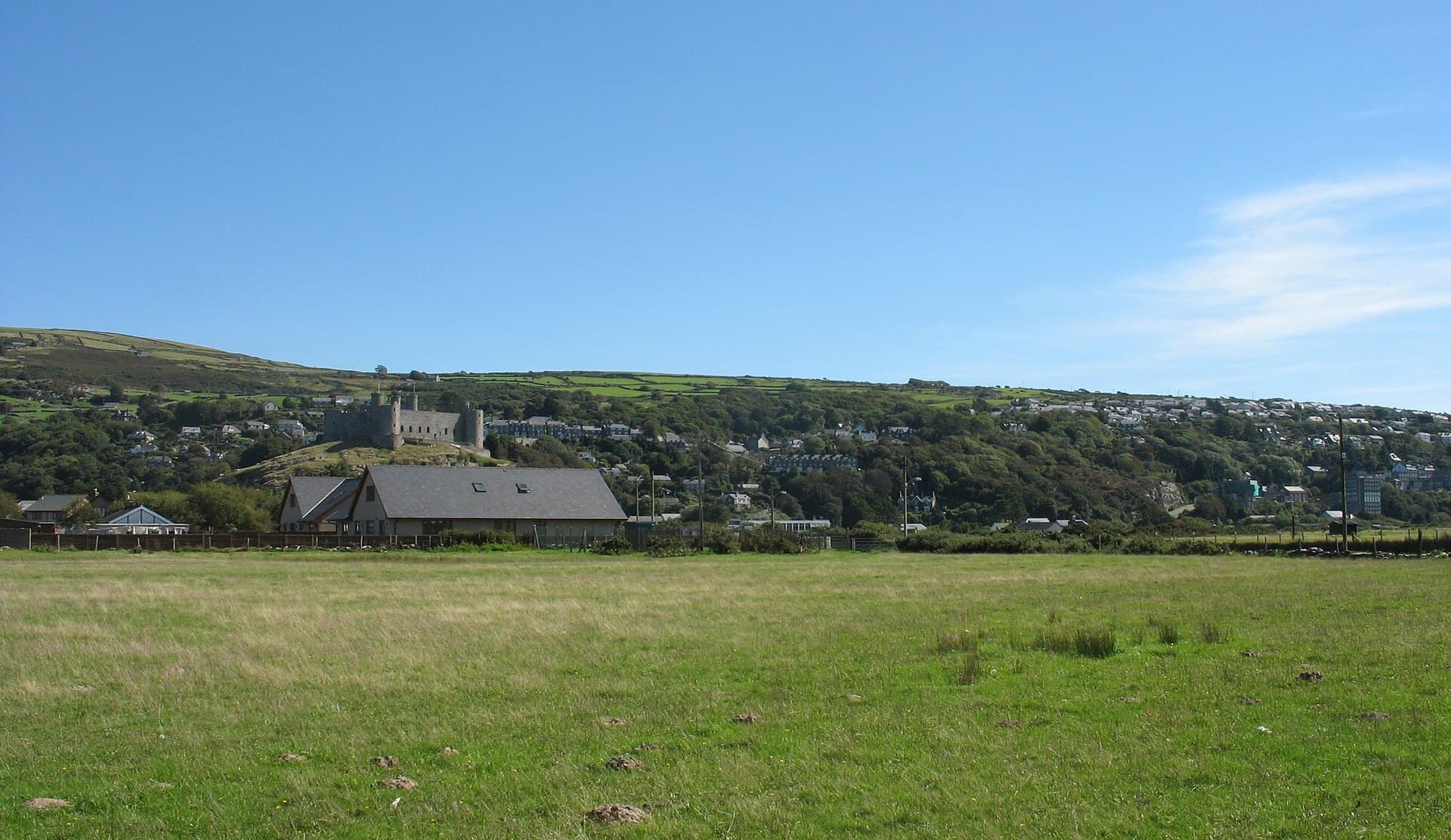 Unknown author / CC BY 2.5, via Wikimedia Commons
“Where ancient stones meet golden sands, and legends linger in the sea air.”
Not the postcards. The stories even locals don't know — whispered in your ear, right where they happened.
Harlech Castle, now a considerable distance from the shoreline, once maintained a secret lifeline during times of siege.
Beyond its medieval stones and scenic coastal setting, this ancient church is said to shelter a spectral presence.
A restaurant in Harlech holds a surprising connection to a celebrated literary and cinematic figure.
Discover every secret of Harlech
Every address, every reveal in full — in your ear, right where it happened.
You pick your stops. You walk. The voice reveals what the others miss.
No tours available yet. Check back soon — we're preparing them.
Harlech, a coastal town in Gwynedd, North Wales, is a place where dramatic history and natural beauty converge. Dominated by its imposing medieval castle and backed by the rugged Rhinog mountain range, it offers a memorable destination within the Snowdonia National Park. The town is split into two main areas: a lower section near the expansive beach and an upper section surrounding the shops, church, and the iconic castle, connected by a steep road called 'Twtil'.
Harlech's golden sandy beach stretches for miles, offering tranquil views of the Llŷn Peninsula and Cardigan Bay. Behind the beach, a system of sand dunes forms a scenic backdrop and is designated a Site of Special Scientific Interest due to its unique flora and fauna. The town's atmosphere is permeated with Welsh culture; over half of its 1,263 residents (as of the 2021 census) habitually speak Welsh.
## A Fortress Born of Conquest Harlech Castle, a UNESCO World Heritage Site, stands as the town's most prominent historical landmark. Edward I of England constructed it between 1283 and 1289 as part of his 'Iron Ring' of fortifications during his conquest of Wales. The castle's design, with its 'walls within walls' and a massive gatehouse, was a testament to medieval military architecture, built to be supplied by sea via a 200-foot staircase cut into the cliff.
## Sieges and Welsh Resistance Harlech Castle played a significant role in several conflicts throughout the centuries. In 1294-1295, it withstood a siege by Madog ap Llywelyn. In 1404, Owain Glyndŵr, the last Welshman to claim the title Prince of Wales, captured the castle. It served as his military headquarters and a place where he summoned parliaments. The English recaptured it in 1409 under Harry of Monmouth, who would later become King Henry V.
During the 15th-century Wars of the Roses, Harlech became a Lancastrian stronghold. From 1461 to 1468, a small garrison famously defended the castle against Yorkist forces for seven years, the longest siege in British history, an event immortalized in the traditional song 'Men of Harlech'. The castle was also the very last Royalist fortress to surrender in the English Civil War, holding out until 1647.
## Legends and Modern Recognition Beyond its documented history, Harlech is woven into Welsh mythology, particularly the Mabinogion. The rock upon which the castle stands is linked to the tragic tale of Branwen, daughter of Llŷr, giving the site legendary status long before Edward I's fortress. Today, Harlech Castle is managed by Cadw, the Welsh Government's historic environment service, and continues to be a major tourist attraction.
Harlech Castle is undoubtedly the primary draw, a UNESCO World Heritage Site offering wide views of the coastline and Snowdonia mountains from its towers and walls. The on-site visitor center provides an informative introduction to its history.
Harlech Beach (Traeth Harlech) is an expansive sandy stretch ideal for walking, sunbathing, and swimming, backed by environmentally important sand dunes. The northern side of the beach is home to the Morfa Harlech National Nature Reserve, a sanctuary for rare plant species and birdlife. To the south, Shell Island is known for its abundance of shells.
For golf enthusiasts, the Royal St. David's Golf Club is a top-rated links course set against the dramatic backdrop of Harlech Castle and the Snowdonia mountains. Beyond the immediate town, consider visiting the Llanfair Slate Caverns for an underground adventure and a glimpse into the slate mining industry's history. St. Tanwg's Church, a medieval church overlooking the sea, is also worth a visit.
The best times to visit Harlech are during the late spring and summer months (June to September) when the weather is mild and the landscapes are green. Daytime temperatures average a pleasant 17°C to 19°C. This period is ideal for enjoying the beach and coastal trails, and the castle often hosts events. Autumn offers beautiful scenery with fewer crowds, while winter provides a quieter, atmospheric experience for castle visits and scenic walks, though temperatures are cooler.
Harlech has its own train station, Harlech railway station, on the Cambrian Coast Line, with services between Pwllheli and other towns. Parking is available, with charges applying at Harlech Beach. The town has a variety of accommodation options, including hotels, B&Bs, and self-catering cottages, many with views of the castle or coastline. Dining options range from fine dining at places like Castle Cottage to pub fare at The Queens Hotel, and several cafes and takeaways.
While swimming at Harlech Beach is generally safe, there is no lifeguard service, and strong currents can occur. Jellyfish are occasionally seen offshore, so exercise caution. Dog restrictions apply on a small section of the beach from April 1st to September 30th, but the rest is dog-friendly year-round.