The Harar Jugol Wall
The city's formidable walls, built centuries ago, hold a secret about their original purpose, extending beyond simple defense.
Full story unlocks in the tour
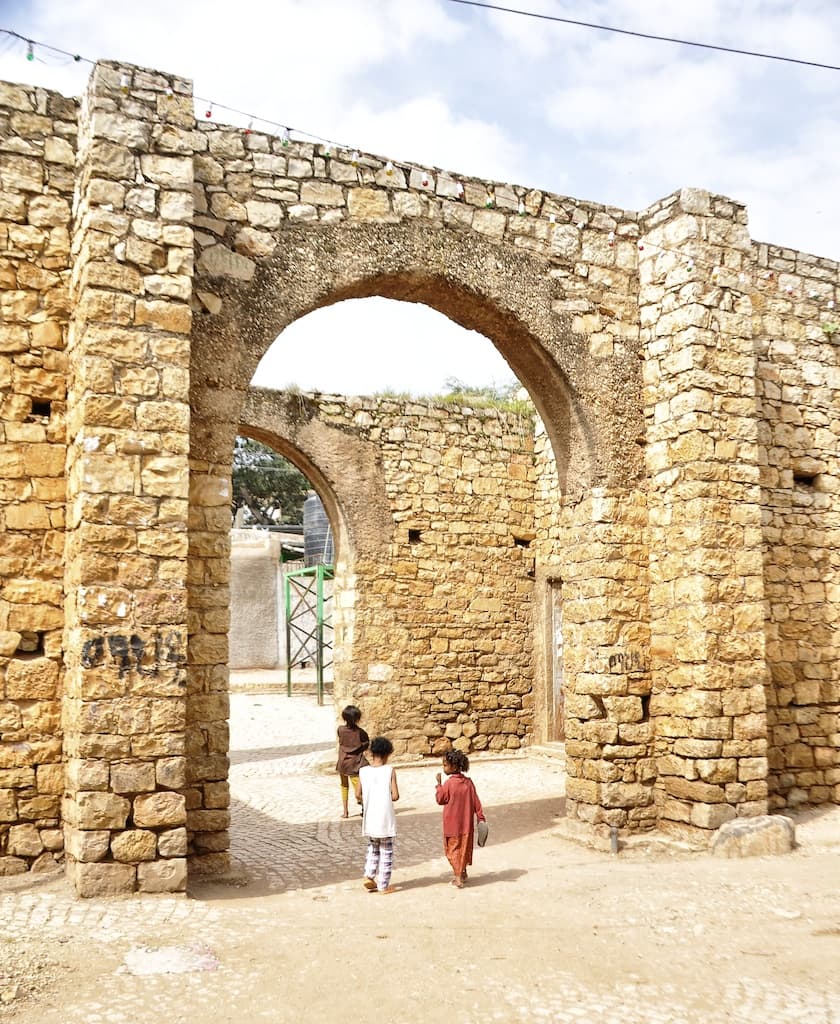 Rod Waddington from Kergunyah, Australia / CC BY-SA 2.0, via Wikimedia Commons
“Beyond ancient walls, where hyenas keep vigil and coffee breathes its aroma.”
Not the postcards. The stories even locals don't know — whispered in your ear, right where they happened.
The city's formidable walls, built centuries ago, hold a secret about their original purpose, extending beyond simple defense.
The nightly ritual of feeding wild hyenas outside Harar's gates is not just a spectacle, but a tradition rooted in a surprising historical pact.
Harar coffee is celebrated globally for its distinctive flavor, but its unique processing method is not merely a choice, but a necessity born from the region's climate.
Discover every secret of Harar
Every address, every reveal in full — in your ear, right where it happened.
You pick your stops. You walk. The voice reveals what the others miss.
No tours available yet. Check back soon — we're preparing them.
Harar, known officially as Harar Jugol, the Fortified Historic Town, is a city unlike any other in Ethiopia. Situated on a hilltop in the eastern part of the country, approximately 500 kilometers from Addis Ababa, it stands as a testament to centuries of cultural exchange and Islamic heritage. Encircled by imposing walls constructed between the 13th and 16th centuries, the old city is a labyrinth of narrow, winding alleyways, lively markets, and traditional Harari houses. Recognized as a UNESCO World Heritage site since 2006, Harar is considered by many to be the fourth holiest city of Islam, with a remarkable concentration of 82 mosques—three of which date back to the 10th century—and 102 shrines.
Stepping into Harar Jugol is akin to entering a living museum, where the echoes of ancient trade routes and scholarly pursuits still resonate. The city's unique cultural identity is a blend of Islamic, African, and Indian influences, evident in its architecture, handicrafts, and daily life. Beyond its historical significance, Harar is recognized for its distinctive coffee, a product of the surrounding highlands, and the intriguing nightly ritual of feeding wild hyenas on the city's outskirts, a practice that highlights a long-standing, unusual coexistence between humans and wildlife.
The exact origins of Harar are somewhat obscured by time, though its beginnings are linked to early Islamic settlements in eastern Ethiopia. Some beliefs suggest the city was founded in the late 7th century by Qurayshi settlers, while others trace its history to the 6th century as part of the Harla Kingdom. Arab and Persian traders, arriving between the 7th and 10th centuries, were instrumental in introducing Islam to the region and establishing Harar as a walled trading town. The legendary saint Abadir Umar ar-Rida and other religious leaders are recorded to have settled in the Harar plateau around 1216 CE, further solidifying its role as a burgeoning Islamic center.
Harar's political significance grew, becoming the new capital of the Adal Sultanate in 1520 under Sultan Abu Bakr ibn Muhammad. During this period, often referred to as Harar's 'Golden Age,' local culture flourished, and the city became known for coffee production, weaving, basketry, and bookbinding, also serving as a home for many poets. The formidable walls surrounding Harar Jugol, a defining feature of the city today, were constructed between the 13th and 16th centuries, providing a crucial protective barrier. From the late 16th to the 19th centuries, Harar was a vital trade center, connecting the coast with the interior highlands and fostering Islamic learning.
In the 17th century, Harar emerged as an independent emirate under Ali ibn Da'ud, a dynasty that would rule for two centuries. This era saw the city develop into a major religious hub, promoting Islamic proselytization to the surrounding Oromo tribes and even minting its own currency by 1789 CE. However, its independence was interrupted by an Egyptian occupation in 1875, before it was integrated into Ethiopia in 1887 by Emperor Menelik II after the Battle of Chelenqo. Despite these political shifts, Harar maintained its cultural prestige and Islamic institutions, with Muslim residents, mosques, and shrines remaining within the walled city, while Christian institutions and markets were established outside. The construction of the Addis Ababa to Djibouti Railway, which bypassed Harar, led to a commercial decline, but the city's unique cultural and architectural heritage endured, leading to its inscription as a UNESCO World Heritage site in 2006.
The heart of Harar is the Jugol, the Fortified Historic Town, a UNESCO World Heritage site that invites exploration of its 3.5-kilometer-long, 5-meter-high walls and the more than 360 narrow alleyways within. These alleys lead to a remarkable concentration of 82 mosques and 102 shrines, some dating back to the 10th century. The traditional Harari houses, known as gey gar, with their distinctive interior designs featuring niched walls adorned with colorful basketry, are a highlight. A good example of this unique architecture can be seen at the Harar Community Centre Museum.
Observe the Hyena Men of Harar, a unique nightly ritual on the city's eastern outskirts where wild spotted hyenas are hand-fed. This fascinating interaction, rooted in a centuries-old tradition, offers a glimpse into an unusual human-animal coexistence.
The Arthur Rimbaud Museum is housed in a beautifully restored Indian merchant house, dedicated to the renowned French poet who lived in Harar from 1884 to 1891. It features photographs, many taken by Rimbaud himself, offering insights into his life and the city's past. For a broader understanding of Harar's substantial history and diverse cultural influences, the Sherif Harar City Museum (also known as Ras Tafari's House, where Emperor Haile Selassie spent part of his childhood) showcases a collection of Islamic manuscripts, Harari coins, textiles, and weaponry. The lively markets, such as the Shoa Gate market and Erer Gate, are bustling hubs where diverse cultures converge, offering everything from local produce and spices to traditional crafts.
The optimal time to visit Harar is during the dry season, which spans from October to March. During these months, the temperatures are moderate, typically ranging from 20-27°C, and the skies are generally clear, providing ideal conditions for exploring the city's ancient alleys and cultural sites. December and January are particularly pleasant. While the long rainy season occurs from March to May, and June through September is mostly dry, the dry season offers the most comfortable weather for outdoor activities. Even during the rainy season, mornings can often be clear, and the old city's ochre walls take on a dramatic appearance.
Harar is approximately 500-525 kilometers east of Addis Ababa. The main air gateway is Dire Dawa, located 52 kilometers northwest of Harar, with daily flights from Addis Ababa. From Dire Dawa, minibuses are available for the 1-1.5 hour journey to Harar. Bus services from Addis Ababa also operate, taking around 11 hours. Once in Harar, the old city, Harar Jugol, is best explored on foot due to its narrow alleyways. Local guides are recommended, especially for a first-time visit, to navigate the labyrinthine streets and gain deeper insights into the city's history and culture.
The local currency is the Ethiopian Birr (ETB), subdivided into 100 santims. Banknotes are available in denominations of 1, 5, 10, 50, and 100 Birr. Foreign currency can be exchanged at banks and hotels, and it's essential to retain all exchange receipts. While Harar is generally welcoming, it's advisable to be mindful of local customs regarding dress and photography, particularly in a conservative Islamic city.