West Lake's 'Three Pools Mirroring the Moon'
This iconic scene, often gracing postcards, holds a secret that makes it more than just a pretty picture.
Full story unlocks in the tour
 EditQ / CC BY-SA 4.0, via Wikimedia Commons
“Where ancient poetry meets modern innovation, framed by the timeless beauty of West Lake.”
Not the postcards. The stories even locals don't know — whispered in your ear, right where they happened.
This iconic scene, often gracing postcards, holds a secret that makes it more than just a pretty picture.
Despite its evocative name, you'll never actually find this famous bridge in pieces.
The seemingly simple stone railings lining the lake's walking paths have a thoughtful, almost secret, design element for tiny residents.
Discover every secret of Hangzhou
Every address, every reveal in full — in your ear, right where it happened.
You pick your stops. You walk. The voice reveals what the others miss.
No tours available yet. Check back soon — we're preparing them.
Hangzhou, the capital of Zhejiang province, is a city where natural splendor and profound history intertwine. Often referred to as "Heaven on Earth," it's a place celebrated by poets and artists for centuries, a sentiment echoed by Marco Polo, who described it as "the finest and most splendid city in the world." Situated at the southern end of the Grand Canal, Hangzhou's allure centers around its iconic West Lake, a UNESCO World Heritage Site that forms the city's serene heart.
Beyond the tranquil waters and willow-lined causeways, Hangzhou is a city of distinct culture and economic significance. It is recognized as the birthplace of Longjing (Dragon Well) tea and a historic center for silk production, traditions that continue to shape its identity. From ancient temples in misty hills to modern architectural marvels along the Qiantang River, Hangzhou offers a unique blend of the contemplative and the contemporary. It's a destination that invites unhurried exploration, a place where every turn reveals a new layer of its poetic past and dynamic present.
Easily accessible, Hangzhou provides a refreshing escape, just a short high-speed train ride from Shanghai. Whether you seek spiritual solace in ancient temples, a leisurely boat ride across a legendary lake, or a taste of authentic Chinese tea culture, Hangzhou offers an experience that resonates long after you depart.
Hangzhou's origins stretch back over 8,000 years, with evidence of human settlement found at the Kuahuqiao Cultural Remains, establishing it as one of the cradles of Chinese civilization. The later Liangzhu Culture, emerging 4,700 years ago, is recognized as the "Dawn of Civilization" in the region. The city was first established as a county seat in 221 BC during the Qin Dynasty.
Significant development occurred during the Sui Dynasty (581-618 AD), when the city, then known as Qiantang and Yuhang, was named Hangzhou in 589 AD. The completion of the Grand Canal's southern section in 609 AD transformed Hangzhou into a major hub for commerce, connecting it to northern China and facilitating economic growth. This strategic location cemented its importance as a center for trade, silk production, and agriculture.
Hangzhou's first golden age arrived when it became the capital of the Wuyue Kingdom (907–978 AD) during the Five Dynasties and Ten Kingdoms Period. Known as Xifu at the time, it was a cultural bastion in southern China. Two centuries later, from 1127 to 1276 AD, Hangzhou, then called Lin'an, served as the capital of the Southern Song Dynasty. This era marked a peak in its prosperity, making it one of the largest and most affluent cities in the world, renowned for its trade, culture, and refined way of life. It's believed that Hangzhou was the largest city globally from 1180 to 1315 and again from 1348 to 1358. Marco Polo's 13th-century accounts lauded Hangzhou as "the world's most magnificent and noble city."
Under the Ming and Qing dynasties, Hangzhou continued to thrive as a superior prefecture and provincial capital, becoming immensely wealthy due to its fertile rice-growing region and its crucial silk industries. Despite facing damage during the Taiping Heavenly Kingdom's occupation in the mid-19th century, the city persevered. In the 20th century, control of Hangzhou was contested by warlords before coming under Nationalist rule and eventually the Communists in 1949.
Today, Hangzhou maintains its status as an economic powerhouse and a significant cultural center. It is home to major companies like Alibaba Group and ranks highly in scientific research output. The city has also embraced modern infrastructure, including China's seventh-largest metro system. Its three UNESCO World Heritage Sites—the West Lake Cultural Landscape, the Grand Canal, and the Archaeological Ruins of Liangzhu City—underscore its enduring historical and cultural importance.
Hangzhou offers a blend of serene landscapes and cultural landmarks, with many key attractions centered around West Lake. A boat tour across West Lake is a classic starting point, allowing you to appreciate its islands, pagodas, and causeways. Don't miss the iconic Leifeng Pagoda, particularly at sunset, for sweeping views. Strolling or cycling along the Su Causeway provides a peaceful way to experience the lake's beauty.
For a spiritual retreat, visit Lingyin Temple, one of China's largest and oldest Buddhist temples, founded in 328 AD. Adjacent to it is Feilai Peak, a limestone hill adorned with over 340 Buddhist stone carvings dating back to the 10th century. The China National Tea Museum offers insights into the region's renowned Longjing tea culture, complete with tea plantations. Similarly, the China National Silk Museum, the world's largest, showcases Hangzhou's silk heritage.
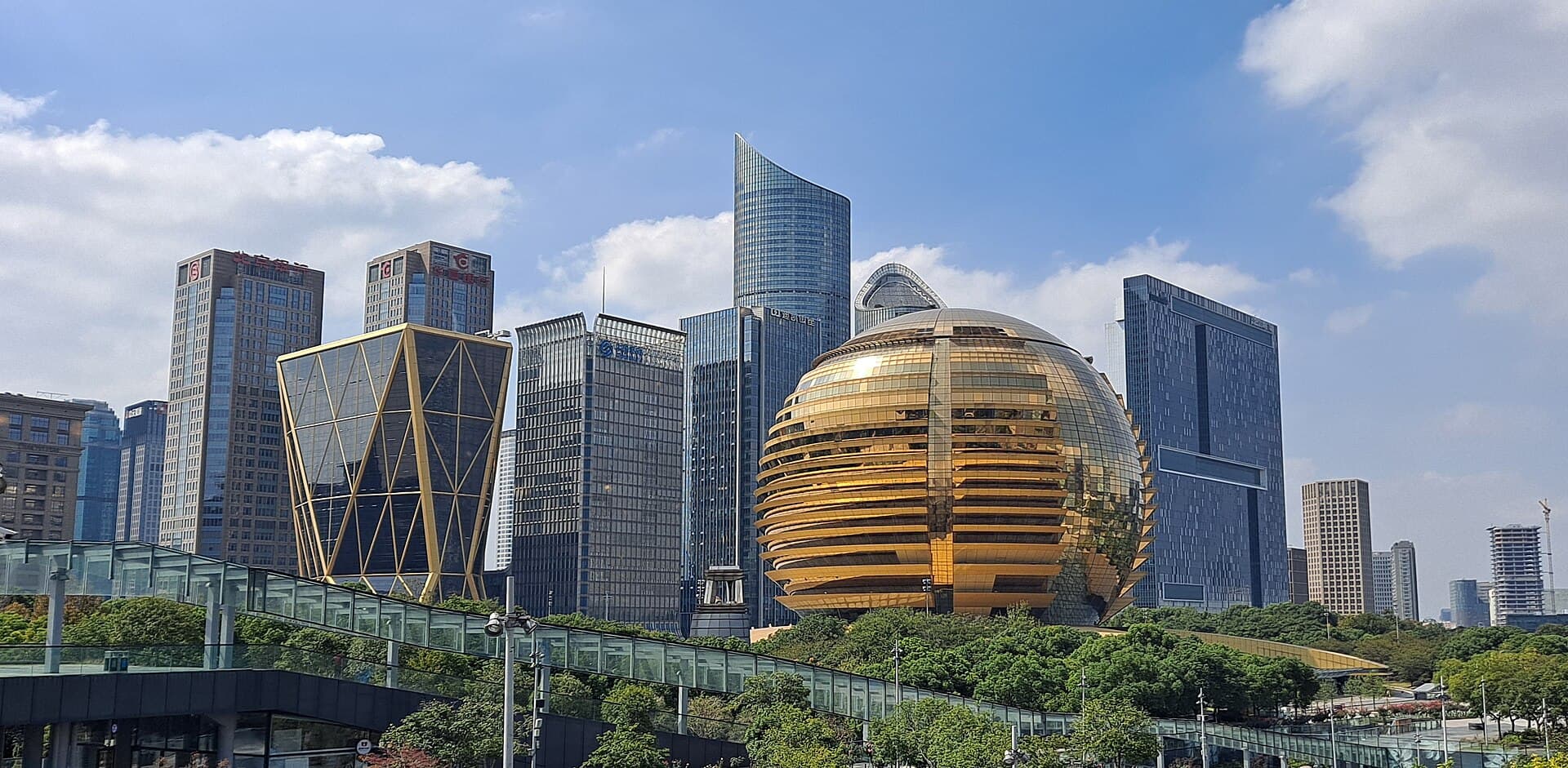
Beyond the lake, explore Hefang Street, a lively pedestrian area reflecting Southern Song Dynasty architecture, perfect for local snacks and souvenirs. For a glimpse into the city's modern side, the Central Business District along the Qiantang River features impressive contemporary architecture, including the lotus-shaped Hangzhou Sports Park Stadium. Xixi National Wetland Park offers a tranquil escape with its waterways and ancient villages, best explored by traditional sampan.
The best times to visit Hangzhou are during spring (March to May) and autumn (September to November). In spring, the weather is mild, with plum and peach blossoms adorning West Lake, and the Longjing tea harvest begins. Autumn brings crisp, dry air, golden foliage, and the sweet fragrance of osmanthus flowers throughout the city. Summer (June to August) can be hot and humid with more rain, while winter, though misty and atmospheric, is colder and wetter. To avoid crowds, steer clear of weekends and Chinese public holidays.
Hangzhou is well-connected by high-speed rail, making it easily accessible from major cities like Shanghai (45 minutes to 1.5 hours) and Beijing (4.5 to 6 hours). Hangzhou Xiaoshan International Airport serves domestic and some international flights. The city has an extensive metro system, with 12 lines covering 516.2 kilometers, and a public bicycle system, offering an affordable way to explore. Many attractions, including West Lake, are best experienced on foot or by bike.
While Mandarin is the official language, the local Wu Chinese dialect is also spoken. English is not widely spoken outside of hotels and major tourist areas, so learning a few basic phrases can be helpful. Mobile payment apps like Alipay and WeChat are widely used. For accommodation, staying near the West Lake Scenic Area or in the Shangcheng District is recommended for convenient access to attractions.