The Elbphilharmonie
The Elbphilharmonie, Hamburg's striking concert hall, appears to float above the Elbe. Its impressive height and unique design required an unusual foundation.
Full story unlocks in the tour
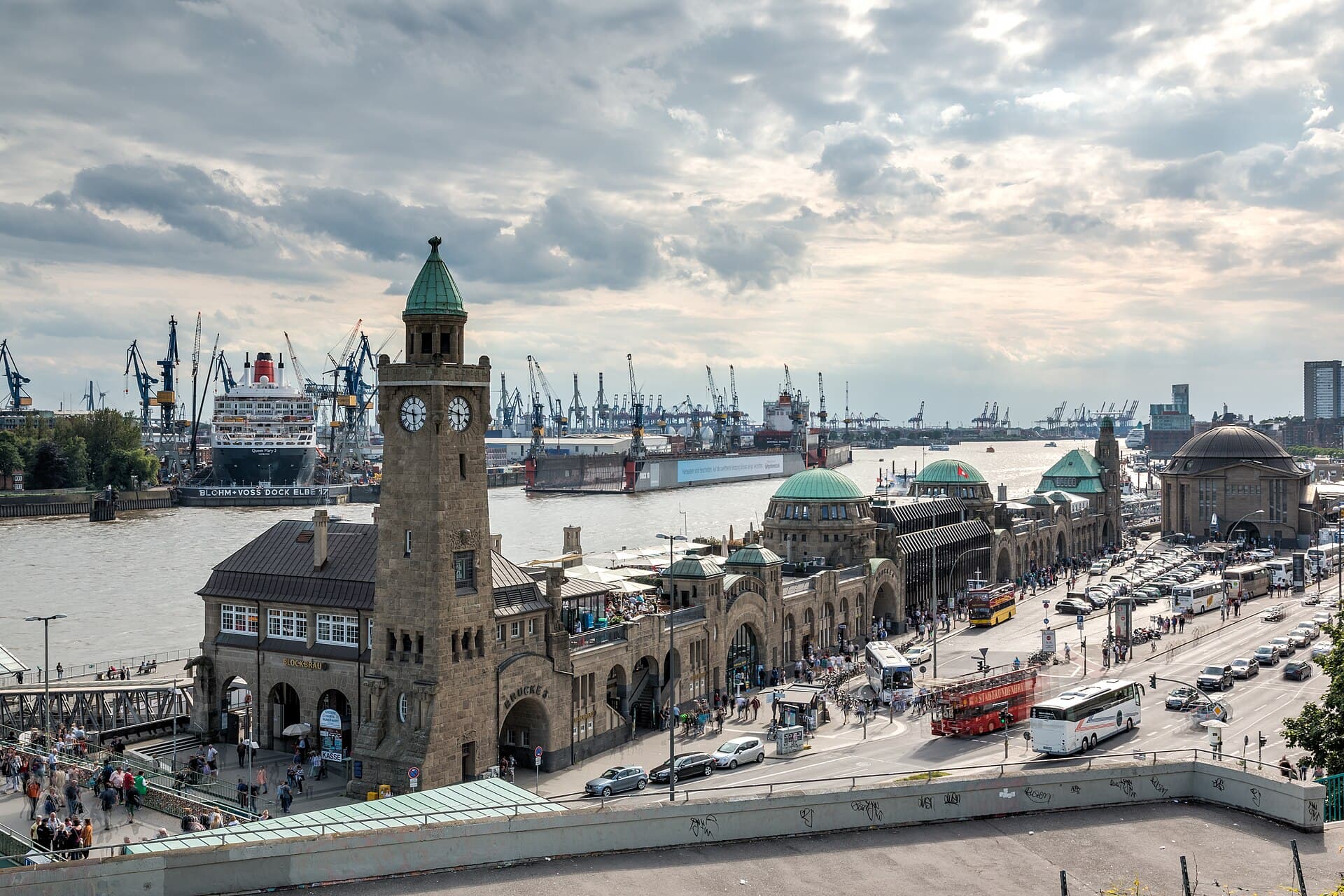 Dietmar Rabich / CC BY-SA 4.0, via Wikimedia Commons
“A city woven from water, where maritime heritage meets modern marvels.”
Not the postcards. The stories even locals don't know — whispered in your ear, right where they happened.
The Elbphilharmonie, Hamburg's striking concert hall, appears to float above the Elbe. Its impressive height and unique design required an unusual foundation.
This sprawling miniature world is Germany's most popular attraction, but its creators stumbled upon an unexpected challenge when expanding their tiny empire.
In Hamburg, you'll hear 'Moin' at any time of day, a greeting that seems simple but carries a deeper linguistic heritage than most realize.
Discover every secret of Hamburg
Every address, every reveal in full — in your ear, right where it happened.
You pick your stops. You walk. The voice reveals what the others miss.
No tours available yet. Check back soon — we're preparing them.
Hamburg, a city of canals and bridges, holds a distinctive identity in northern Germany. As the country's second-largest city, it's a major international and domestic destination, often referred to as the 'Gateway to the World' due to its expansive port. The city's character is deeply intertwined with its maritime heritage, evident in its historic Speicherstadt warehouse district and the modern HafenCity quarter.
With more than 2,500 bridges, Hamburg surpasses Amsterdam, Venice, and London combined in bridge count, earning it the nickname 'Venice of the North.' Beyond its waterways, Hamburg offers a deep well of culture, from its renowned concert halls like the Elbphilharmonie to its lively nightlife in the Reeperbahn district. It's a city that balances historical depth with contemporary innovation, making it an engaging destination for diverse travelers.
Hamburg's origins trace back to the 9th century when Emperor Charlemagne ordered the construction of a castle, Hammaburg, on marshy land between the Alster and Elbe rivers. This strategic fortification was intended to defend against Slavic tribes. By 834 CE, Hamburg had become the seat of an archbishop, signifying its growing importance. A pivotal moment arrived in 1189 when Frederick I Barbarossa allegedly granted Hamburg the status of a Free Imperial City within the Holy Roman Empire, providing tax-free access to the lower River Elbe and solidifying its position as a key trading power.
Hamburg became a leading member of the Hanseatic League, a powerful commercial confederation of Northern European cities that flourished from the 13th to 17th centuries. This alliance cemented Hamburg's role as a major transshipment point for goods across Europe. The city's independent spirit continued, and in 1510, it officially received the status of a 'Free Imperial City,' granting it significant political and economic autonomy. This self-ruling status allowed Hamburg to maintain its own tax and customs regulations even after joining the German Empire in 1871, a privilege it held until 1888.
The 19th century saw rapid growth, with Hamburg's population quadrupling as its Atlantic trade made it Europe's third-largest port. However, this period also brought challenges, including a major cholera outbreak in 1892. The construction of the Speicherstadt, the world's largest warehouse district, between 1883 and 1927, was a direct consequence of Hamburg's integration into the German Customs Union. Built on thousands of oak poles, this architectural wonder allowed for a free port area where goods could be transferred without customs duties. Though parts were destroyed during World War II, the Speicherstadt was rebuilt and, in 2015, was designated a UNESCO World Heritage Site, recognizing its exceptional Neo-Gothic architecture and its testimony to international maritime trade.
Begin your exploration at the Speicherstadt, the historic warehouse district and a UNESCO World Heritage Site. Its distinctive red-brick buildings, crisscrossed by canals, are best experienced on a harbor tour or a public ferry, such as Line 62, which offers an affordable way to see the port's major sights. Within the Speicherstadt, explore Miniatur Wunderland, the world's largest model railway exhibition, a captivating attraction for all ages.
Another architectural highlight is the Elbphilharmonie, a modern concert hall with a striking glass facade. Visit the Plaza, a public viewing platform 37 meters high, for expansive views of the city and harbor. For a different perspective, climb the tower of St. Michael's Church (Michel), a Baroque-style landmark known for its copper dome and sweeping city vistas. Take time to wander through HafenCity, Hamburg's newest district, which seamlessly blends modern architecture with the historic port. If you seek green spaces, Planten un Blomen Park offers botanical gardens and a Japanese garden, while Stadtpark in the north of Hamburg provides extensive meadows and houses the Hamburg Planetarium.
The best time to visit Hamburg is during late spring or early autumn, specifically from May to September. During these months, temperatures are mild and pleasant, making it ideal for outdoor activities and sightseeing. Summer (June to August) is popular for its warmer weather and festivals, but also brings larger crowds and higher prices. For those on a budget or seeking fewer crowds, March, September, or November can offer good value and comfortable temperatures. Winter, from December to February, is cold and often snowy, but the city transforms with its numerous Christmas markets.
Hamburg's public transportation system, HVV, is extensive and efficient, comprising U-Bahn (subway), S-Bahn (suburban trains), buses, and ferries. A single ticket allows seamless transfers between these modes. Consider purchasing the Hamburg CARD for unlimited travel on all HVV services, along with discounts at museums, restaurants, and attractions. The S1 line connects Hamburg Airport to the city center in under 30 minutes. While English is widely spoken, especially by younger generations, knowing a few German phrases can be helpful. It's advisable to carry cash, as many smaller shops, restaurants, and bars may not accept debit or credit cards. Tipping is customary, with a general guideline of 5-10% in restaurants, often by rounding up the bill and informing your server of the total amount you wish to pay.