Haarlem, NetherlandsFryslan0109 at English Wikipedia / Public domain, via Wikimedia Commons
NL

Haarlem

Beyond Amsterdam's shadow, a city of quiet canals, artistic legacies, and resilient spirit.

The secrets of Haarlem

Haarlem, as no one tells it.

Not the postcards. The stories even locals don't know — whispered in your ear, right where they happened.

3 secrets below. Many more wait inside the tour.
Grote Markt

For centuries, the Town Hall has anchored Haarlem's central square, a testament to its long history of self-governance. But a particular bench here once hosted a rather unconventional, if consistent, public spectacle.

Full story unlocks in the tour
Corrie ten Boom House

This seemingly ordinary clock shop harbored a secret far more precious than timepieces during World War II.

Full story unlocks in the tour
Jopenkerk

Haarlem was once a powerhouse of brewing, with over 100 breweries at its peak. Today, a striking example of this legacy is housed within an unexpected structure.

Full story unlocks in the tour
The full tour

Discover every secret of Haarlem

Every address, every reveal in full — in your ear, right where it happened.

Get the key to Haarlem

You pick your stops. You walk. The voice reveals what the others miss.

Choose your time

How long do you have in Haarlem?

No tours available yet. Check back soon — we're preparing them.

About Haarlem

The story of Haarlem

Haarlem, the capital of North Holland, offers a captivating blend of medieval character and cultural depth, often providing a more relaxed experience than its bustling neighbor, Amsterdam. Situated along the Spaarne River and just a short distance from the North Sea, the city's historic center unfolds with gabled houses and serene canals. Haarlem's enduring appeal lies in its ability to feel both intimately local and globally significant, having even lent its name to a famous New York City neighborhood.

Stepping into Haarlem feels like entering a living history book, where every corner reveals a story, from its Golden Age art heritage to its pivotal role in the infamous Tulip Mania. The city's compact size makes it ideal for exploration on foot or by bicycle, inviting visitors to discover its renowned museums, picturesque courtyards, and lively market squares. Whether you are drawn to its artistic masterpieces, its brewing traditions, or simply the tranquil beauty of its waterways, Haarlem promises an authentic Dutch experience that rewards curiosity and offers a peaceful escape.

History

From Fortified Town to Artistic Hub

Haarlem's origins trace back to the 10th century, a settlement known as 'Haarloheim' meaning 'home on a forested dune,' strategically positioned on a sandbar near the Spaarne River. By the 12th century, it had evolved into a fortified town, serving as a residence for the Counts of Holland. In 1245, Count William II officially granted Haarlem city rights, a pivotal moment that spurred its institutional development and attracted merchants and artisans. The city's early prosperity was fueled by its control over a strategic waterway on the Spaarne, allowing it to collect tolls from passing merchant ships.

The 14th century saw Haarlem grow into a major city, second only to Dordrecht in historical Holland. However, this period was also marked by hardship, including devastating fires that destroyed much of its wooden buildings in 1328, 1347, and 1351, and the arrival of the Black Death in 1381, which claimed an estimated half of the population. Despite these setbacks, the city rebuilt, often in stone, and continued to flourish with a large textile industry, shipyards, and numerous beer breweries.

During the Eighty Years' War against Spain, Haarlem endured a brutal seven-month siege from December 1572 to July 1573. The city's heroic defense, though ultimately ending in surrender and severe retribution, became a symbol of early Protestant defiance. Following its recapture in 1577 and incorporation into the United Netherlands, Haarlem entered a golden age in the 17th century. It became a refuge for Huguenots and a prominent artistic center, giving rise to the Haarlem school of painting, which included masters like Frans Hals, Jacob van Ruisdael, and Salomon van Ruysdael. The city also played a crucial role in the infamous Tulip Mania, becoming a central hub for the trade of these coveted flowers.

The 19th century brought significant changes, with the demolition of old city walls to allow for expansion and the establishment of Haarlem as the provincial capital of North Holland. The Netherlands' first railway, connecting Haarlem to Amsterdam, opened in 1839, further bolstering its economic ties. In the 20th century, Haarlem faced the challenges of World War II, including German occupation and the courageous efforts of families like the ten Booms, who hid Jewish people from the Nazis. Today, Haarlem continues to blend its preserved historical monuments with modern vitality, maintaining its identity as a cultural location with a layered past.
What to see

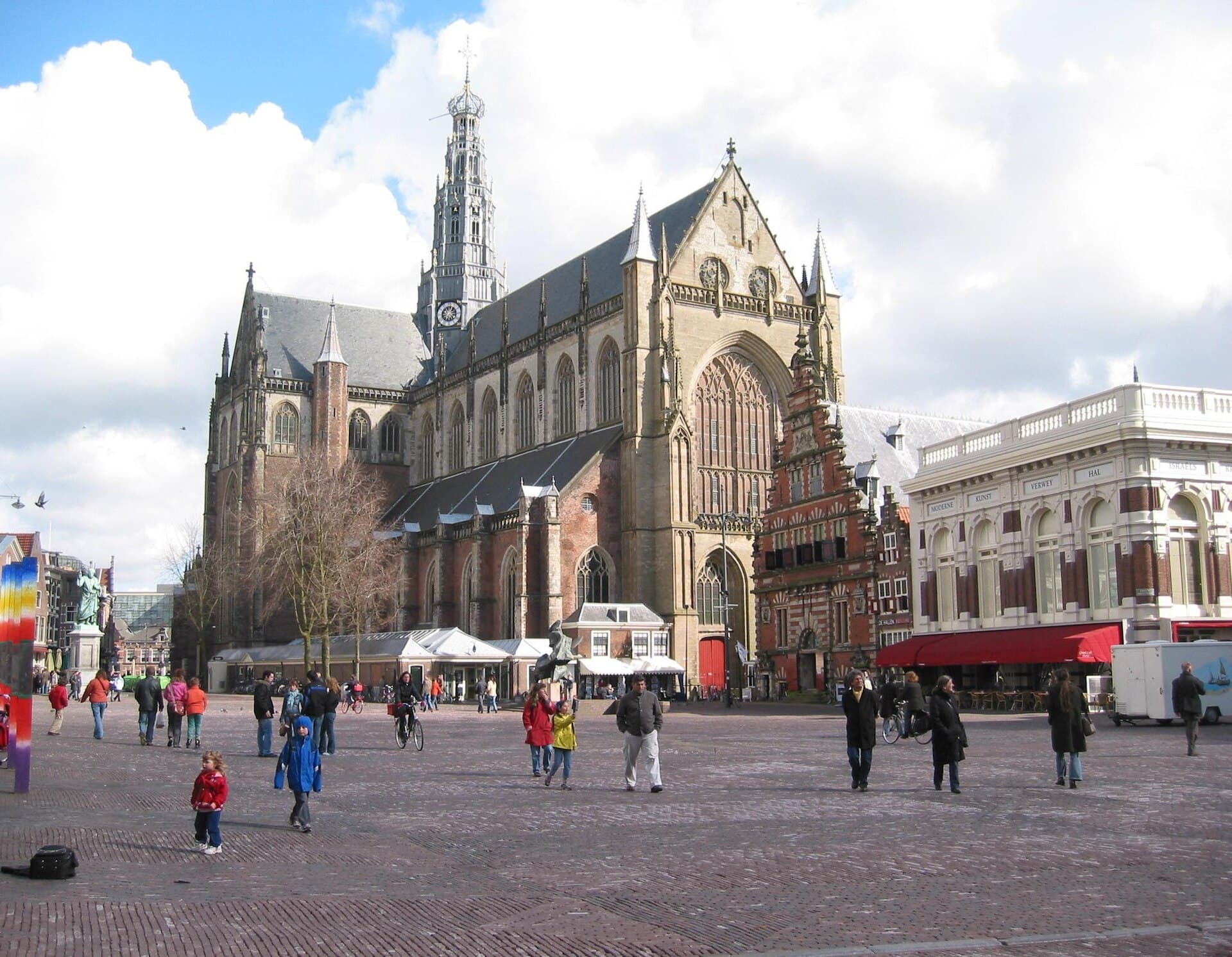
Haarlem's compact center makes it ideal for exploring its many attractions on foot. The Grote Markt is the city's lively heart, surrounded by historic buildings like the Grote Kerk (St. Bavokerk), an impressive Gothic church housing a famous pipe organ once played by Mozart. Adjacent to the church is the Vleeshal (Meat Market), a striking 17th-century building that now hosts art exhibitions.

Art enthusiasts will find the Frans Hals Museum a rewarding visit, dedicated to the renowned Dutch Golden Age portrait painter. For a journey through science and art, the Teylers Museum, the oldest museum in the Netherlands, offers an eclectic collection ranging from fossils to scientific instruments within its iconic Oval Hall. A poignant historical site is the Corrie ten Boom House, a former clock shop where a family bravely hid Jews during World War II.

Beyond the main square, wander along the Spaarne River to admire the Molen De Adriaan, a reconstructed windmill offering tours and expansive views. Seek out Haarlem's tranquil hofjes, enclosed courtyard gardens originally built for elderly women, with the oldest, Hofje van Bakenes, dating back to 1395. The Amsterdamse Poort is one of the few remaining medieval city gates. For shopping, explore the Gouden Straatjes (Golden Streets), a network of charming alleys filled with independent boutiques and cafes.

When to visit

The best time to visit Haarlem largely depends on your interests. Spring, particularly April and May, is popular for its colorful tulip fields nearby and pleasant, mild temperatures ranging from 10°C to 18°C (50°F to 65°F). Summer (June to August) brings warm weather, lively festivals, and long daylight hours, though it can be busier with tourists. For fewer crowds and comfortable temperatures, May, June, and early September are ideal. Autumn (September and October) offers crisp air, colorful foliage, and a quieter atmosphere, with temperatures between 10°C and 16°C (50°F to 61°F). While winters are colder and cloudier, the city remains charming with festive markets and museums as key attractions.

Practical

Haarlem is easily accessible by public transportation. Trains run frequently (every 7-10 minutes) to and from Amsterdam Centraal, with a journey time of less than 20 minutes. Direct buses, like line 300, connect Haarlem to Schiphol Airport in approximately 30-40 minutes. The city center is compact and very walkable, and bicycles are a popular way to get around, with rental options available. For those less inclined to walk or cycle, frequent buses operate within the city, and taxis, including Uber, are also available.

The local currency is the Euro (€). While cash is rarely needed, as cards are widely accepted, it's always useful to have some small denominations for smaller purchases. The official language is Dutch, but English is widely spoken, especially in tourist areas. The standard electricity voltage is 230V with Type C and F plugs. The tap water in Haarlem is generally safe to drink and of high quality, sourced from surface water that undergoes extensive treatment.

Good to know
What is Haarlem known for?
Haarlem is known for its Golden Age art heritage, particularly painter Frans Hals, its historical role as a center for tulip trading, and its beautifully preserved medieval city center with iconic landmarks like the Grote Kerk and Teylers Museum.
Is Haarlem walkable?
Yes, Haarlem has a very compact city center, making it easily walkable. Most major attractions are within close proximity, allowing visitors to explore on foot.
Can you swim in the canals of Haarlem?
Swimming in the Spaarne River (the main waterway through Haarlem) is generally not allowed and can be unsafe due to boat traffic and potential water quality issues, though some locals do swim in certain areas. There are designated swimming spots like Molenplas where water quality is regularly monitored and rated as good.
What is the currency and language in Haarlem?
The currency in Haarlem, as in the rest of the Netherlands, is the Euro (€). The official language is Dutch, but English is widely spoken, especially in tourist areas.
Is the tap water safe to drink in Haarlem?
Yes, tap water in Haarlem is generally safe to drink directly from the tap. It is sourced from surface water and undergoes extensive treatment, meeting stringent Dutch and EU regulations.
How do I get around Haarlem?
Haarlem is well-connected by public transport, including trains and buses. The city center is very walkable, and bicycles are a popular and convenient way to explore. Taxis and ride-sharing services like Uber are also available.
Haarlem
From€9.00
No booking · activate anytime · 12h to walk it
Get the key to Haarlem