Hospital Cave
Beyond its natural beauty, one cave in Ha Long Bay served a surprising, critical role during a tumultuous period in Vietnamese history.
Full story unlocks in the tour
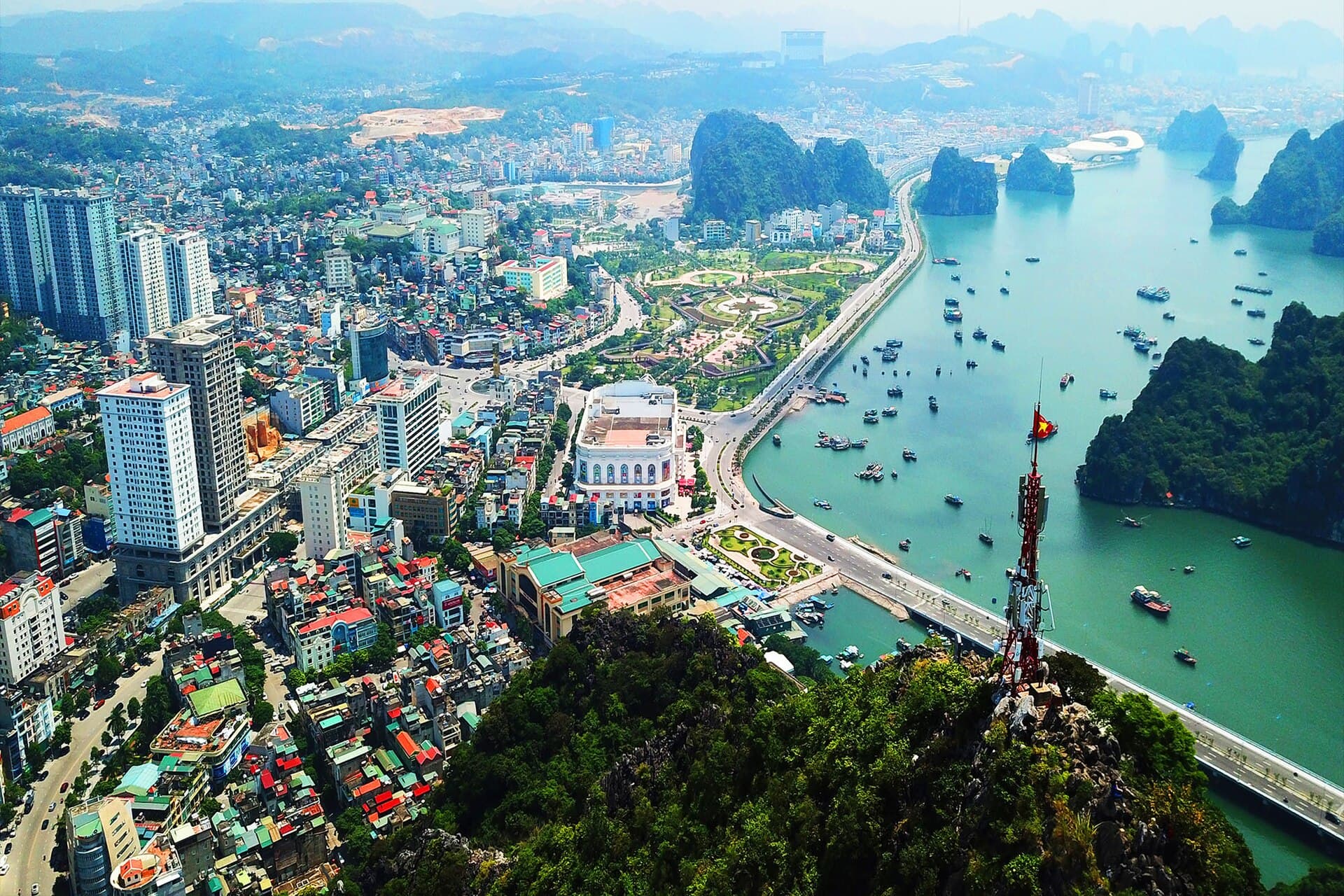 Dratharr / CC BY-SA 4.0, via Wikimedia Commons
“Where dragons descended and limestone dreams ascend.”
Not the postcards. The stories even locals don't know — whispered in your ear, right where they happened.
Beyond its natural beauty, one cave in Ha Long Bay served a surprising, critical role during a tumultuous period in Vietnamese history.
A towering peak in Ha Long Bay holds more than just panoramic views; it carries ancient whispers etched in stone.
The iconic emerald hue of Ha Long Bay's waters isn't always what it seems in photographs.
Discover every secret of Ha Long
Every address, every reveal in full — in your ear, right where it happened.
You pick your stops. You walk. The voice reveals what the others miss.
No tours available yet. Check back soon — we're preparing them.
Ha Long Bay, a UNESCO World Heritage Site in northeastern Vietnam, presents a seascape where nearly 2,000 limestone karsts and islets rise dramatically from the calm, jade-green waters. The name "Ha Long" itself translates to "descending dragon," rooted in a legend where a family of dragons, sent by the gods, spat out jewels and jade to form these islands, creating a protective barrier against invaders. This mythical origin story imbues the bay with a deep cultural significance, reflecting the enduring connection between the Vietnamese people and their natural environment.
The bay's unique geological formations are the result of over 500 million years of tectonic activity, sea-level changes, and erosion. Acidic rainwater and relentless waves have sculpted the limestone into a labyrinth of towering cliffs, hidden caves, and serene lagoons, creating a landscape often described as otherworldly. Beyond its visual grandeur, Ha Long Bay is a biodiverse region, supporting a tropical evergreen biosystem and a seashore biosystem, with 14 endemic floral species and 60 endemic faunal species.
The history of Ha Long Bay stretches back tens of thousands of years, with archaeological evidence pointing to prehistoric human presence. The Soi Nhụ culture (18,000–7,000 BC), Cái Bèo culture (7,000–5,000 BC), and Hạ Long culture (5,000–3,500 years ago) are among the earliest known human settlements in the area, with tools, pottery, and artifacts unearthed providing insights into these ancient communities.
The geological narrative of Ha Long Bay is even more ancient, beginning approximately 500 million years ago when the region was a deep sea. Over millions of years, tectonic activity caused the area to uplift, and a shallow, warm sea reformed, leading to the formation of a thick limestone layer, over 1,000 meters deep, during the Carboniferous and Permian periods (240 to 340 million years ago). The distinctive karst geomorphology, characterized by cone-shaped hills and isolated limestone towers, has evolved over the last 20 million years under the influence of a tropical wet climate. Rainwater seeping into limestone crevices, combined with marine erosion, steadily widened cracks and sculpted the formations seen today.
Ha Long Bay has also played a strategic role in Vietnamese history. In 1288, General Trần Hưng Đạo achieved a significant victory against the Mongol fleet in the Battle of Bạch Đằng River, part of the bay's estuary, by employing underwater stakes and utilizing the tides. Later, in the 15th century, scholar and poet Nguyễn Trãi praised the bay as "a rock wonder in the sky" in his verse Lộ nhập Vân Đồn. The name "Hạ Long Bay" itself, meaning "descending dragon," only became widely recorded in the late 19th century, appearing on French maritime maps and in local newspapers reporting a dragon sighting. This rich natural evolution, ancient habitation, and historical significance led to its designation as a UNESCO World Heritage Site in 1994 for its aesthetic value, and again in 2000 for its geological and geomorphological importance.
Exploring Ha Long Bay often centers around its iconic limestone karsts and the emerald waters that surround them. The most popular way to experience the bay is via an overnight cruise, which allows for deeper exploration and a chance to witness both sunrise and sunset over the dramatic landscape.
Beyond cruising, kayaking is highly recommended for navigating through narrower channels, sea caves, and lagoons that larger vessels cannot access, offering an intimate perspective of the bay's natural beauty. Many caves are open for exploration, such as Sung Sot Cave (Surprise Cave), known for its massive chambers and intricate stalactites and stalagmites, and Thien Cung Cave, which presents a magical scene of natural formations. Ti Top Island offers a white sandy beach for swimming and a hike to the summit for panoramic views of the bay. For a glimpse into local life, visits to floating fishing villages like Cửa Vạn or Vung Viêng provide insight into communities that have lived on the water for generations. Adventurous travelers can also consider rock climbing on Cat Ba Island's towering cliffs or trekking through Cat Ba National Park.
The most favorable times to visit Ha Long Bay are during spring (March to April) and autumn (late September to November). These periods offer mild temperatures, lower humidity, and generally clear skies, which are ideal for cruising, kayaking, and other outdoor activities. While the bay is a year-round destination, avoiding the summer months (June to August) is advisable due to heavy rainfall, high humidity, and the potential for typhoons that can disrupt boat tours. Winter (January and February) can be chilly and foggy, with reduced visibility, though it offers fewer crowds.
Most travelers reach Ha Long Bay from Hanoi, a journey that typically takes around 2.5 to 3.5 hours by road. Shuttle buses, often arranged through cruise operators, are a common and efficient option, while private car transfers offer more flexibility. It's recommended to book cruises and accommodations in advance, especially during peak seasons (October to December and February to April).
Packing light is advisable, as space on cruise boats can be limited. Essentials include sunscreen, a bathing suit, sunglasses, a hat, and insect repellent. Comfortable shoes are a must for exploring caves and hiking. While most meals are included on cruises and often feature fresh local seafood, inform your operator of any dietary restrictions in advance. Cash is useful for onboard extras and tipping the crew, as credit cards may not be accepted on all boats.