Gulangyu Organ Museum
Among the grand organs, one stands as a testament to international collaboration and a dramatic past.
Full story unlocks in the tour
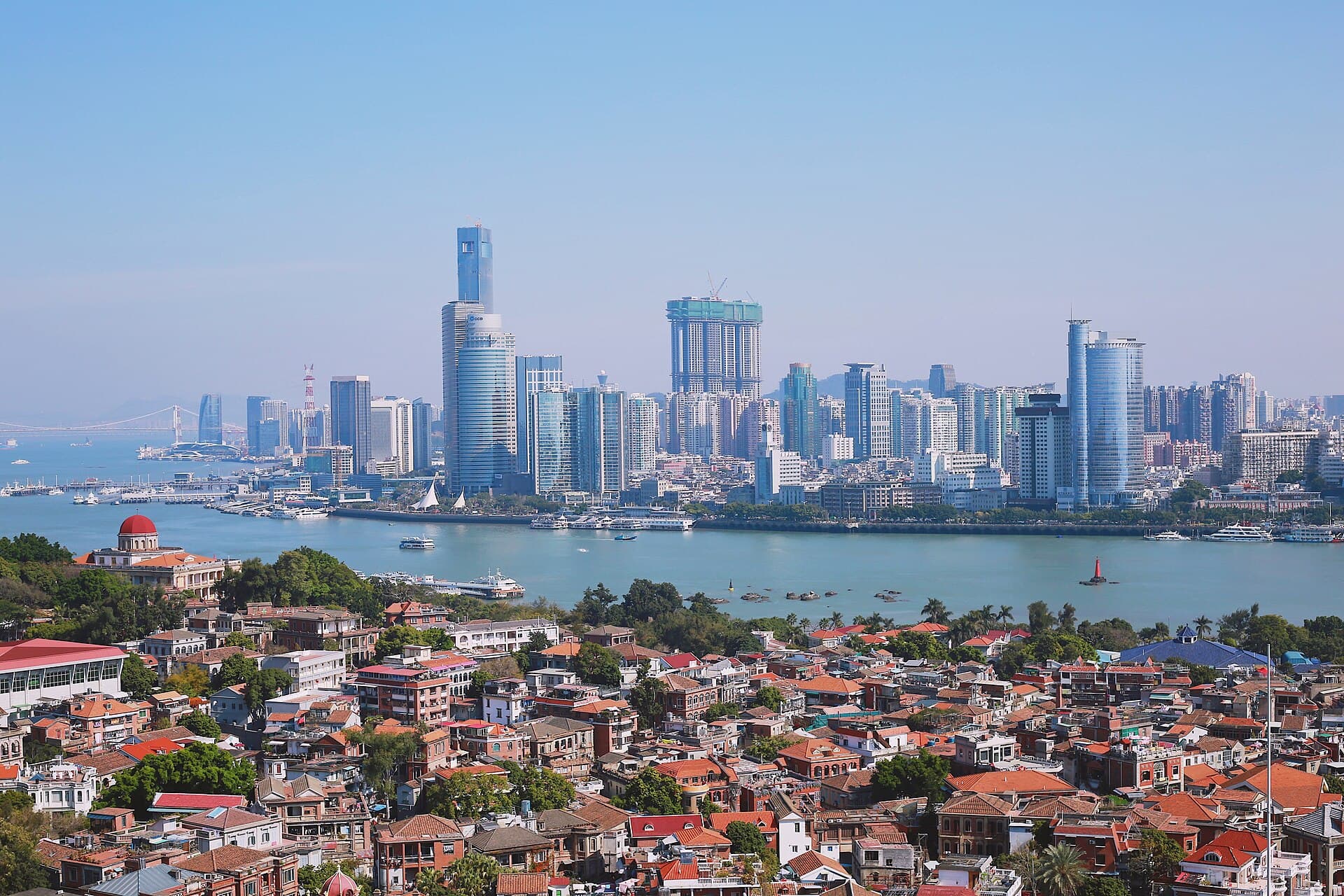 -森屿- / CC BY 2.5, via Wikimedia Commons
“Where colonial echoes meet a symphony of the sea.”
Not the postcards. The stories even locals don't know — whispered in your ear, right where they happened.
Among the grand organs, one stands as a testament to international collaboration and a dramatic past.
Beyond the main tourist paths, some quiet corners hint at a unique policing force from a bygone era.
You might expect to see antique instruments, but one piano here has a surprising connection to American history.
Discover every secret of Gulangyu
Every address, every reveal in full — in your ear, right where it happened.
You pick your stops. You walk. The voice reveals what the others miss.
No tours available yet. Check back soon — we're preparing them.
A brief ferry journey from Xiamen transports you to Gulangyu Island, a pedestrian-only sanctuary. This UNESCO World Heritage site, often referred to as 'The Island of Music' and 'The World Architecture Museum,' spans less than two square kilometers, presenting a distinctive fusion of colonial and Chinese architectural styles, tranquil pathways, and subtropical gardens. The absence of cars and motorbikes cultivates a serene atmosphere, where the sounds of breaking waves and distant piano melodies drift through the air.
Once an international settlement, Gulangyu preserves a compelling history, evident in its former consulates, churches, and villas. It is a destination that invites unhurried exploration, whether you are drawn to its musical legacy, its singular architectural fabric, or simply a peaceful escape from urban clamor. The island's allure resides in these layers of history and culture, offering a different cadence of discovery.
Before the 19th century, Gulangyu existed primarily as an agricultural and fishing community, home to Minnan people. Its strategic location off the coast of Xiamen, then known as Amoy, would soon transform its destiny. Following China's defeat in the First Opium War, the Treaty of Nanking in 1842 designated Xiamen as one of five treaty ports open to foreign trade.
This pivotal moment led to a significant influx of foreign merchants, missionaries, and diplomats, who found Gulangyu's scenic beauty and fresh air appealing. By the early 20th century, an International Settlement was formally established in 1902, governed by a municipal council representing thirteen countries, including Great Britain, France, Germany, and Japan. This period saw the construction of numerous consulates, churches, hospitals, and residences, shaping the island's unique architectural landscape with a blend of Victorian, Gothic, Baroque, and traditional Chinese styles.
During World War II, Gulangyu remained an International Settlement until its occupation by Japan in 1942, with extraterritorial privileges officially ending in 1943. After the war, the island was returned to China and integrated into the Xiamen municipality. Today, Gulangyu is recognized as a UNESCO World Heritage Site, celebrated for its historical international settlement and the harmonious integration of diverse cultures.
Gulangyu offers a variety of sights, best explored on foot. Ascend Sunlight Rock (Riguang Yan), the island's highest point at 93 meters, for expansive views of Gulangyu, the Xiamen skyline, and the surrounding waters. The climb, though steep, rewards with sweeping vistas, especially at dawn or dusk.
Immerse yourself in music at the Gulangyu Piano Museum, housed within Shuzhuang Garden. It features over a hundred antique pianos from around the world, some dating back to the 19th century. Another musical highlight is the Gulangyu Organ Museum, located in the Bagua Building, which stands as the world's largest organ museum and the only one in China. It houses a collection of organs from various countries, including a substantial Norman & Beard organ from 1909.
Stroll through Shuzhuang Garden, a seaside garden constructed in 1913 by a Taiwanese merchant. Its design cleverly integrates with the natural landscape, offering unexpected ocean views through winding paths and bridges. Beyond these main attractions, simply wander the narrow, car-free lanes to discover the island's diverse architecture, from colonial villas to traditional Chinese courtyards.
The most pleasant times to visit Gulangyu are spring (March to May) and autumn (September to November). During these months, the weather is mild, making it ideal for walking and exploring without the intense heat or humidity of summer. Crowds are also typically more moderate. While summer (July and August) can be hot and humid with more visitors, winter (December to February) offers a quieter experience with cooler temperatures, rarely dropping below 10°C (50°F).
To reach Gulangyu, take a ferry from Xiamen. Foreign visitors typically use the Xiamen International Cruise Terminal, with ferries running frequently throughout the day. It is advisable to book ferry tickets in advance, especially during peak seasons or holidays, and bring your passport for verification. The island is entirely pedestrian, so comfortable walking shoes are essential for navigating its hilly, winding paths. While electric golf carts are available for sightseeing, many attractions are best reached on foot.
Most sites are open from 8 AM to 6 PM, with ferries running until late evening or midnight. Consider staying overnight in one of the island's colonial guesthouses for a more serene experience, allowing you to enjoy the quiet mornings and evenings after day-trippers depart. Luggage storage is available at the pier if you are not staying overnight.