Guimarães Castle
This 10th-century fortress, the supposed birthplace of Portugal's first king, holds a secret that predates its royal connections and even its original purpose.
Full story unlocks in the tour
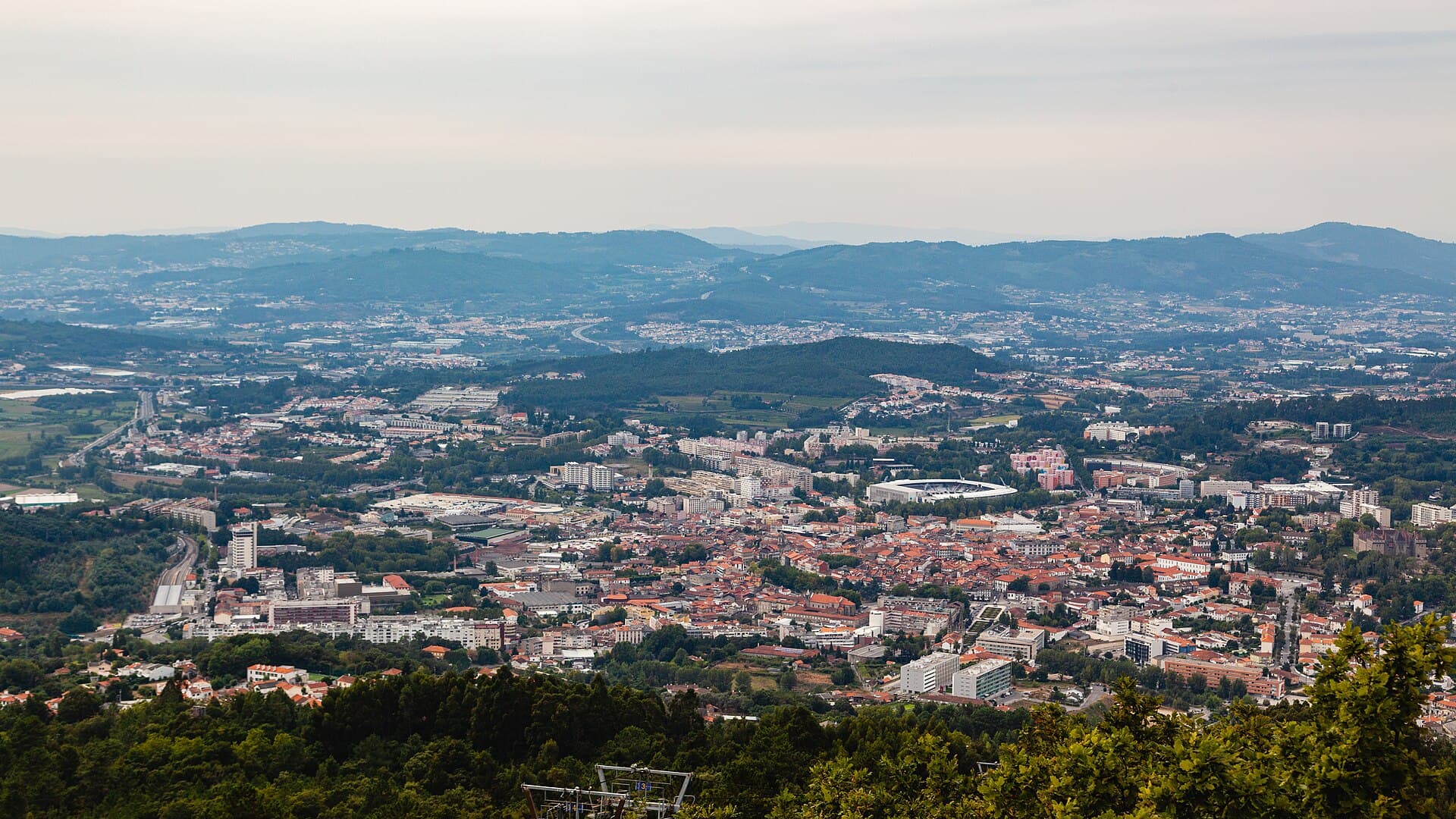 Otto Domes / CC BY-SA 4.0, via Wikimedia Commons
“Where a nation was forged in stone and spirit.”
Not the postcards. The stories even locals don't know — whispered in your ear, right where they happened.
This 10th-century fortress, the supposed birthplace of Portugal's first king, holds a secret that predates its royal connections and even its original purpose.
The distinctive chimneys of this 15th-century palace hint at an architectural influence far from Portugal's sunny shores, a detail that reveals a duke's worldly travels.
The 'Square of the Olive Tree' is named for a miraculous event that brought life back to a seemingly dead tree, a story deeply woven into the city's spiritual fabric.
Discover every secret of Guimarães
Every address, every reveal in full — in your ear, right where it happened.
You pick your stops. You walk. The voice reveals what the others miss.
No tours available yet. Check back soon — we're preparing them.
Guimarães, often called the "birthplace of Portugal," is a city where history is not just preserved but actively felt in its granite walls and cobbled lanes. This UNESCO World Heritage site, recognized for its exceptionally well-preserved medieval center, offers a journey through time, from the 10th-century castle to the charming squares. It's a place where the past seamlessly blends with a lively contemporary culture, making it a rewarding destination for those who appreciate both heritage and a relaxed pace.
Located in northern Portugal, Guimarães played a pivotal role in the nation's formation. It's believed to be the birthplace of Afonso Henriques, Portugal's first king, who led the Battle of São Mamede in 1128, a seminal event that paved the way for Portuguese independence. The city's motto, "Aqui nasceu Portugal" (Portugal was born here), is inscribed on a remnant of its ancient walls, underscoring its profound historical significance. Beyond its historical weight, Guimarães invites visitors to wander its picturesque streets, discover quiet corners, and experience a city that wears its medieval legacy with pride.
The history of Guimarães stretches back further than the foundation of Portugal itself, with early records indicating Roman settlement and its function as a spa town in the 4th century A.D. After the fall of the Roman Empire, the region saw invasions by Visigoths, followed by Arab armies from North Africa, known as the Moors. However, the mountainous north of the Iberian Peninsula, where Guimarães lies, remained free from Moorish rule.
The city's pivotal role in Portuguese history began in the 10th century when Countess Mumadona Dias ordered the construction of a castle to protect a monastery from attacks by Moors and Norsemen. This defensive structure would later become the Guimarães Castle. In 1096, Count Henrique and his wife, Teresa de León, settled in Guimarães, expanding and improving the castle. Their son, Afonso Henriques, born in Guimarães around 1110 or 1111, would become Portugal's first king.
Guimarães was the stage for major political and military events in 1128, most notably the Battle of São Mamede. In this battle, Afonso Henriques' forces, favoring independence from the Kingdom of León, defeated those of his mother, D. Teresa. This victory was a crucial step towards the independence of the Condado Portucalense, paving the way for the founding of the Portuguese Nation. Afonso Henriques was granted the title of King of Portugal in 1179 by Pope Alexander III. Guimarães served as the capital of this nascent kingdom until 1255, when Lisbon took its place. As Portugal expanded, Guimarães's direct political importance waned, a process that inadvertently helped preserve its medieval character. In 2001, its historic town center was designated a UNESCO World Heritage Site, recognizing its authentic evolution from a medieval settlement into a modern town.
Begin your exploration at the Guimarães Castle, a 10th-century fortress considered a symbol of Portuguese national identity and the birthplace of Afonso Henriques. Climb its battlements and towers for sweeping views of the city. Adjacent to the castle is the Palace of the Dukes of Braganza, a 15th-century manor with distinctive Burgundian architecture and 36 chimneys. It functions as a museum and an official presidential residence.
Wander down Rua de Santa Maria, a medieval artery connecting the castle area to the heart of the old town. You'll arrive at Largo da Oliveira, a picturesque square named for a centuries-old olive tree. Here, admire the Gothic shrine of Padrão do Salado and the Igreja de Nossa Senhora da Oliveira, a 14th-century Gothic church built on the foundations of a 10th-century monastery. The church's cloister houses the Alberto Sampaio Museum, with a collection of medieval and Renaissance art.
Continue to Praça de Santiago, another atmospheric medieval square, separated from Largo da Oliveira by the arches of the old council chambers. For a different perspective, take the cable car up to Monte da Penha, a forested hill offering expansive views of Guimarães and the surrounding Minho region, along with walking trails and a sanctuary.
The best time to visit Guimarães is between April and November. Spring (March-May) offers mild temperatures, ample sunshine, and blooming countryside, making it ideal for outdoor exploration. Summer (June-August) is warm and dry, with long days and temperatures sometimes exceeding 30°C, perfect for sightseeing, though it is the busiest tourist season. Early autumn (September-October) brings pleasant weather and fewer crowds, with temperatures cooling from summery highs. While winter (December-February) is cooler and wetter, it can be atmospheric, with fewer tourists, and is suitable for indoor activities like visiting museums and churches.
Guimarães is easily accessible, located about 55 km from Porto. Regular trains run from Porto's São Bento station, taking just over an hour. Driving offers flexibility for exploring the wider Minho region, with a travel time of around 50 minutes, though a car is not recommended within the old town. Buses also connect Guimarães with Braga, Porto, and Lisbon.
The city's historic center is best explored on foot. Wear comfortable shoes for the stone streets. Most major attractions, including the castle and Ducal Palace, are within easy walking distance. Many visitors take a day trip to Guimarães, often combined with Braga, but spending an overnight allows for a more relaxed experience of the old squares after day-trippers depart. Free walking tours are available, covering various themed routes and offering historical context.