Beijing Road Pedestrian Street
Beneath the bustling shops of Beijing Road, layers of history lie just beneath your feet.
Full story unlocks in the tour
 Tim Wu / CC BY-SA 4.0, via Wikimedia Commons
“Where ancient trade routes meet a futuristic skyline, and every meal is a conversation.”
Not the postcards. The stories even locals don't know — whispered in your ear, right where they happened.
Beneath the bustling shops of Beijing Road, layers of history lie just beneath your feet.
Guangzhou holds a surprising link to early Islamic history, far from the Middle East.
The Pearl River isn't just a scenic waterway; it was once the only gateway to China for centuries.
Discover every secret of Guangzhou
Every address, every reveal in full — in your ear, right where it happened.
You pick your stops. You walk. The voice reveals what the others miss.
No tours available yet. Check back soon — we're preparing them.
Guangzhou, historically known as Canton, is a dynamic megacity in southern China, serving as the capital of Guangdong Province. Positioned at the heart of the Pearl River Delta, it's a city where over 2,200 years of maritime trade history intertwines with a dazzling modern skyline. From its origins as a key starting point of the ancient Maritime Silk Road to its contemporary status as a global manufacturing and technology hub, Guangzhou offers a compelling blend of tradition and innovation.
Often called the "City of Flowers" (Huacheng) due to year-round blooms, and the "City of Rams" (Yangcheng) after a local legend, Guangzhou is also renowned as the birthplace of Cantonese culture, cuisine, and language. The city's energy is palpable, whether you're savoring world-famous dim sum, exploring colonial-era architecture, or marveling at futuristic skyscrapers. Guangzhou invites visitors to delve into its layered past while experiencing the pulse of a forward-looking metropolis.
Guangzhou's history stretches back over 2,200 years, with its formal founding as Panyu in 214 BC during the Qin Dynasty. Located strategically on the Pearl River, it quickly became a vital port and a distribution center for tropical products. Under the Han Dynasty, Panyu developed robust commerce and advanced textile and porcelain industries, engaging in foreign exchange.
During the Tang Dynasty (618-907 AD), Guangzhou, then known as Guang Prefecture, solidified its reputation as a world-renowned trading harbor, connecting China with countries across the South Pacific and Indian Oceans. This era saw the establishment of China's earliest customs in Guangzhou to strengthen foreign trade. The city's significance as a global trade hub continued to grow, and by the 17th century, it was the primary port for China's foreign trade.
A pivotal period in Guangzhou's history was the Canton Trade Era (17th-19th centuries). During the Qing Dynasty, the Canton System restricted international trade to Guangzhou alone, making it the only Chinese port accessible to Europeans from 1757 to 1842. European merchants, including those from Britain, France, and the Netherlands, established trading houses along the Pearl River. However, this monopoly ended when British forces captured Guangzhou during the First Opium War in 1841, marking a significant shift in China's relationship with the West.
In the late Qing dynasty, Guangzhou was a center of revolutionary activity, with uprisings in 1895 and 1911 preceding the successful revolution that overthrew the Qing dynasty. The municipal council of Guangzhou was officially established in 1921, shaping the city into its modern form. Today, Guangzhou stands as a testament to its enduring commercial spirit and cultural heritage, continually evolving while honoring its deep historical roots.
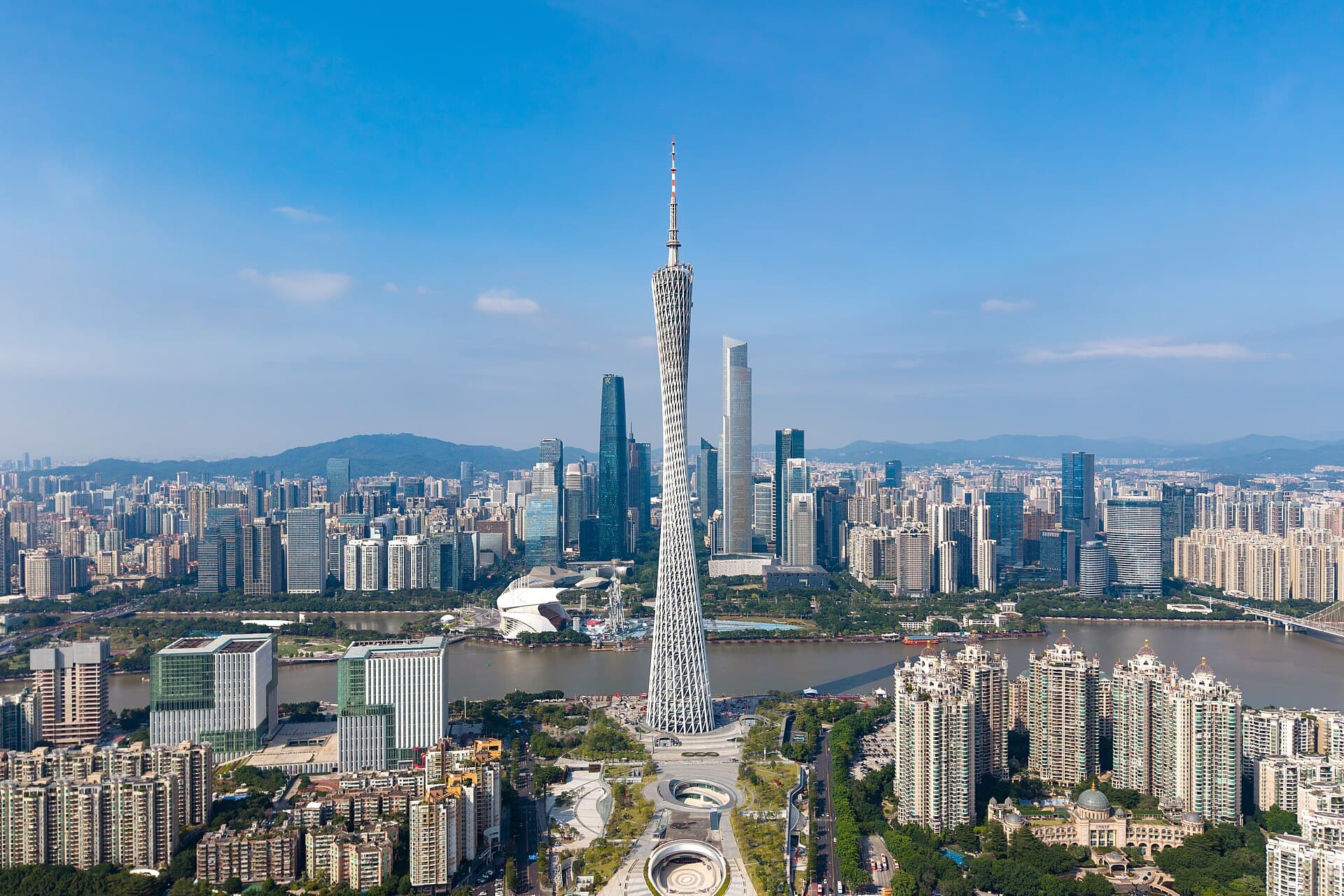
Guangzhou offers a diverse array of sights, blending ancient heritage with modern marvels. The Canton Tower, a 600-meter architectural landmark, provides panoramic city views from its observation decks at 428m, 433m, and 450m, with an adventurous skywalk and outdoor glass observatory. For a glimpse into the city's colonial past, Shamian Island features charming, pedestrian-friendly streets lined with European-style buildings.
Immerse yourself in history at the Chen Clan Ancestral Hall, a late 19th-century complex of 19 buildings showcasing intricate Cantonese architecture and housing the Guangdong Folk Art Museum. Another significant historical site is the Temple of the Six Banyan Trees, dating back to 537 AD, known for its pagoda, carvings, and peaceful courtyards. Yuexiu Park, Guangzhou's largest urban park, is home to the iconic Five Rams Statue, a symbol of the city, along with lakes, gardens, and ancient city wall relics.
For an urban experience, stroll along Beijing Road Pedestrian Street, a bustling shopping area where ancient city ruins from the Song and Yuan dynasties are visible under glass panels. The Museum of the Mausoleum of the Nanyue King offers insights into Guangzhou's early rulers with over 10,000 funerary objects. Don't miss the Pearl River Promenade for evening views of the illuminated skyline, or consider a Pearl River night cruise for a magical perspective of the city.
The best time to visit Guangzhou is during autumn, from October to December. During these months, the city experiences comfortable temperatures, typically ranging from 20°C to 28°C (68°F to 82°F), with lower humidity and less rainfall. This makes it ideal for exploring outdoor attractions and enjoying river cruises. Spring, from March to early April, also offers mild temperatures, though with occasional showers. While Guangzhou can be visited year-round, summers (May to September) are long, hot, humid, and wet, with a risk of typhoons. Winters (December to February) are mild and dry, with average lows around 10°C (50°F) and highs around 20°C (68°F).
Guangzhou Baiyun International Airport (CAN) is located 17 miles north of the city, with Metro Line 3 offering the easiest route into the city center. The city offers an extensive and efficient public transportation system, including a metro, buses, and trams. The Guangzhou Metro is one of China's longest, with 19 lines connecting major attractions, shopping areas, and even the airport. A transportation card, like the Yang Cheng Tong card, can be purchased for convenience and topped up at 7-Eleven stores.
Mobile payment apps like WeChat Pay and Alipay are widely used for transactions; it's advisable to download and link your international credit card before arrival. While taxis are readily available and metered, ride-hailing apps offer fixed upfront fares. For longer stays, a visa is required for most nationalities, though Guangzhou offers a 72-hour or 144-hour visa-free transit for eligible travelers.