Guadalajara Cathedral
Look closely at the Guadalajara Cathedral's towers, and you might notice something unusual about their construction.
Full story unlocks in the tour
 Isacdaavid / CC BY-SA 4.0, via Wikimedia Commons
“Where mariachi melodies meet modern innovation, Guadalajara invites you to discover the soul of Mexico.”
Not the postcards. The stories even locals don't know — whispered in your ear, right where they happened.
Look closely at the Guadalajara Cathedral's towers, and you might notice something unusual about their construction.
This UNESCO World Heritage site, once a grand orphanage, holds a secret in its construction that hints at a forgotten past.
Whispers persist of a vast network of tunnels beneath Guadalajara's streets, connecting historic buildings.
Discover every secret of Guadalajara
Every address, every reveal in full — in your ear, right where it happened.
You pick your stops. You walk. The voice reveals what the others miss.
No tours available yet. Check back soon — we're preparing them.
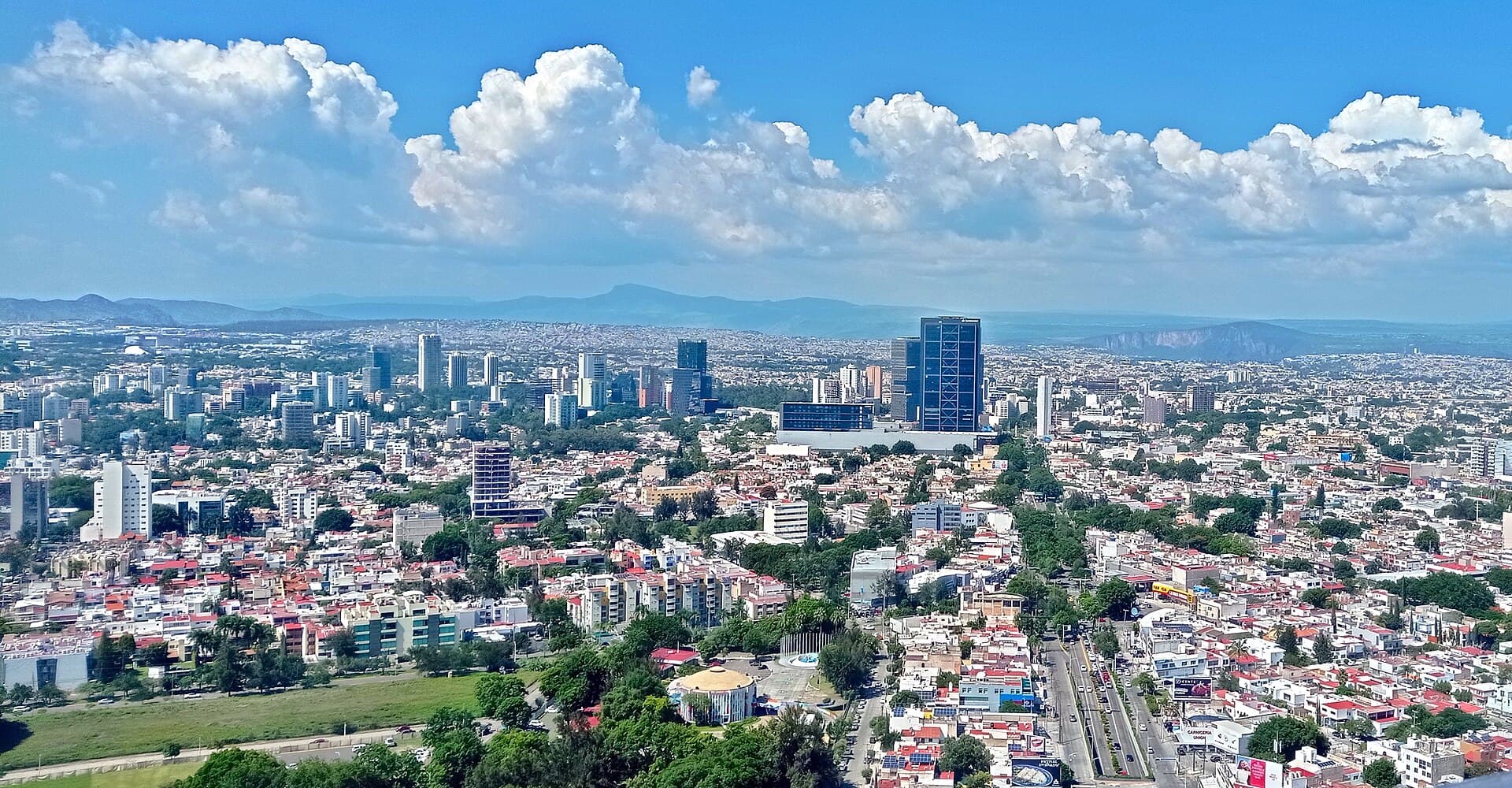
Guadalajara, the capital of Jalisco, stands as a beating heart in western Mexico, a city where enduring tradition and contemporary energy intertwine. Often considered the birthplace of mariachi music, tequila, and charrería (Mexican rodeo), it plays a significant role in shaping Mexico's cultural identity. With a metropolitan population exceeding five million, Guadalajara is a major center for business, arts, culture, technology, and tourism, consistently ranking among the world's most productive and globally competitive cities.
The city offers a captivating blend of colonial charm and modern dynamism. Its historic center features grand cathedrals and plazas, while neighborhoods like Colonia Americana buzz with trendy cafes and boutiques. From exploring bustling markets to savoring authentic Jalisco cuisine, Guadalajara provides a deep dive into Mexican life, making it a compelling destination for those seeking an immersive cultural experience.
Guadalajara's origins are marked by a unique persistence; the city only found its permanent home on the fourth attempt. Spanish conquistador Nuño Beltrán de Guzmán commissioned Juan de Oñate to establish the town, naming it after Guzmán's hometown in Spain. After three failed settlements, plagued by water shortages and indigenous attacks, the city was finally founded on February 14, 1542, in the fertile Atemajac Valley. This strategic location, meaning "place where water divides" in Nahuatl, provided crucial access to water and favorable agricultural conditions.
A pivotal moment arrived in 1560 when Guadalajara was granted the status of capital of the Kingdom of New Galicia, with administrative and ecclesiastical authorities relocating from Compostela. This solidified its role as the primary political and religious center of western New Spain. The construction of the iconic Guadalajara Cathedral began shortly after in 1563, further establishing Roman Catholicism in the region. By the 18th century, Guadalajara had grown to become Mexico's second-largest city, fueled by agriculture, trade, and mining, and attracting significant colonial migration.
Guadalajara played a crucial role in Mexico's fight for independence. In 1810, rebel leader Miguel Hidalgo y Costilla established Mexico's first revolutionary government here and issued a historic decree abolishing slavery. After the War of Independence (1810-1821), Guadalajara became the capital of the newly formed free and sovereign state of Jalisco in 1823. The city experienced periods of economic, technological, and social growth throughout the 19th century, despite tumultuous events like the Reform War, during which Benito Juárez briefly made Guadalajara the seat of his liberal government in 1858. French occupation occurred between 1864 and 1866, with Mexican troops eventually reclaiming the city. The 20th century saw continued growth, with the population surpassing one million in 1964, and Guadalajara becoming a significant hub for technology and business. The city has also hosted major international events, including the FIFA World Cup and the Pan American Games, and was named the American Capital of Culture in 2005.
Begin your exploration in the Centro Histórico, where grand colonial architecture tells tales of centuries past. The Guadalajara Cathedral, with its distinctive twin spires, is a prominent landmark, and the surrounding plazas — Plaza de Armas, Plaza de la Liberación, and Plaza Guadalajara — offer lively spaces for people-watching. Inside the Palacio de Gobierno del Estado de Jalisco, discover powerful murals by José Clemente Orozco depicting Mexico's political and social history.
A short walk leads to the Hospicio Cabañas, a UNESCO World Heritage site renowned for its impressive architecture and a captivating dome mural by Orozco. For a different artistic perspective, the Museo de Arte de Guadalajara (MUSA) offers engaging exhibits by Mexican artists. Immerse yourself in local commerce at Mercado Libertad, also known as Mercado San Juan de Dios, the largest indoor market in Latin America, where you can find everything from handicrafts to traditional Mexican products and local delicacies.
Beyond the historic core, explore the lively neighborhood of Colonia Americana, known for its leafy streets, stylish cafes, and trendy boutiques. For a taste of traditional arts and crafts, venture to Tlaquepaque, a Pueblo Mágico just outside the city center, with its inviting streets, galleries, and artisan workshops. Consider a day trip to the nearby town of Tequila to tour agave fields and distilleries, or visit Lake Chapala, Mexico's largest freshwater lake, for a scenic escape.
The most pleasant time to visit Guadalajara is during the dry season, from October to May, when the weather is mild and comfortable. Temperatures during these months hover in the low 70s to mid-80s°F (21-30°C) during the day, with cooler evenings. This period also coincides with numerous festivals and events, including the Guadalajara International Film Festival in March and the International Book Fair in November. The rainy season, from June to September, brings afternoon or evening showers, often heavy but short-lived, with higher humidity. While the city is less crowded and hotel prices may be lower during this time, the lush green landscapes offer a different kind of beauty.
Guadalajara is served by the Miguel Hidalgo y Costilla Guadalajara International Airport (GDL), located about 30 minutes from the city center. The most economical way to get to and from the airport is by city bus (Ruta 176 or Atasa), which takes approximately 45 minutes. For convenience, rideshares like Uber and DiDi are readily available and often more affordable than taxis for getting around the city. While the public bus system is extensive and a basic subway network exists, many popular tourist attractions in the city center are walkable.
Spanish is the primary language, and while you may encounter English speakers in tourist areas, knowing some basic Spanish phrases will enhance your experience. The local currency is the Mexican peso. When exploring, it's advisable to take precautions common in any large city, such as being aware of your valuables, especially in crowded areas or on public transportation. Guadalajara is generally welcoming to visitors, and residents are often helpful if you need directions or advice.