Martini Tower
Groningen's celebrated Martini Tower, affectionately called 'd'Olle Grieze' (the Old Gray One), carries a surprising narrative of endurance.
Full story unlocks in the tour
 Thomso at Dutch Wikipedia / Public domain, via Wikimedia Commons
“Groningen: where ancient foundations meet a youthful pulse.”
Not the postcards. The stories even locals don't know — whispered in your ear, right where they happened.
Groningen's celebrated Martini Tower, affectionately called 'd'Olle Grieze' (the Old Gray One), carries a surprising narrative of endurance.
Beneath the calm surface of Groningen's scenic canals rests an unexpected bounty.
The University of Groningen, among the Netherlands' oldest, conceals a pioneering achievement within its academic past.
Discover every secret of Groningue
Every address, every reveal in full — in your ear, right where it happened.
You pick your stops. You walk. The voice reveals what the others miss.
No tours available yet. Check back soon — we're preparing them.
Groningen, often termed the 'Capital of the North,' is a city where a lively student population imbues ancient thoroughfares with a youthful energy. While its official establishment dates to 1040, archaeological evidence suggests a settlement existed here as early as 3 AD. This northern Dutch city, once a powerful independent city-state and member of the Hanseatic League, possesses a distinctive character shaped by centuries of commerce, conflict, and ingenuity.
Today, Groningen is recognized for its exceptional cycling culture, with more bicycles than inhabitants, and a city center designed to prioritize cyclists and pedestrians. Beyond its two-wheeled dominance, the city offers an animated atmosphere with a bustling nightlife, numerous cafes, and a flourishing cultural landscape, largely due to its substantial student population. From medieval architecture to contemporary art, Groningen presents a compelling fusion of history and modern life, rendering it a singular destination in the Netherlands.
The origins of Groningen extend back millennia, with archaeological discoveries indicating a settlement around 3950–3650 BC, and a significant community by 3 AD. The first official mention of 'Villa Cruoninga' appeared in 1040 when German King Henry III granted the lands to a Utrecht bishop. Its strategic location on the northernmost point of the Hondsrug ridge provided natural protection, contributing to its early expansion.
By the 13th century, Groningen had developed into an important trading hub, fortifying itself with city walls and asserting considerable influence over the surrounding Ommelanden region. The city's economic prosperity was further solidified by its membership in the Hanseatic League, a formidable North German trade network. The late 15th century marked the apex of Groningen's power, operating as a virtually independent city-state and even administering the nearby province of Friesland.
In 1536, Groningen's autonomy concluded as it accepted Emperor Charles V as its sovereign, integrating into the Habsburg Netherlands. The city later became part of the Dutch Republic after being conquered from the Spanish in 1594. A pivotal moment in its history occurred on July 21, 1672, when Bishop Bernhard von Galen, known as 'Bommen Berend' (Bombing Berend), assaulted Groningen, damaging parts of the city. The city's liberation on August 28, 1672, is still commemorated annually.
During the early 19th century, under French administration, Groningen was known as 'Groningue' and was even briefly incorporated into the French Empire under Napoleon I. While much of the city's main square, the Grote Markt, was devastated during the Battle of Groningen in April 1945 at the conclusion of World War II, prominent structures like the Martinitoren, Goudkantoor, and city hall remarkably remained intact. The city was subsequently reconstructed, evolving into the animated center it is today, a testament to its enduring character.
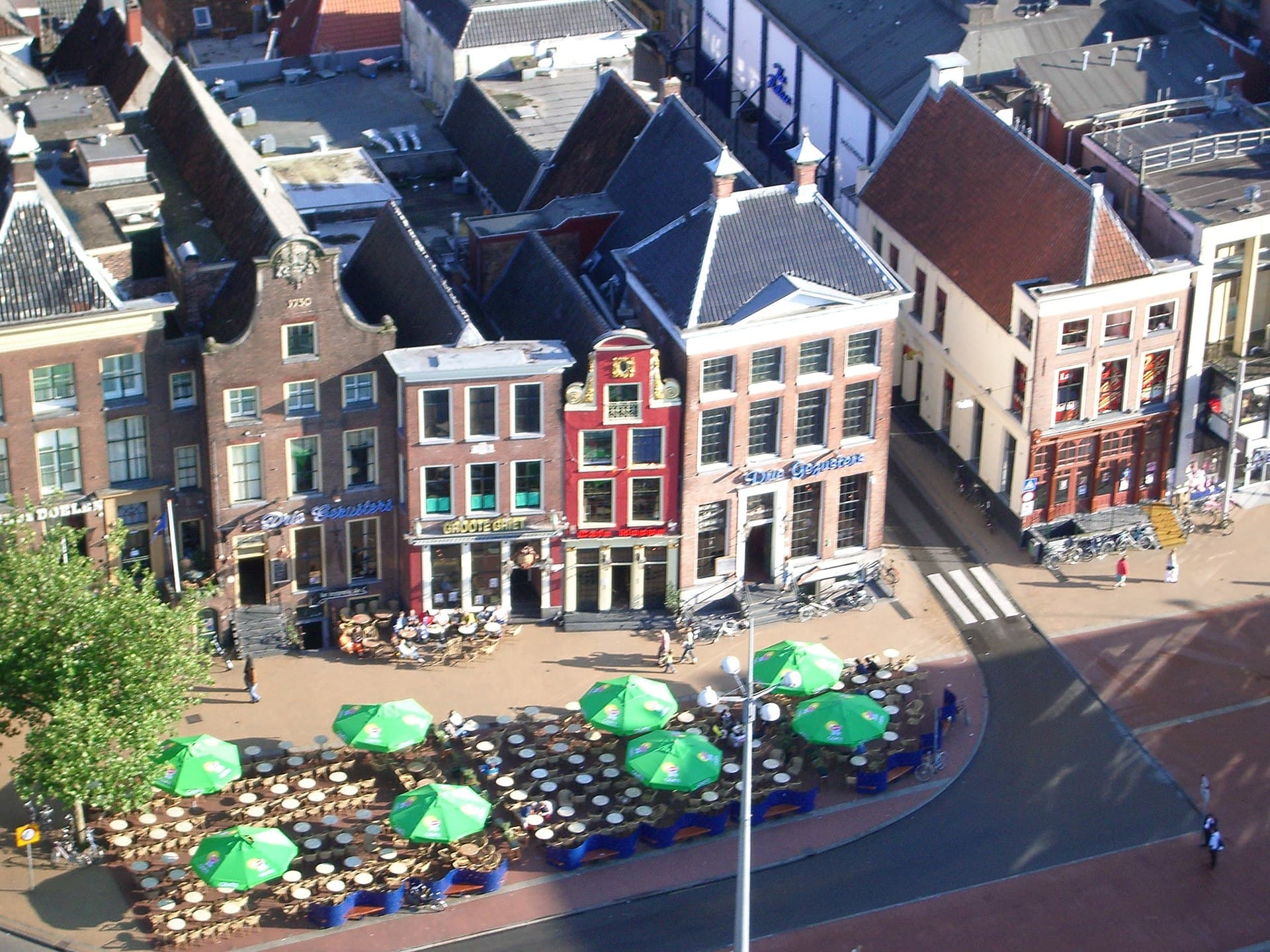
Begin your exploration at the Grote Markt, the city's central square, bordered by historic buildings and lively cafes. Ascend the Martini Tower (Martinitoren), affectionately known as 'd'Olle Grieze' (the Old Gray One), for expansive views of the city and its environs. This 97-meter bell tower, part of the Martinikerk church complex, is a significant landmark with a deep history. Inside the tower, you can climb 251 of its 311 steps and even ring one of its grand carillon bells.
Immerse yourself in art and culture at the distinctive Groninger Museum, recognized for its bold, modern architecture and diverse exhibitions spanning contemporary art, fashion, and history. For a peaceful interlude, wander through the Prinsentuin, an exquisite Renaissance-style garden with sculpted hedges and rose bushes, particularly charming in late spring or early summer. The Noorderplantsoen offers another green sanctuary, a favored city park constructed on old defensive walls, ideal for repose.
Explore the appealing Marina Reitdiephaven, a picturesque harbor featuring colorful Scandinavian-style houses reflected in the water, providing excellent photographic opportunities, especially at dusk. Do not overlook the Vismarkt, a historic market square where you can sample local delicacies like kibbeling (fried fish). For a distinctive blend of art and utility, seek out the whimsical public toilet along the Kleine der A canal, designed by Rem Koolhaas and Erwin Olaf.
The most favorable time to visit Groningen for pleasant weather and outdoor pursuits is from late spring to late summer, specifically May through September. May offers blossoming scenery and comfortable temperatures, while June is ideal for warm weather and extended daylight hours. July and August are the warmest months, with average daytime highs around 22°C (72°F). While rain is possible throughout the year, it is generally lighter in spring and early summer. If you prefer fewer crowds, September can also be a good option.
Groningen is a remarkably bicycle-friendly city, and renting a bike is an excellent method of navigation. The city center is easily traversed on foot. For longer distances or excursions beyond the center, the Qbuzz bus system is efficient, and the central station provides train connections to other Dutch cities like Leeuwarden, Utrecht, and Amsterdam. The cost of living in Groningen is generally more accessible compared to larger Dutch cities such as Amsterdam or Rotterdam. Students, who comprise a significant portion of the population, typically spend around €1000-€1100 per month, excluding tuition fees. For international visitors and residents, the International Welcome Center North (IWCN) offers assistance and information on various practical matters, including immigration, health, and legal guidance. Emergency services can be reached by dialing 112.